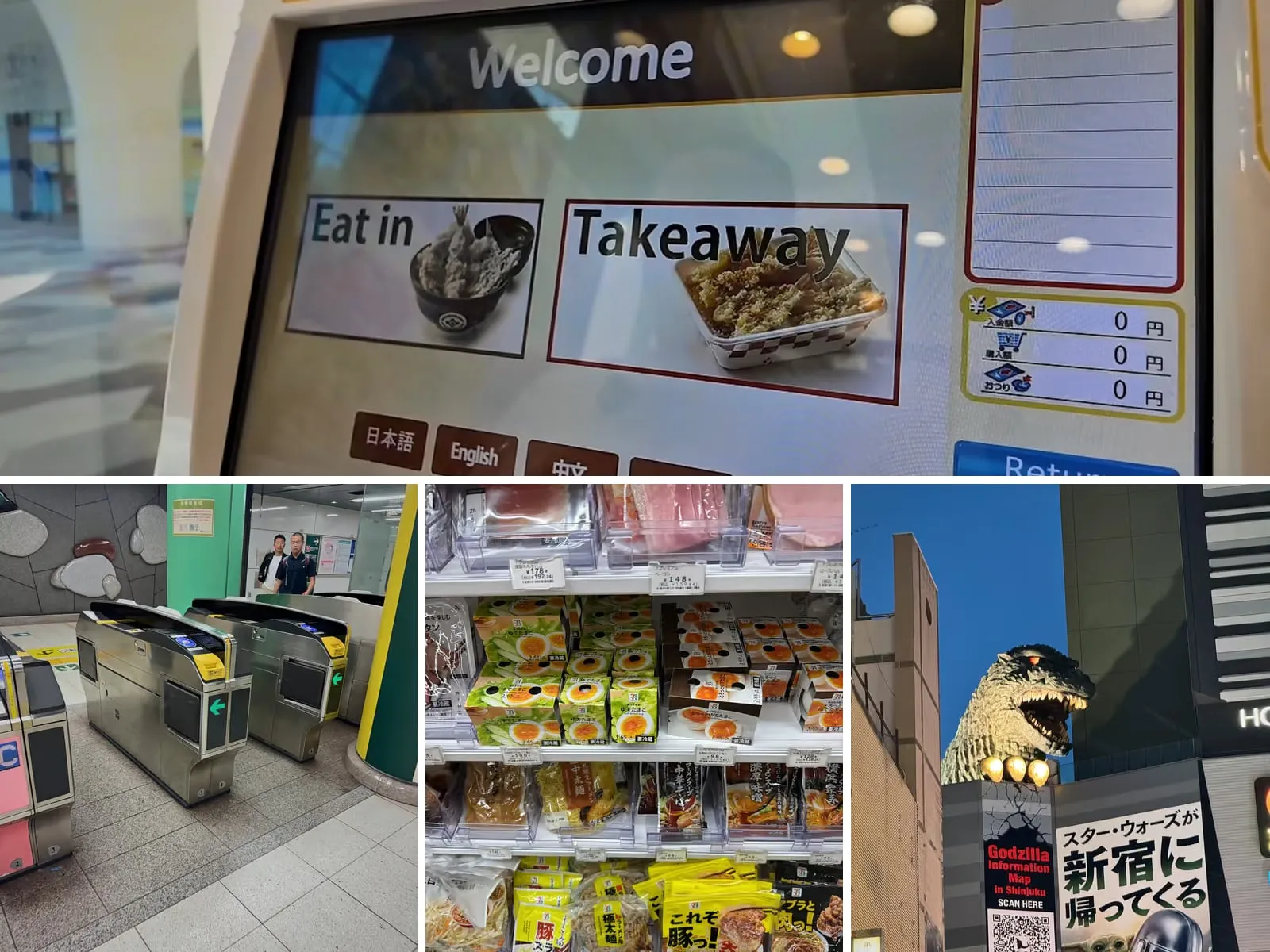
Getting from Narita to Shinjuku is the first real decision you make in Japan, and you make it tired. Narita is about 60 km from central Tokyo. There are two airport express trains with confusingly similar names, a slower cheap train, buses, and very expensive taxis.10 It's easy once you know the system.
Heads up: some links in this guide are affiliate links. If you book or buy through them, we may earn a commission at no extra cost to you.
In this guide 12 sections
Cream and I came in the cheap way. We tapped Suica on our phones and rode Keisei's regular train into Ueno, standing the whole way with all our bags. Then we changed to the subway and walked the last five minutes to our apartment in Shinjuku.
Leaving was a different story. We tried the same cheap train back to Narita. In the station, we realized it couldn't get us there in time. We ran to buy Skyliner tickets with only a few minutes to spare. It was pretty stressful.
Here's every way from Narita to Shinjuku with October 2026 fares, what we actually rode each way, and the one thing we'd do differently.
How to Get From Narita to Shinjuku: The Quick Answer
The easiest way from Narita to Shinjuku is the Narita Express (N'EX): one train, no transfers, about 1 hour 20 minutes, and 3,330 yen (about $21) per adult as of October 2026. The Skyliner is cheaper and faster to Ueno or Nippori (2,580 yen, about $16, in roughly 40 minutes), but you change trains once to reach Shinjuku. The cheapest way is Keisei's regular trains, which take a Suica card and cost from 1,030 yen (about $6.50), but they're slower and you may stand with your bags. We rode the regular train in and the Skyliner out, and whichever you pick, decide your departure train before the day you fly.
| Option | Adult fare (Oct 2026) | Time to Shinjuku | Best for |
|---|---|---|---|
| Narita Express (N'EX) | 3,330 yen (about $21) | About 1 hr 20 min, no transfer | Hotels near Shinjuku Station, big bags |
| Skyliner + subway or JR | 2,580 yen (about $16), plus 200 to 300 yen | About 1 hr 15 min with one transfer | Saving money, hotels on a line from Ueno or Nippori |
| Keisei Limited Express + JR | 1,030 yen (about $6.50), plus the JR fare | About 2 hours | Tight budgets, light bags |
| Airport Limousine Bus | 3,600 yen (about $23) | About 1 hr 45 min to 2 hr 10 min | Door to door at big Shinjuku hotels |
| Fixed-fare taxi | 31,500 yen (about $200), plus tolls | About 1.5 hours | Groups splitting the cost |

 Bernie & Cream@bernieandcream
Follow along on Facebook
Bernie & Cream@bernieandcream
Follow along on Threads
Bernie & Cream@bernieandcream
Watch us on TikTok
Bernie & Cream@bernieandcream
Follow along on X
Bernie & Cream@BernieAndCream


How We Got From Narita to Shinjuku: Suica, Keisei, and the Oedo Line
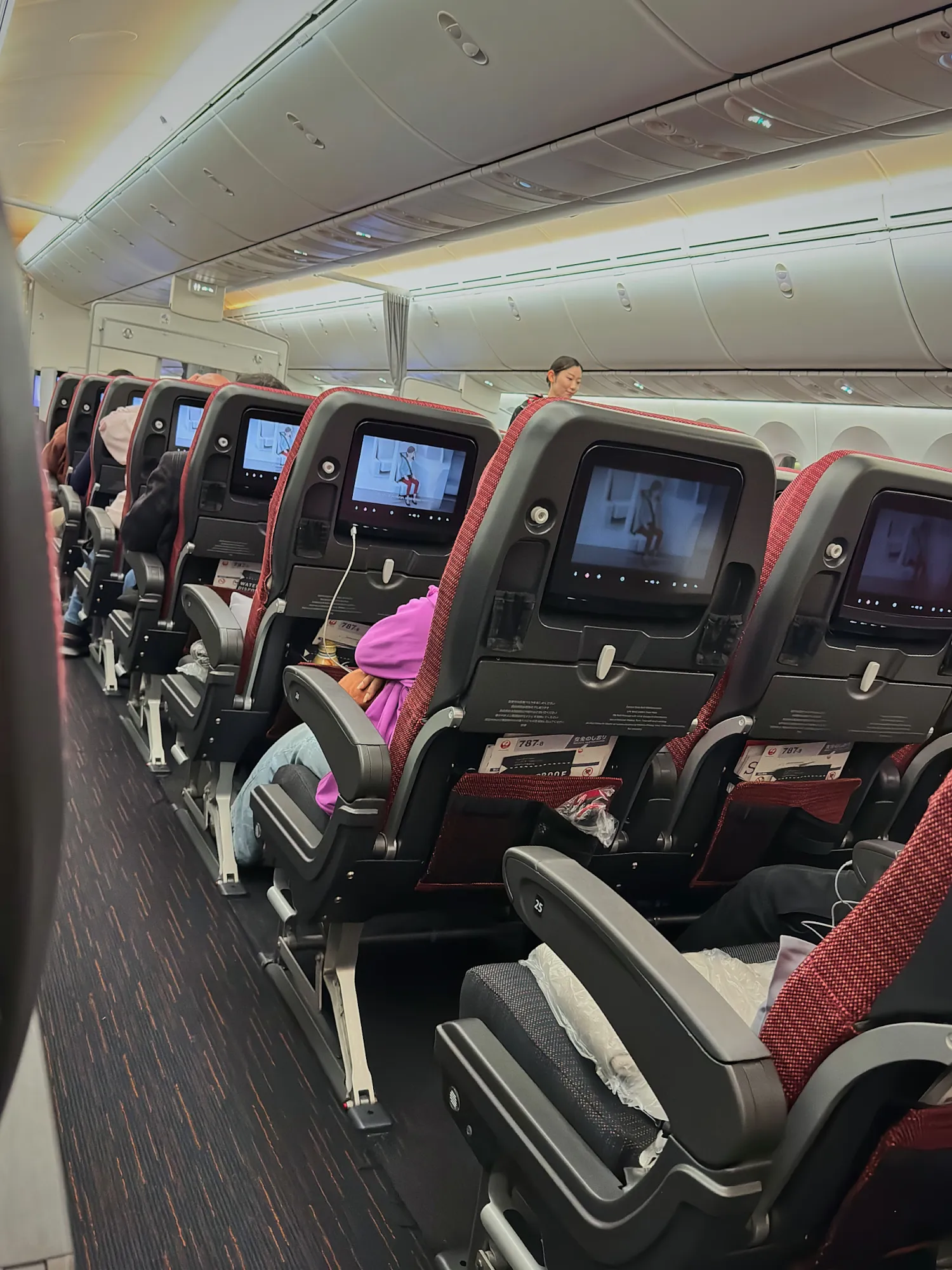
We flew in from Kuala Lumpur and landed at Narita in the evening. Before we did anything else, we got our phones online, because in Japan we always need maps the moment we land to work out the airport train. (We bought a data plan at the airport; more on why we wouldn't do that again below.)
The trains leave from the station under the airport terminals. We didn't buy any special tickets: we tapped in with Suica on our phones and took the basic Keisei train that takes Suica. An express was on the platform first, so we waited a bit for ours, and then rode it into the city to Ueno.
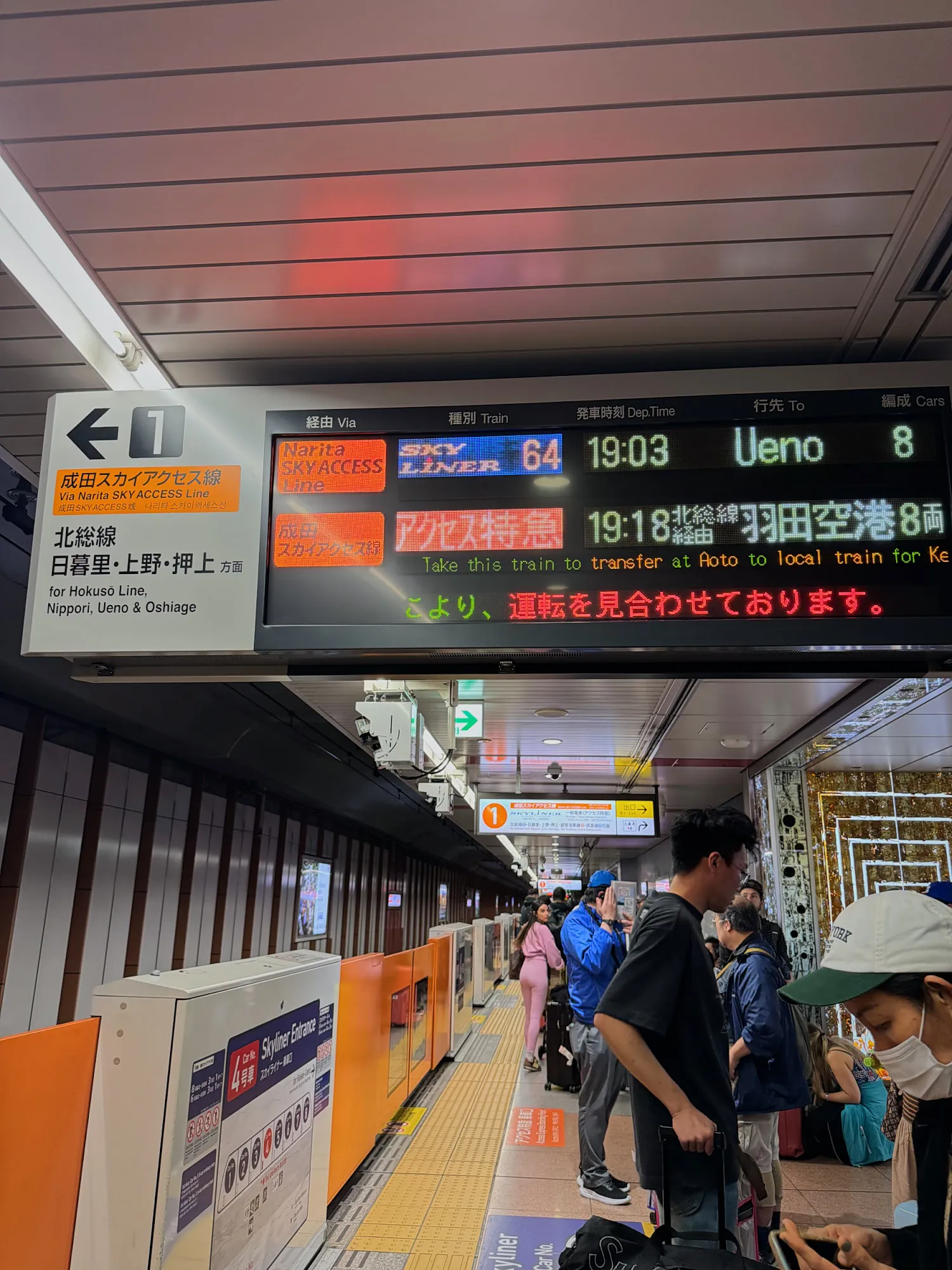
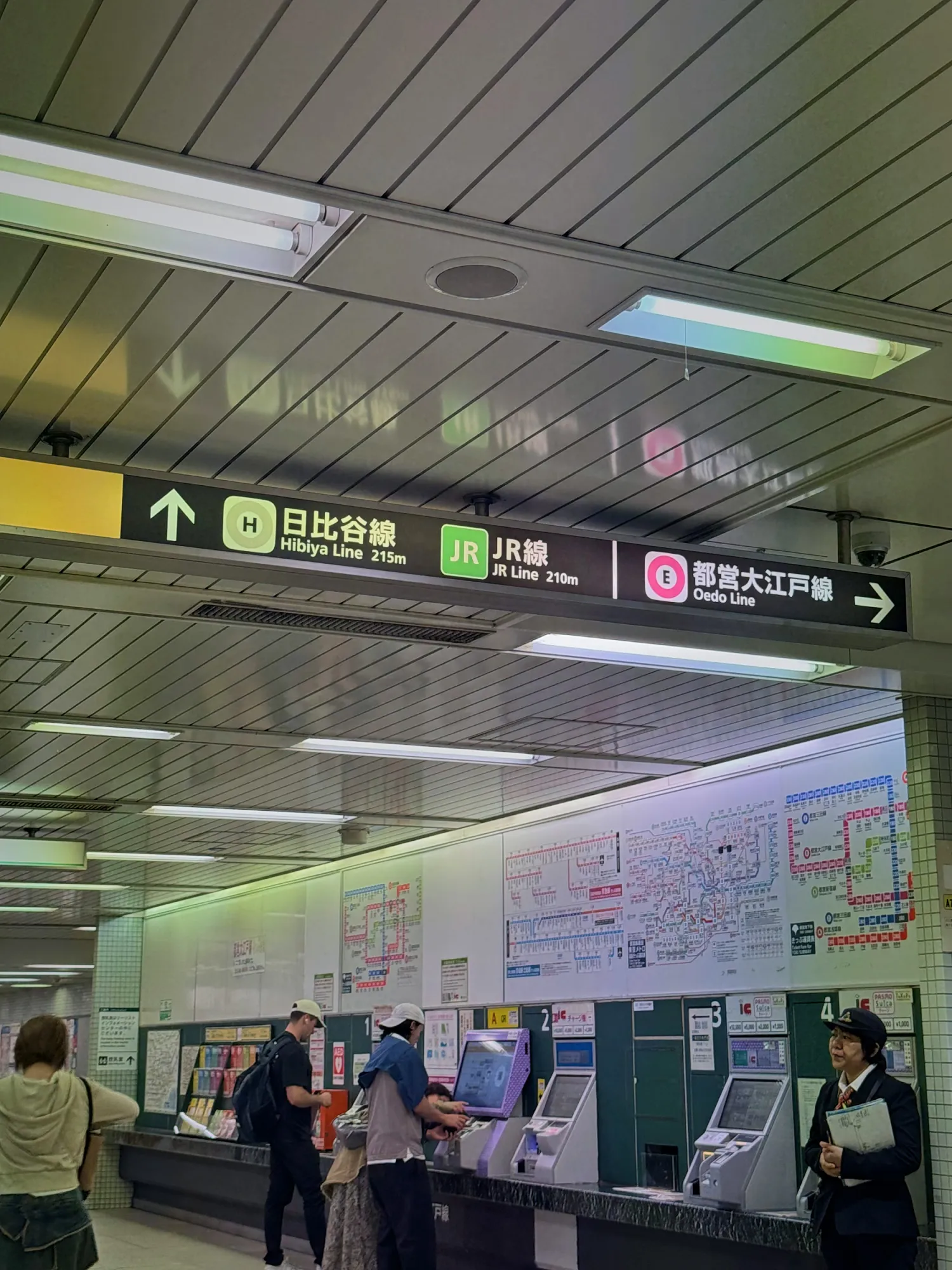
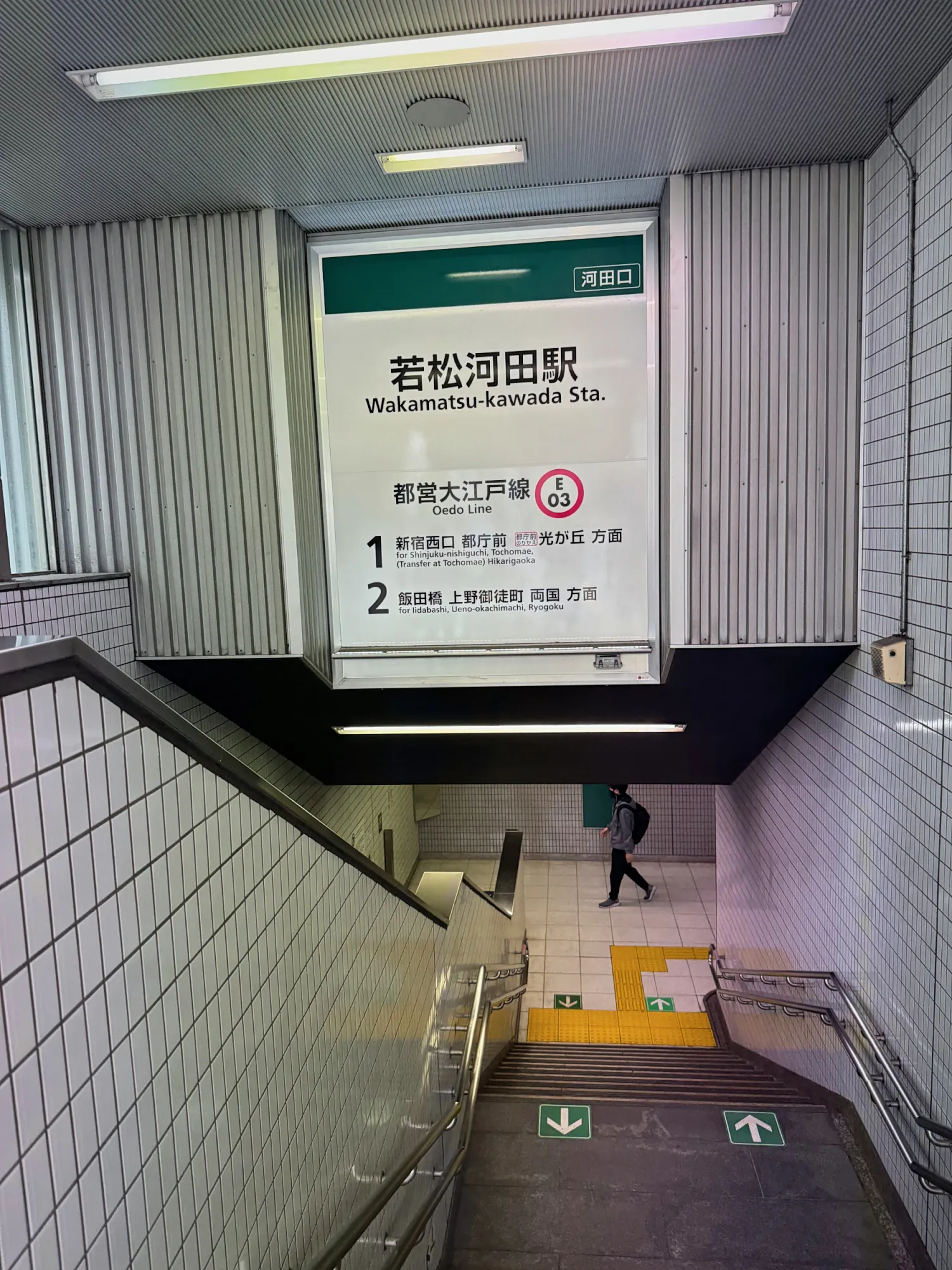
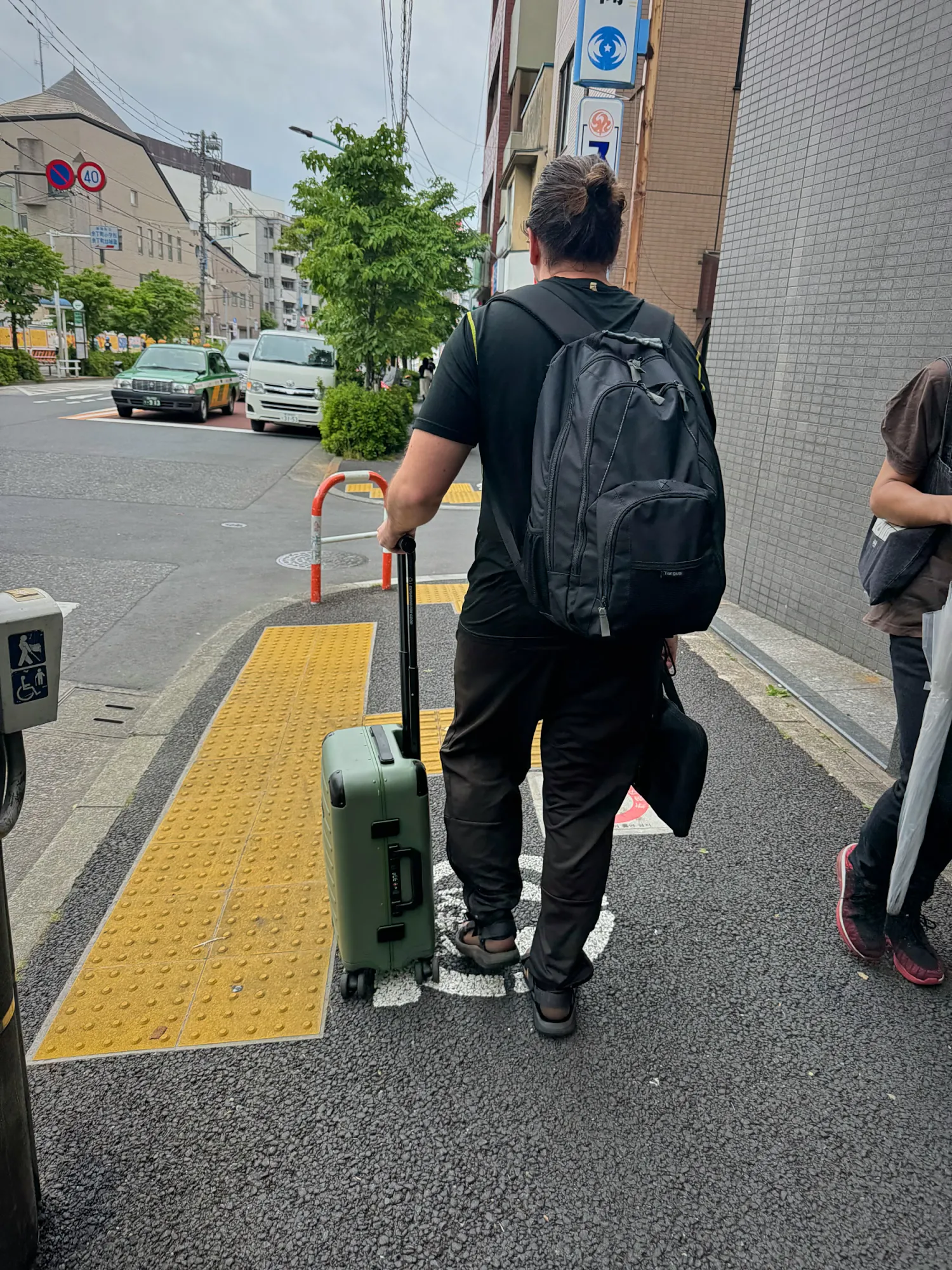
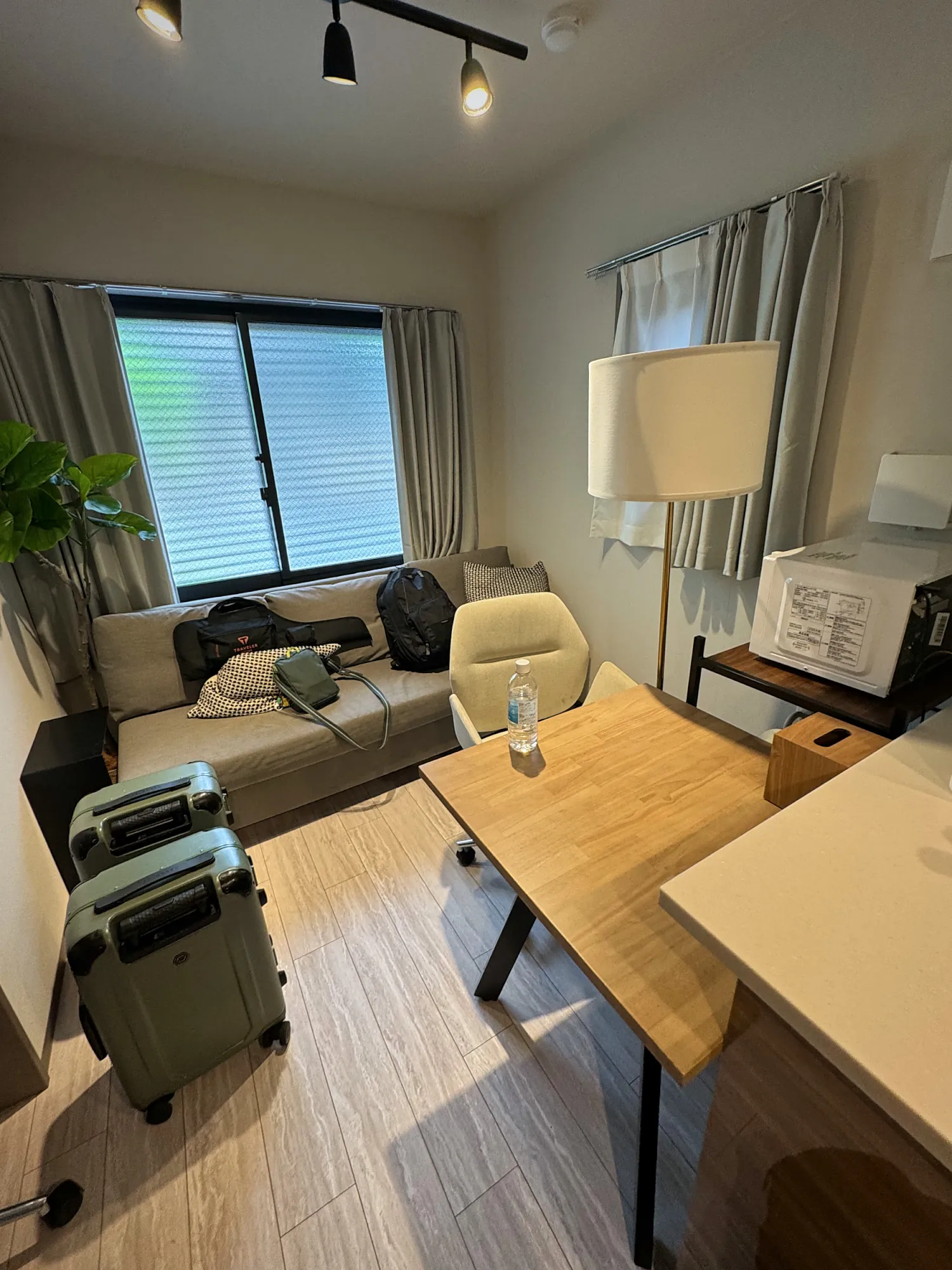
At Ueno we changed to the Toei Oedo Line at Ueno-okachimachi Station (E09), a short walk through the underground passages, and rode it to Wakamatsu-Kawada (E03), our home station in a quiet residential corner of Shinjuku. From there it was about a five-minute walk to the apartment.
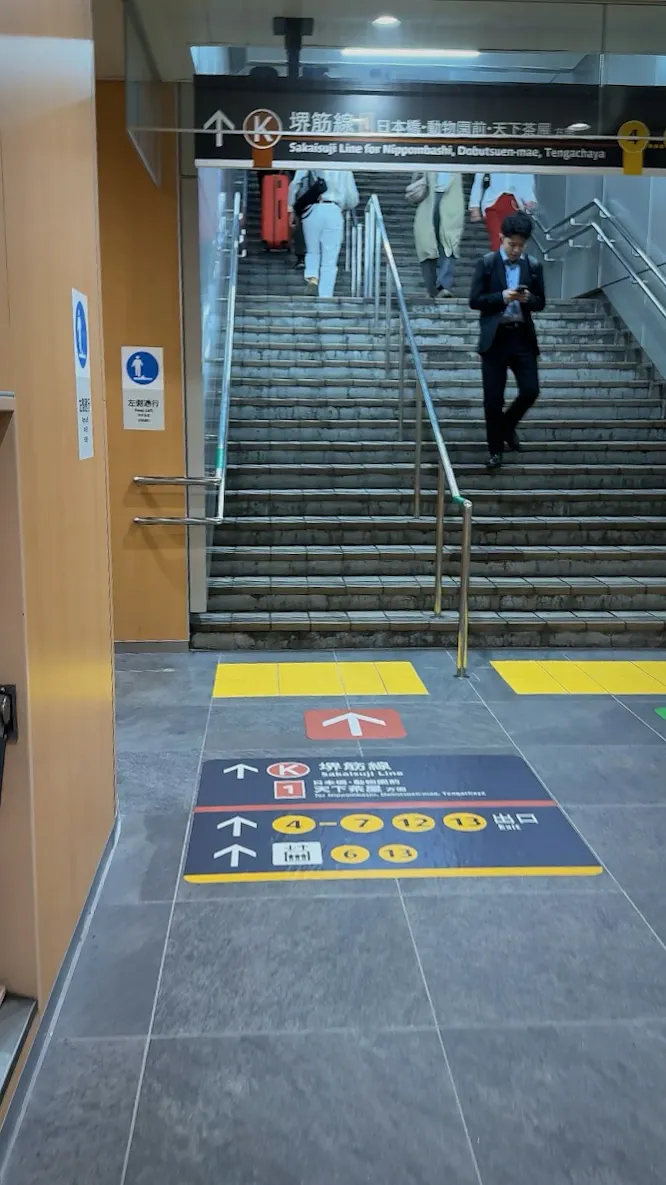
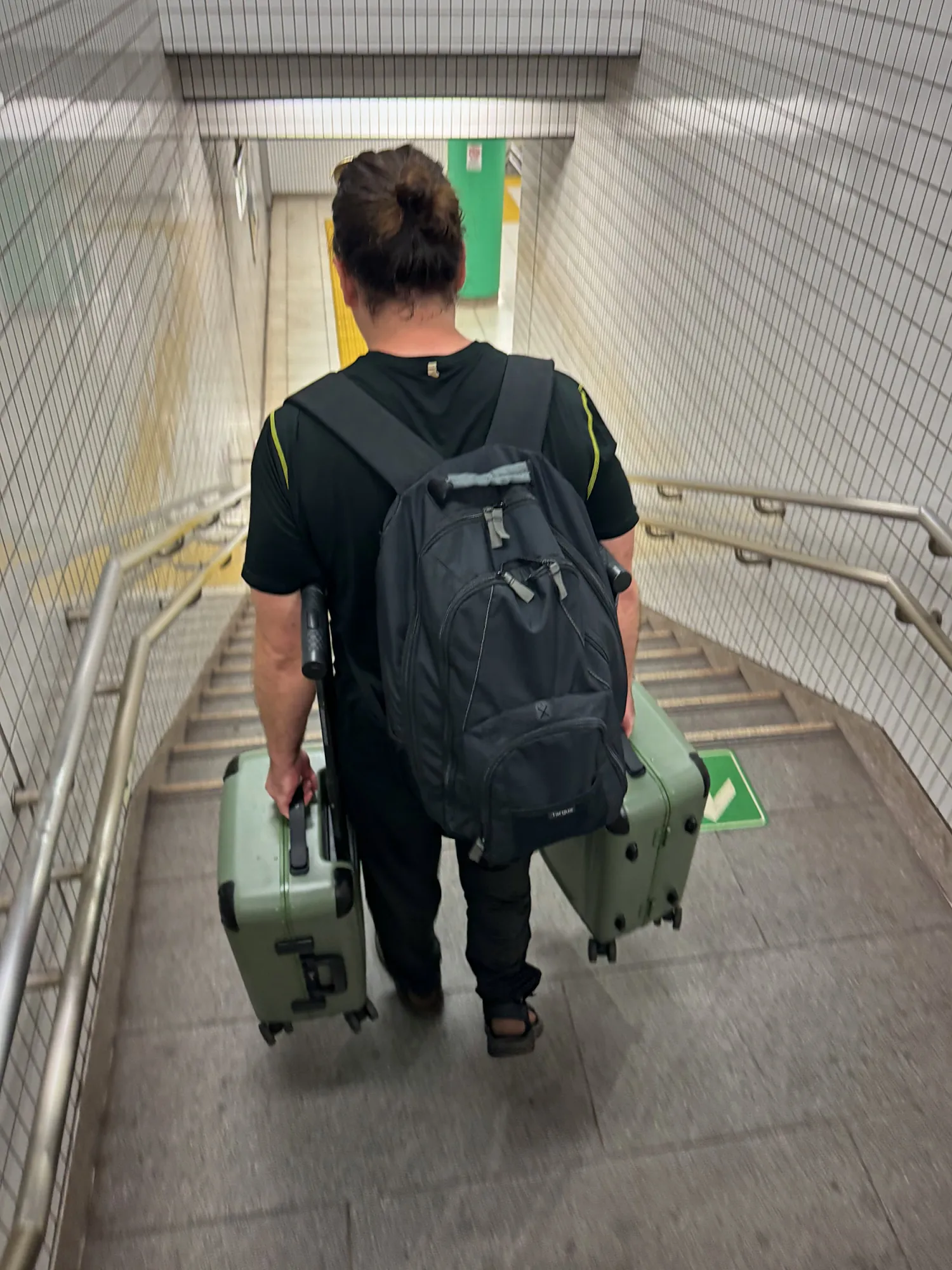
The regular train is not built for luggage. We had two carry-on suitcases, two backpacks, and our travel guitar, and we stood the whole way with our backpacks on our fronts and the suitcases in front of us. It wasn't comfortable. Then the subway means stairs: not every exit has an escalator or elevator, and we carried our suitcases down more than one flight. If you're traveling heavy, look for the elevator symbol on the station signs before you commit to an exit.
There's another way to do it: send your bags ahead. Luggage delivery counters at Narita (Japan's takkyubin, door-to-door parcel delivery) will take your suitcase to your hotel, usually arriving the next day, for a few thousand yen per bag. Keep what you need for the first night in your backpack, and the cheap train becomes a lot more comfortable.
The best tip I have for any train in Tokyo: put your destination into Apple Maps and choose public transit. It shows the exact fare for each leg, which is so helpful for knowing whether you need to top up your Suica card before you tap in. It also tells you which platform to stand on and which exit to take at the other end. Of all the apps on our phones in Tokyo, it's the one we used most. The rest of our list is in the best apps for Tokyo, from translation to taxis.
Skyliner or Narita Express?
This is the question everyone asks, and the honest answer depends on where your hotel is.
Pick the Narita Express if you're staying near Shinjuku Station itself, you have big bags, or you just want to sit down once and get off in Shinjuku. It runs straight from both Narita terminals to Shinjuku in about 1 hour 20 minutes, stopping at Tokyo, Shinagawa, and Shibuya on the way.3
Pick the Skyliner if you want the cheaper, faster train and don't mind one transfer, or your hotel is on a line you can reach from Ueno or Nippori, like ours on the Oedo Line. The Skyliner reaches Nippori in as little as 36 minutes and Keisei Ueno in about 40 to 45.2 From Nippori, the JR Yamanote Line takes you to Shinjuku in about 20 to 25 minutes for a few hundred yen.
Here's how the two compare as of October 2026:
| Skyliner | Narita Express (N'EX) | |
|---|---|---|
| Operator | Keisei | JR East |
| Goes to | Nippori and Keisei Ueno | Tokyo, Shinagawa, Shibuya, Shinjuku, and Yokohama |
| Stops at Shinjuku? | No, change at Nippori or Ueno | Yes |
| Adult one way | 2,580 yen (about $16) | 3,330 yen to Shinjuku (about $21) |
| Travel time | 36 to 45 minutes to Nippori or Ueno | About 1 hr 20 min to Shinjuku |
| Seats | All reserved | All reserved |
| Japan Rail Pass | Not covered | Covered |
| Visitor deal | About 2,300 yen one way online | 5,200 yen round trip for foreign passport holders |
The catch with both: they are not the same as the regular trains on the same tracks. The Skyliner and N'EX need a seat ticket on top of the basic fare, and every seat is reserved. The slower trains on the same lines (Keisei's Access Express and Limited Express) need no reservation and take a Suica card, which is exactly how we rode in, and exactly how people end up on the wrong train.
The Skyliner From Narita: Fares and Tickets
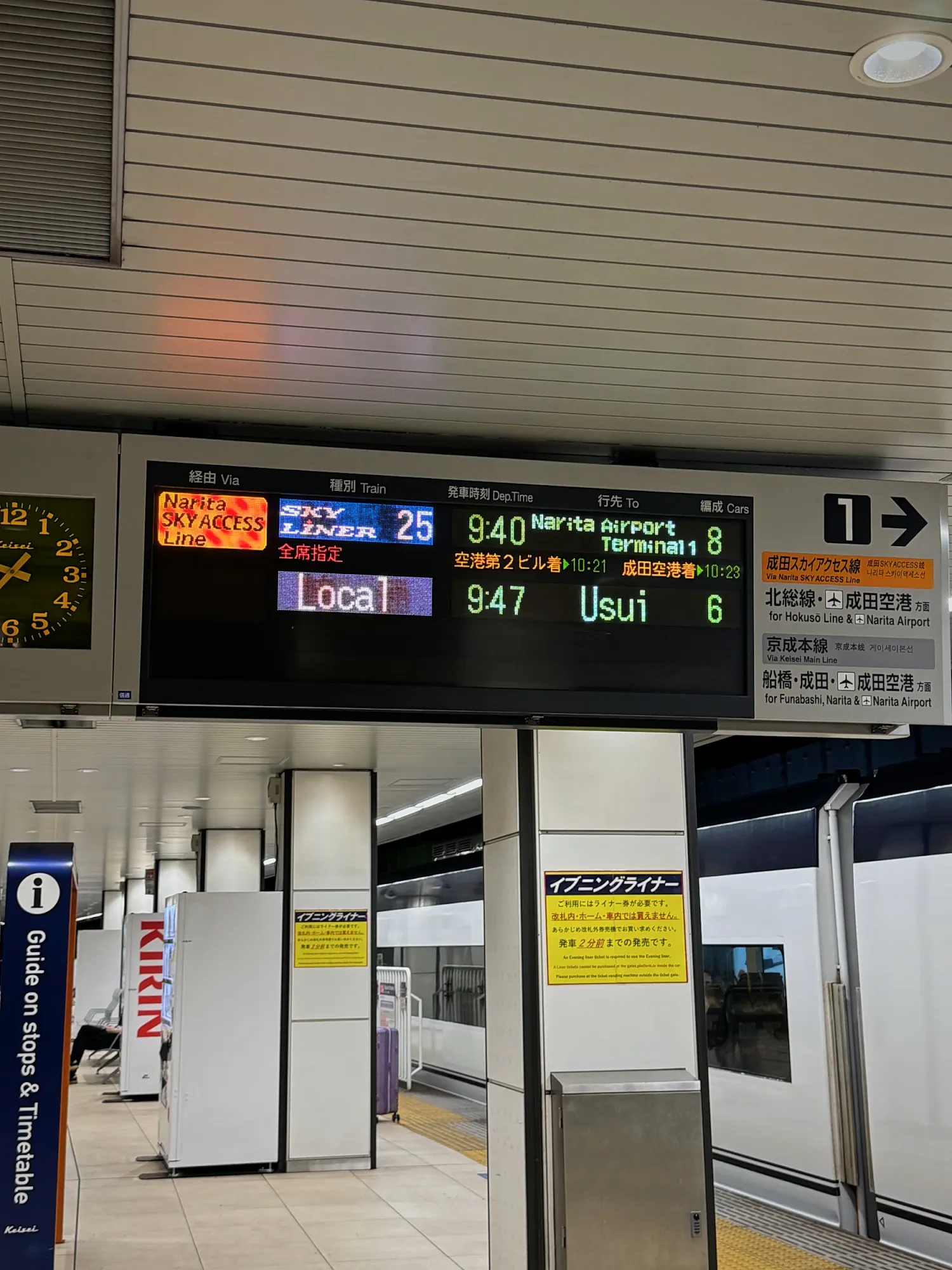
The Skyliner's adult fare is 2,580 yen (about $16) from either Narita terminal to Nippori or Ueno: a 1,280-yen boarding fare plus a 1,300-yen Skyliner ticket for your reserved seat.1 Trains run about every 20 minutes.2
You can buy tickets at the Skyliner counters and ticket machines in the airport station, or as a Skyliner e-ticket online, which opens a month ahead.2 Overseas visitors can also buy a discounted one-way Skyliner ticket through online resellers for about 2,300 yen (about $14.50), exchanged at the counter. A Japan Rail Pass doesn't cover the Skyliner.
Don't hop on without a seat ticket, either. Since December 2025, Keisei charges an extra 300 yen on board if you ride the Skyliner without one.8
The Narita Express to Shinjuku: Fares and Tickets
The Narita Express costs 3,330 yen (about $21) from Narita Airport to Shinjuku, made up of a 1,600-yen basic fare and a 1,730-yen limited express charge, after JR East's March 2026 fare change.3 Trains run every 30 to 60 minutes, so check the timetable rather than walking down to the platform and hoping.
If you hold a foreign passport, the N'EX Tokyo Round Trip Ticket is the deal to know: 5,200 yen (about $33) for a return trip, valid for 14 days.10 It works out much cheaper than two one-way tickets. Japan Rail Pass holders ride the N'EX for free and can reserve a seat at no extra cost.3
The N'EX does not stop at Ueno or Nippori.4 That matters for the trip back.
The Cheapest Way: Keisei's Regular Trains (What We Rode In)
If every yen counts, Keisei's regular trains run on the same tracks without the seat ticket. The Keisei Main Line Limited Express costs 1,030 yen (about $6.50) from Narita Airport to Nippori or Ueno and takes roughly 75 to 80 minutes.5 The Access Express on the Narita Sky Access line is faster (about an hour) and costs the same 1,280-yen boarding fare as the Skyliner, minus the seat ticket.1
Both take a Suica card and need no reservation, so you just tap in at the gate, which is what we did. You aren't guaranteed a seat, and there's no luggage rack worth the name. Add your JR or subway ride from Nippori or Ueno, and you're looking at about two hours to Shinjuku. It's a fine choice on the way in, when the only deadline is getting to bed. It's a risky one on the way out, which is the mistake we made.
Airport Limousine Bus and Taxis
The Airport Limousine Bus goes from both Narita terminals to Shinjuku for 3,600 yen (about $23) per adult, stopping at Shinjuku Station, the Shinjuku Expressway Bus Terminal (Busta Shinjuku), and the big hotels, including Keio Plaza, Hilton Tokyo, Hyatt Regency, and Park Hyatt.6 The timetable allows about 1 hour 45 minutes to 2 hours 10 minutes. It costs more than the train and takes longer, but it can drop you at your hotel's door, which is worth something after a long flight with a lot of luggage.
We don't recommend taxis from airports. Narita's taxis are official and use fixed fares, but they're expensive: 31,500 yen (about $200) to Shinjuku, plus expressway tolls, with a surcharge from 10 PM to 5 AM.7 If you'd rather skip trains entirely, for example with kids or a lot of bags, a pre-booked private airport transfer gives you a fixed price and a driver waiting in arrivals.
Going Back: Shinjuku to Narita (Don't Do What We Did)
When we left Tokyo, we wanted to do the cheaper option again. We rode the Oedo Line to Ueno-okachimachi, walked underground to Keisei Ueno, where the airport trains leave from, and thought we had time.
We didn't. I'd been using ChatGPT the whole way, sending it photos of where I was and asking where to go. I didn't even know how to get to the right train area, and it walked me through every step. Standing in the station, we did the research we should have done the night before and realized the slower train would make us miss our flight. So we ran back up, bought Skyliner tickets, and made the train with a few minutes to spare.
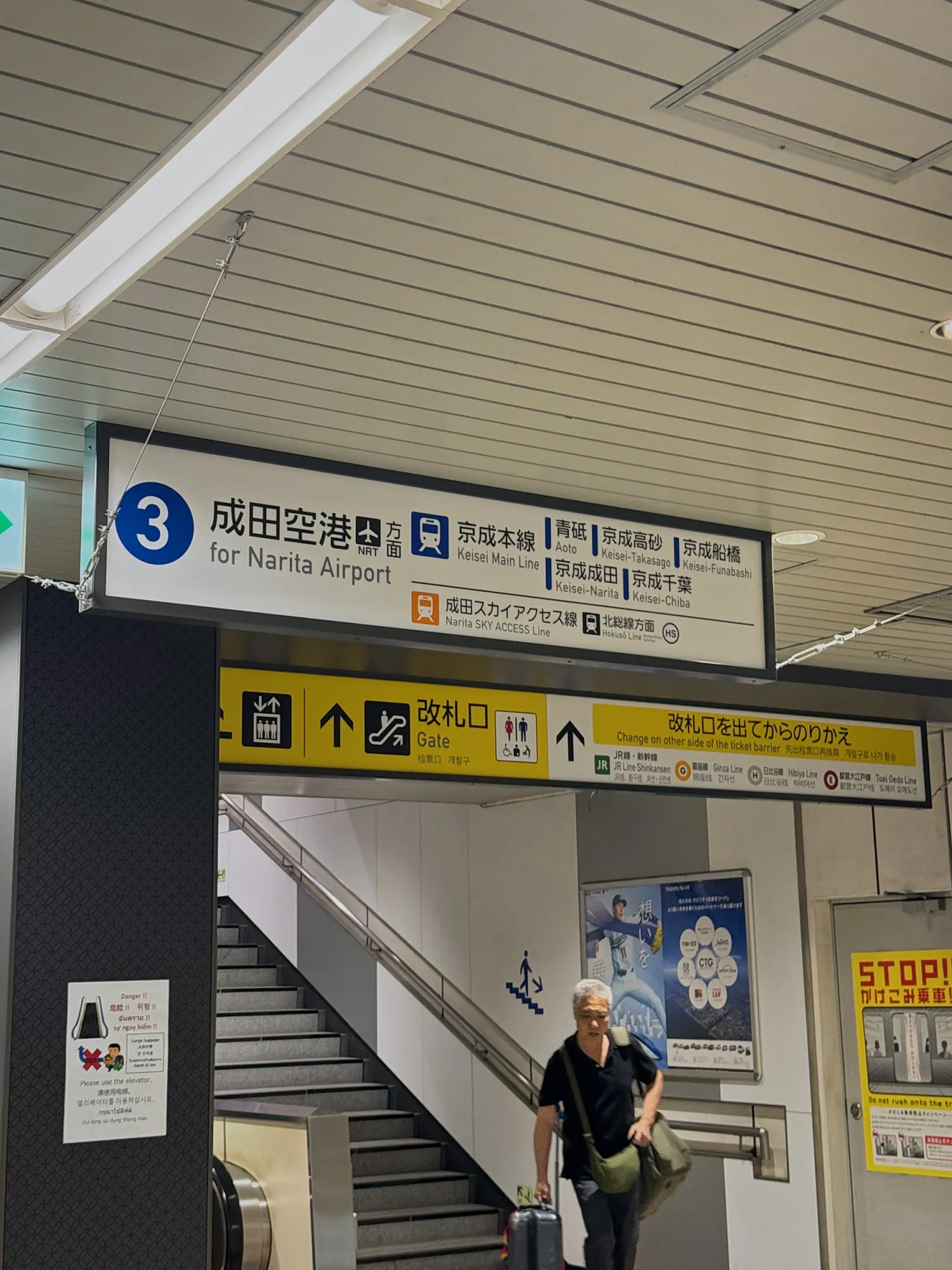
It worked out, but I wouldn't do it that way again. For arrival, I'd do the same thing again. For departure, I'd know ahead of time which train we were taking and just book the Skyliner right away. Here's what that looks like:
- Book the night before. Buy your Skyliner e-ticket or N'EX seat for a specific train, so you aren't deciding on the platform.
- Leave Shinjuku 3.5 to 4 hours before an international flight. The ride is 1.5 to 2 hours, and you still need to check in.
- Remember the N'EX doesn't stop at Ueno. If your plan B is the Narita Express, you need to be at Shinjuku, Shibuya, or Tokyo Station, not Ueno.4
- If you're staying near Shinjuku Station, the N'EX is the simplest way back. One train, no transfers, no stairs.
Tip
Check which Narita terminal your airline uses before you buy a ticket. Terminal 1 is the last stop and Terminal 2 is one stop before it, on both the Skyliner and the Narita Express.
Get Your Data Working Before You Land
The most important thing for getting from Narita to Shinjuku isn't a ticket. It's data. Maps, fares, and Suica top-ups all need it from the arrivals hall on, and on the way out, ChatGPT on my phone is what got us to the right train in time. (In Osaka in 2025, it even told us to get off an express we'd boarded without a ticket. That would cost an extra 300 yen on the Skyliner today.)
This trip we bought SoftBank mobile data at Narita Airport, and it cost $105.07 for the two of us. The speed was good and there were no issues, but it's not the cheapest way and you don't save any hassle. Next time we'd just get an Airalo eSIM before you land, the same thing we use almost everywhere. Install it before your flight and it works the moment you switch off airplane mode.
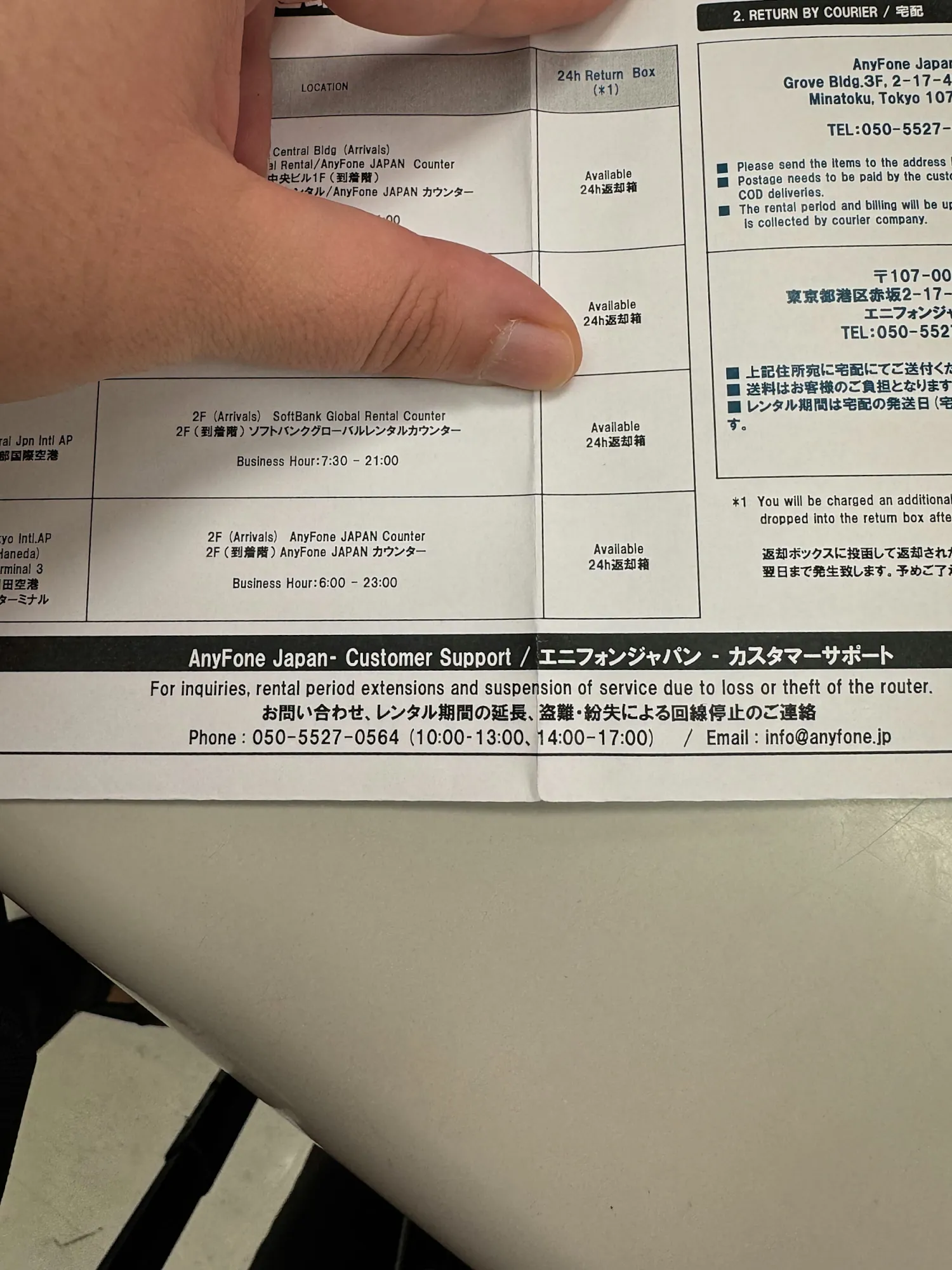
Two more things to set up before you fly: register on Visit Japan Web, Japan's free official site that gives you one QR code for immigration and customs, and add a Suica card to Apple Wallet so you can tap through the gates on the subway and the slower Keisei trains. Not every foreign card will top it up, so check which cards work in Japan before you leave home.
Got a Layover at Narita? Eat Before You Fly
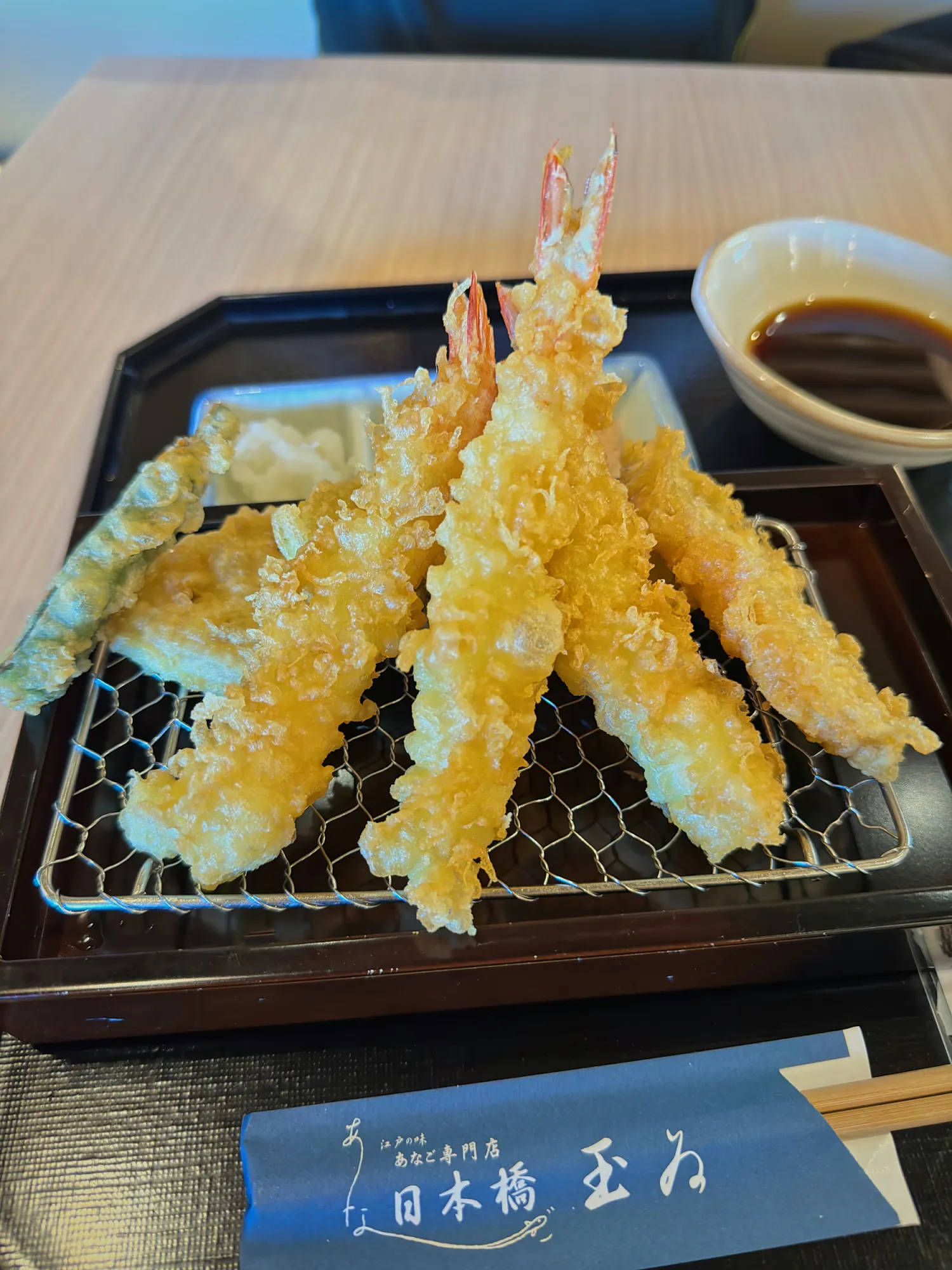
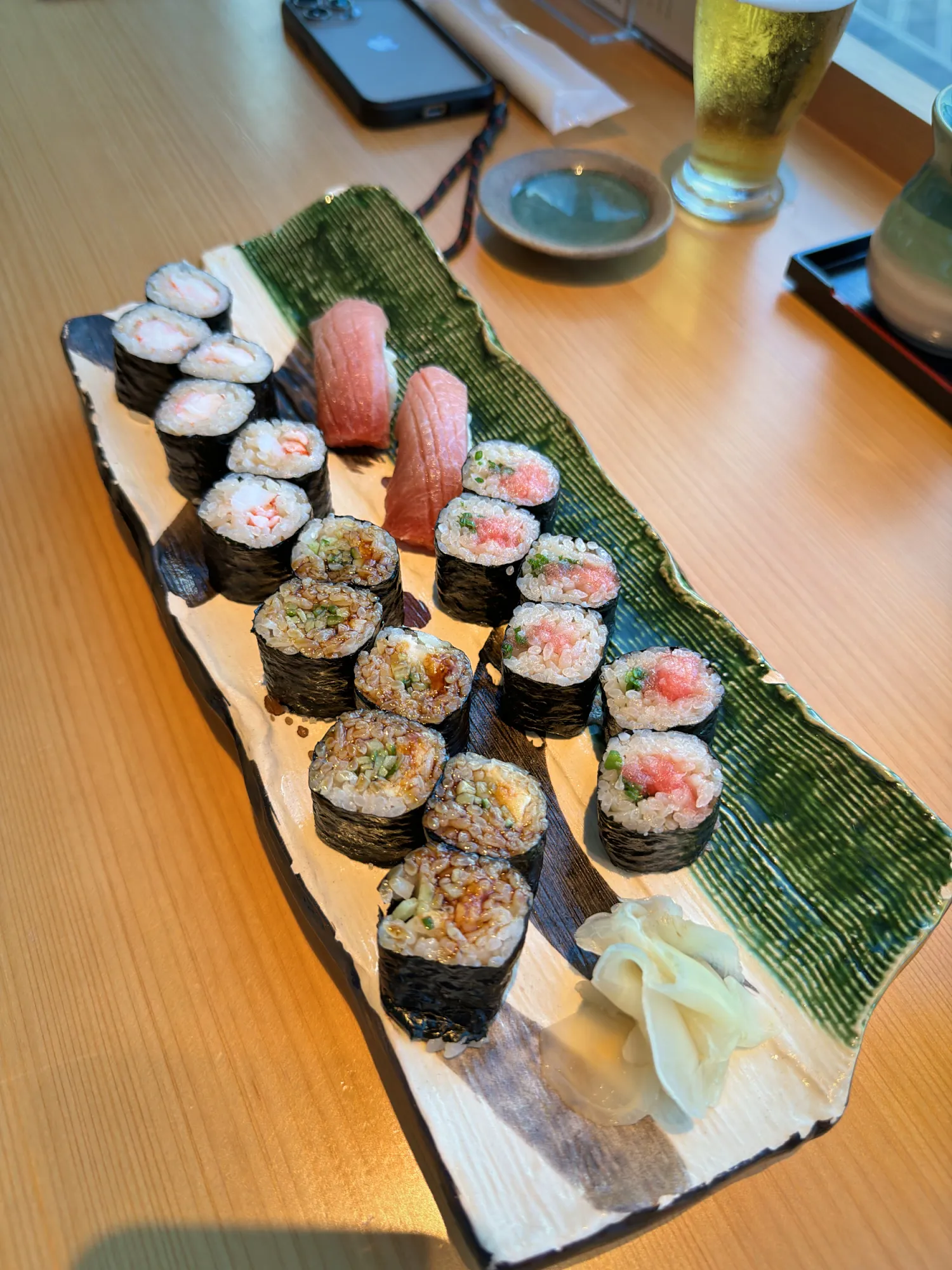
Our first meal in Japan ever wasn't in Tokyo at all. It was at Narita, on a layover on our way to Jakarta, and it's still one of our most memorable. We had shrimp tempura from Tempura Nihonbashi Tamai, an anago (saltwater eel) tempura specialist in the Japan Food Hall in Terminal 2, plus a platter of sushi rolls.11 If you're flying out of Narita, arrive early enough to eat airside. Airport food in Japan is a real meal, not a consolation prize. That goes for the chains in the city too: we even gave McDonald's in Japan a 10 out of 10.
Narita vs Haneda: Which Airport Is Better for Shinjuku?
If you have a choice, Haneda is much closer to Shinjuku: it sits on Tokyo Bay, about 15 to 20 km from the city center, and the Airport Limousine Bus from Haneda to Shinjuku costs 1,400 yen (about $9).9 Narita is about 60 km away. Our flight from Kuala Lumpur landed at Narita, and plenty of international flights do, so don't pay much more for a Haneda ticket just to save the ride.
Our Pick
Coming in, we'd ride Keisei's regular train with Suica again: it's the cheapest way, and from Ueno the Oedo Line took us right to our door. If standing for an hour with all your bags sounds worse than spending about $8 to $10 more, take the Skyliner, and if your hotel is next to Shinjuku Station, the Narita Express saves you the transfer. Going back, book the Skyliner or N'EX the night before. Once you're settled, start your first morning with a traditional Japanese breakfast at Yayoiken for under $5. Need a place near the station? Here's where to compare hotels near Shinjuku Station. Staying longer? Here's what living in Shinjuku was like for our month.
Next Steps for Your Tokyo Trip
- Tokyo Metro 101: how to ride the subway once you're in the city.
- The best things to do in Shinjuku: the Godzilla head, Golden Gai, a free city view, and a route for one full day.
- Japanese breakfast in Tokyo: a real Japanese breakfast at Yayoiken for under $5.
- McDonald's in Japan: the 15 menu items we tried, and what's different.
- How to get around Tokyo: trains, walking, and the one time we took a taxi.
- Things to know before visiting Tokyo: everything else we wish we'd known on day one.
Bernie & Cream@bernieandcream
Follow along on Facebook
Bernie & Cream@bernieandcream
Follow along on Threads
Bernie & Cream@bernieandcream
Watch us on TikTok
Bernie & Cream@bernieandcream
Follow along on X
Bernie & Cream@BernieAndCream