For a country famous for cash, Japan barely asked us for any. In a month in Tokyo, our phones paid for the trains, the beef bowls, the sushi, and the grocery runs. I can count the times we handed over yen on one hand.
Heads up: some links in this guide are affiliate links. If you book or buy through them, we may earn a commission at no extra cost to you.
In this guide 10 sections
That isn't what we expected. Everything we'd read said to bring a stack of yen. On our first trip, to Osaka, it looked true: the street food stalls around Dotonbori wanted cash, and we'd arrived without any. In Tokyo, even the kiosk at Tenya that turned down our credit card took Suica on our phones. That set the pattern for the whole month.
Here's how we actually paid, the one card that made it all work, where yen still matters, and why you never leave a tip.
Cash or Card in Japan? The Quick Answer
Card, plus Suica on your phone. For a whole month in Tokyo, those two covered nearly everything, from chain restaurants and kiosks to trains and the grocery store. Keep a small amount of yen for street food stalls and the occasional place that takes only cash or a transit card. Always pay in yen, never US dollars. And don't tip: it isn't done in Japan.
💡 Paying in Japan, in five lines:
- Chain restaurants, kiosks, convenience stores, supermarkets: card or Suica
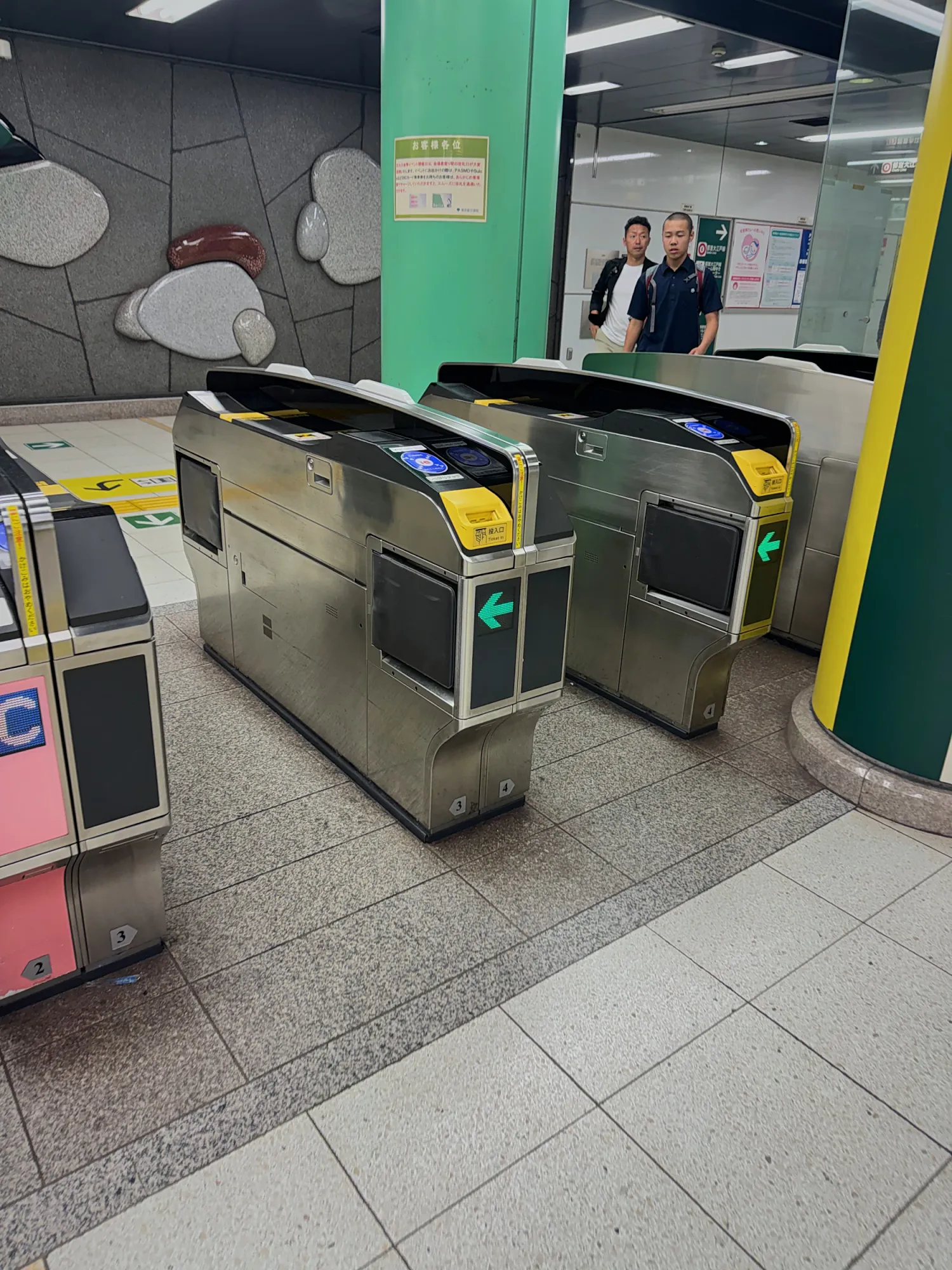
- Trains and buses: Suica (ours lived in Apple Wallet)
- Street food stalls and small shops: carry some yen
- Getting cash: a 7-Eleven ATM
- Tipping: never
Is Japan Cashless? Closer Than You Think
Japan isn't fully cashless, but it's a long way from the cash-only country of travel forums. Japan's Ministry of Economy, Trade and Industry (METI) says 58% of payments in Japan were cashless in 2025, up from 42.8% the year before.2
That matched what we saw. We ate at the big chains most of the month, and they all took card. The exception was the small, independent kind of place: at Donsuke, a neighborhood bakery near our apartment in Shinjuku, we paid for our bread in cash. Honestly, I think "Japan is cash heavy" is a tourist tip that has outlived itself.
Where it does hold up is the touristy street food. In Osaka, the stalls around Dotonbori felt like they all needed cash. If you're planning a night of street snacks, bring yen. If you're eating at restaurants, you'll barely touch it.
 Bernie & Cream@bernieandcream
Follow along on Facebook
Bernie & Cream@bernieandcream
Follow along on Instagram
Bernie & Cream@bernieandcream
Follow along on Threads
Bernie & Cream@bernieandcream
Watch us on TikTok
Bernie & Cream@bernieandcream
Follow along on X
Bernie & Cream@BernieAndCream


Suica: The Card That Does the Job of Cash
The real reason we barely needed yen was Suica. Suica is a rechargeable IC card (a tap card) made for Tokyo's trains, but you can also pay with it at a lot of shops, vending machines, and restaurant kiosks. When a place says "IC cards", Suica counts.
We kept ours in Apple Wallet on our iPhones. Topping up takes a few seconds in the Wallet app, and Apple Maps shows the exact fare for each trip, so you know before you leave whether you need to add money. A ride from our station in Shinjuku to Ueno was 220 yen.
Here's the catch we learned the hard way. Adding money to Suica in Apple Wallet with a foreign card is hit or miss. Of all our cards, our Capital One Savor was the only one that worked. On our Osaka trip only Cream had that card, so we ran two different transit cards between us: he'd tap in with one, and I'd use the other. Now we both carry the Capital One, and topping up is easy.
So test your cards before you fly. If none of them will top up Suica, JR East's Welcome Suica Mobile app is built for overseas visitors and puts a Suica on your iPhone without a trip to a ticket office.4 We haven't used it ourselves. Once Suica works, the trains are the easy part, and how to get around Tokyo shows how far one tap gets you.

Kiosks and Ticket Machines: Card, Suica, or Cash
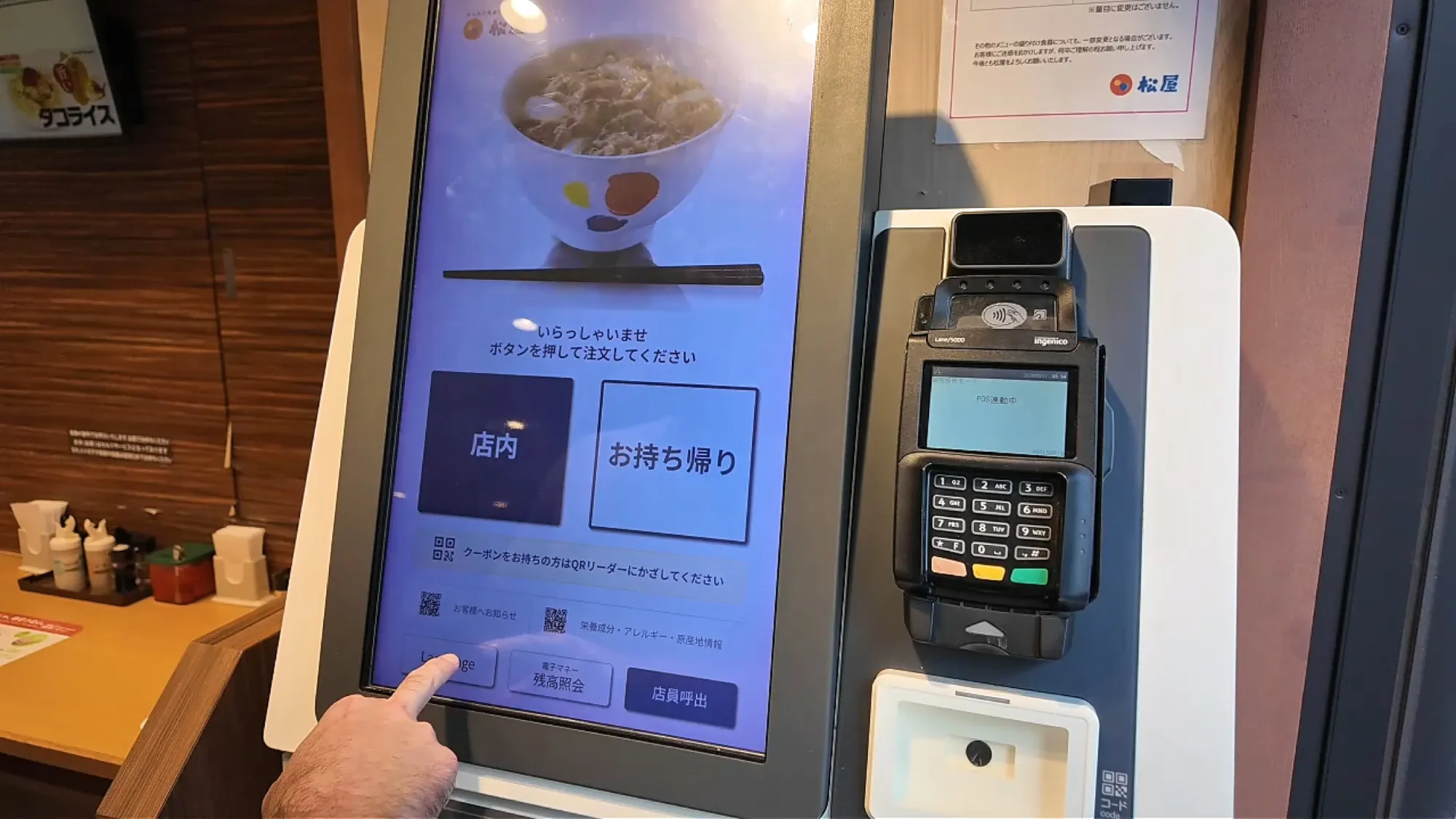
A lot of Japanese restaurants have you order and pay at a machine before you sit down. Most of the ones we used took a card or Suica, and a few took only one or the other. It's the one place where how you pay really matters, so read the payment sign before you order.
- Matsuya: the kiosk took a card or Suica. Gyudon for two came to about $7.
- Ichiran: the kiosk outside took our credit card.
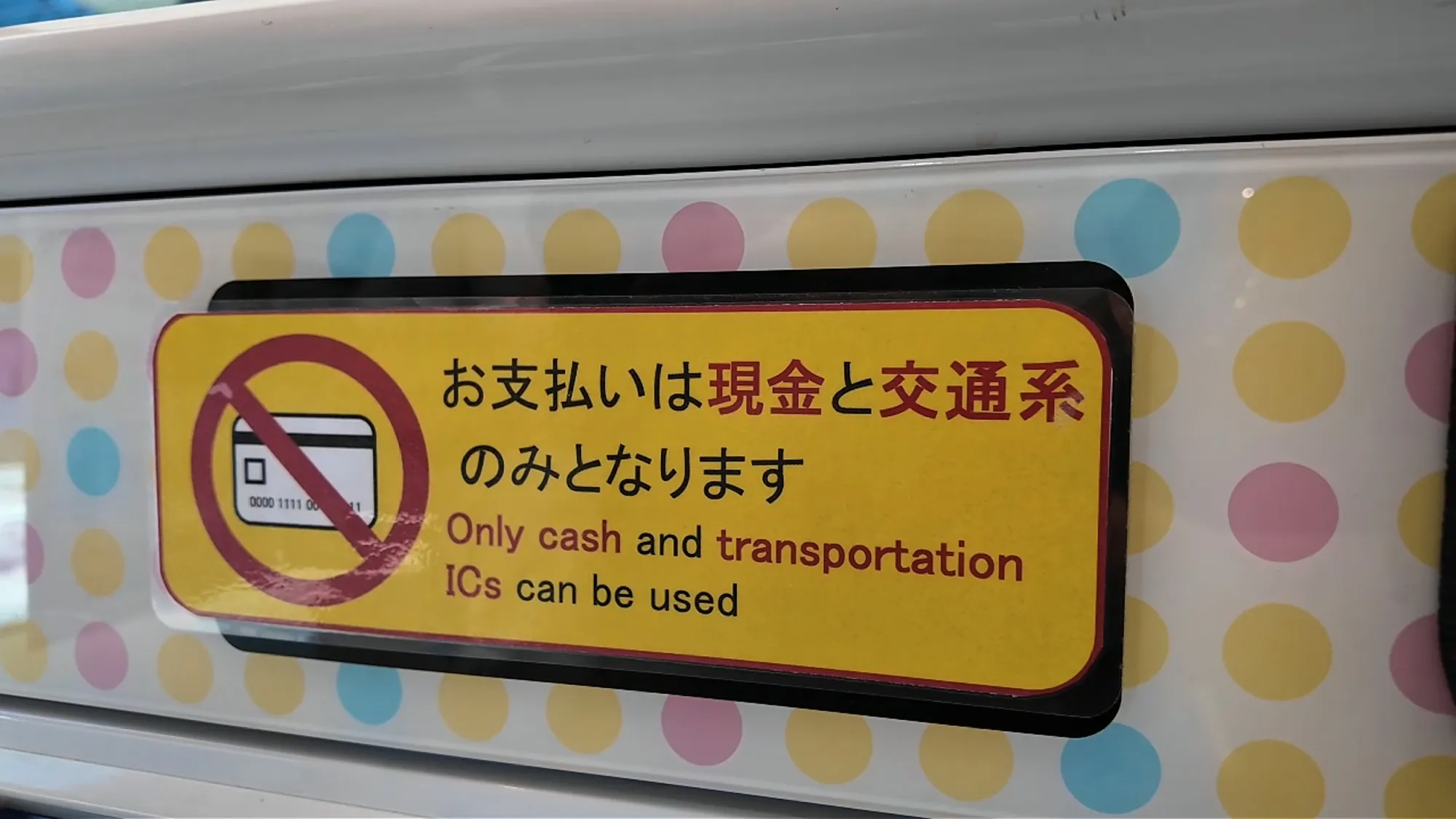
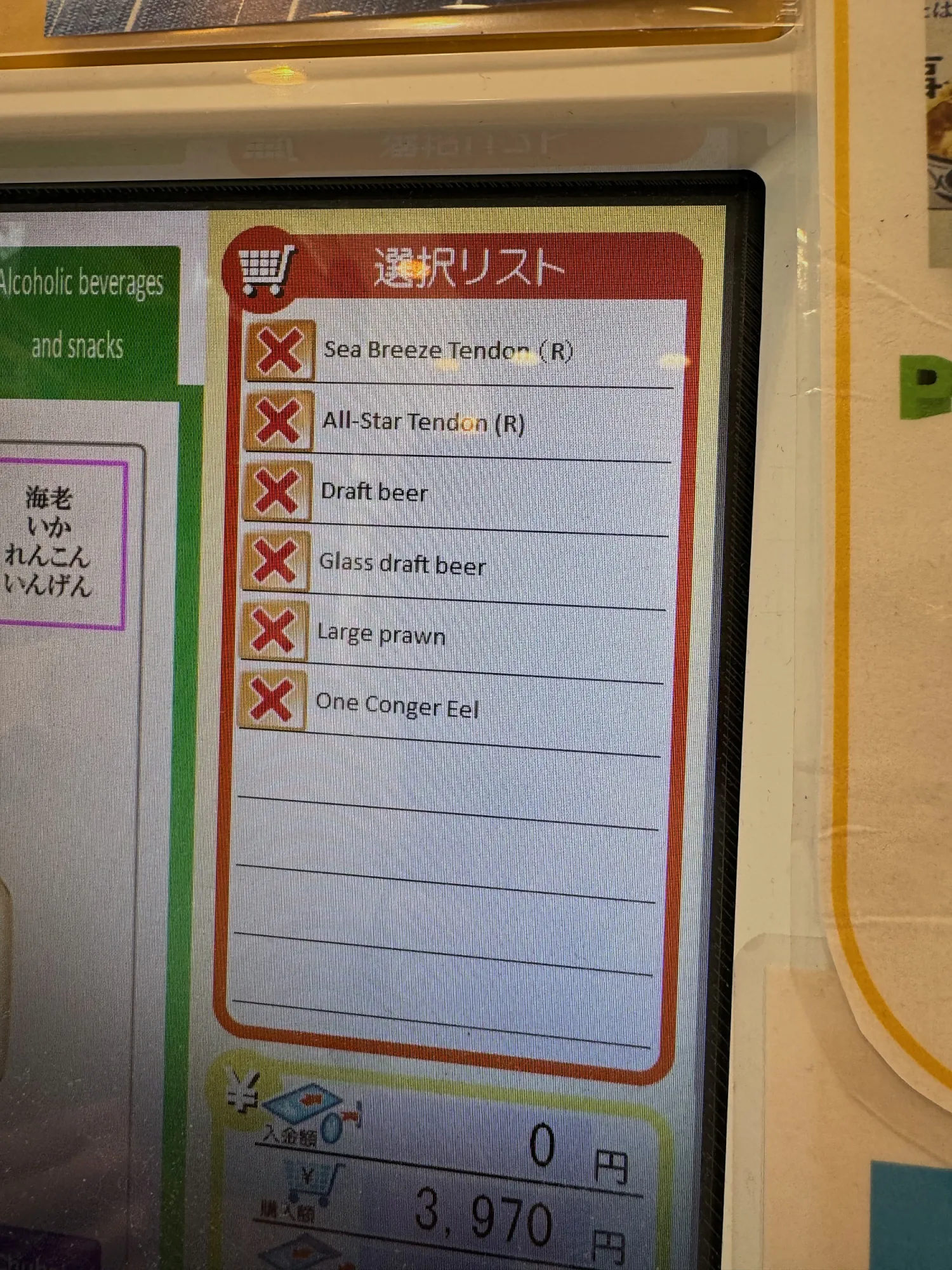
- Tempura Tendon Tenya: cash or transit IC cards only, no credit cards. We paid 3,970 yen for two with Suica on our phones.
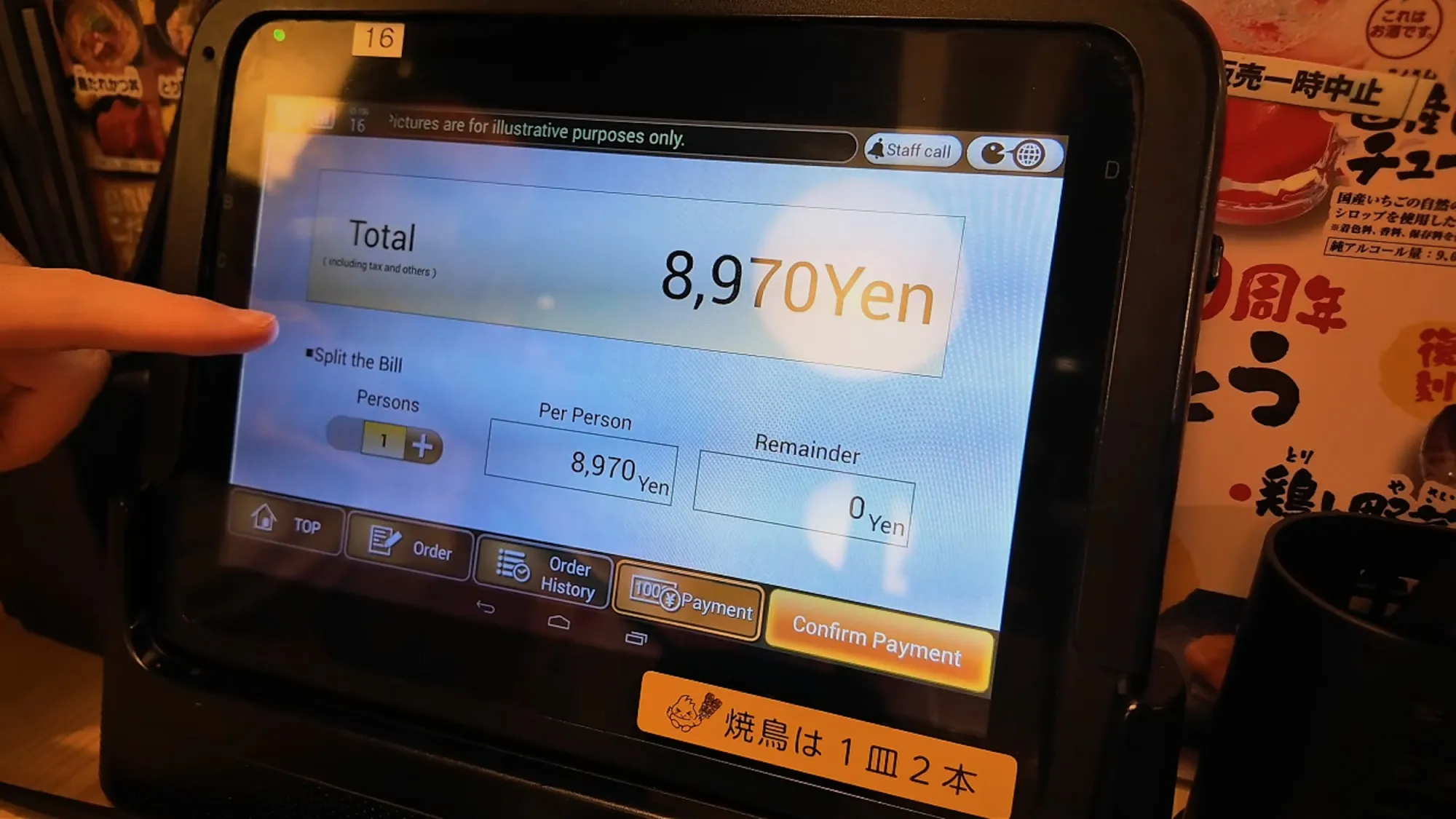
- Torikizoku: we ordered and paid on a tablet at the table, and it can split the bill for you.

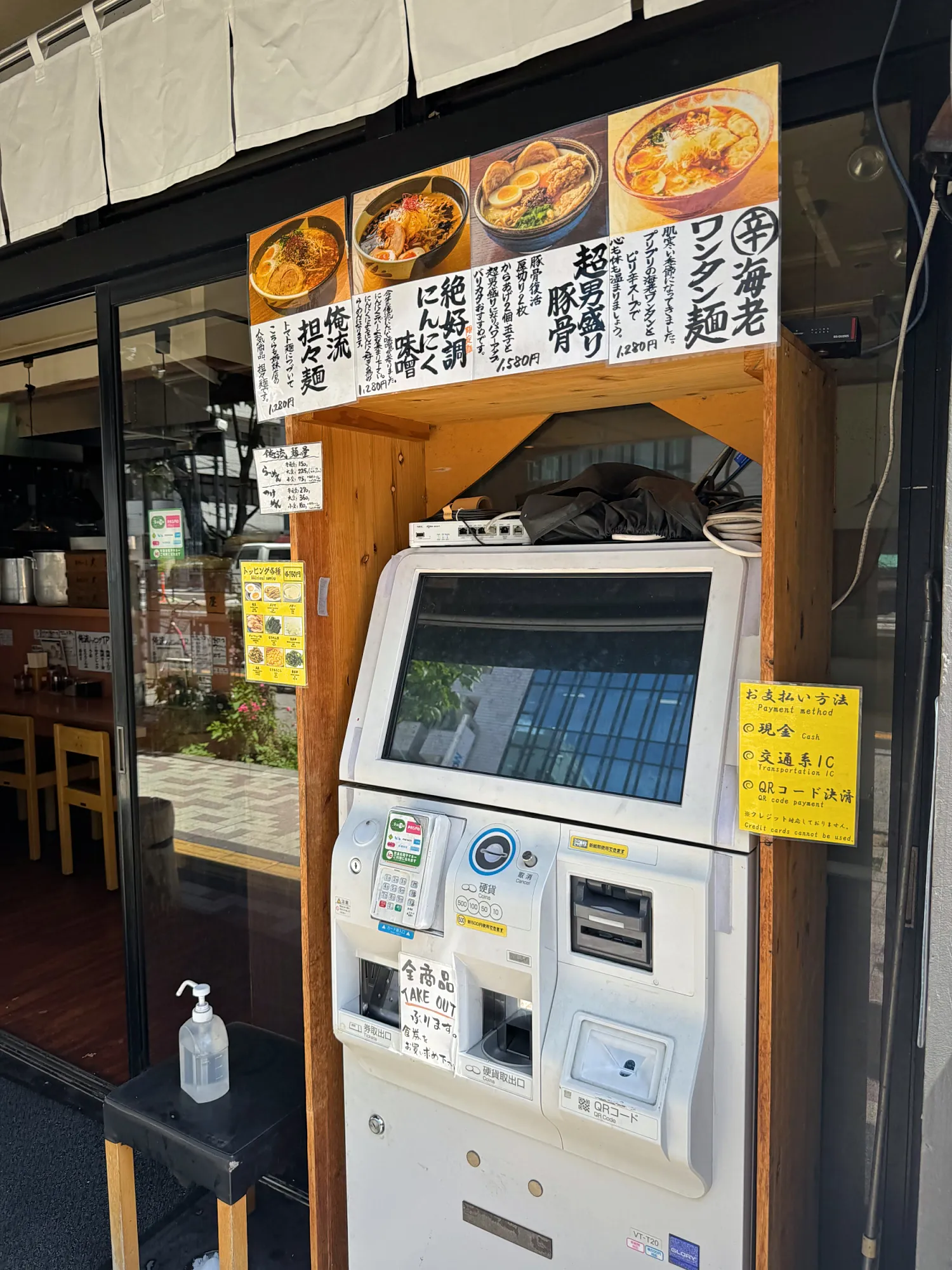
Older ramen shops often have a ticket machine by the door. Some take only cash, and newer ones list the ways to pay on a sticker beside the machine. Our first ticket machine felt like a test, but it isn't hard, and how to order food in Japan shows every kind of kiosk and tablet we used.
When You Need Cash in Japan
You'll want some yen for:
- Street food stalls and food markets, like the stalls around Dotonbori in Osaka
- Small, family-run restaurants and shops, especially older ramen shops with cash-only ticket machines
- The odd chain that takes no cards, like Tenya, where cash or a transit card are the only options
How Much Cash to Bring to Japan
You don't need to land with a stack of yen. A small amount for stalls and small shops is plenty if you're also carrying a card and Suica, and you can top up at a 7-Eleven ATM whenever you run low.
ATMs in Japan: Use 7-Eleven
The easiest place to get cash in Japan is a 7-Eleven. The ATMs inside, run by Seven Bank, accept most foreign cards, including Visa, Mastercard, American Express, JCB, and UnionPay, and you can withdraw yen day or night.3
The ATM shows its fee on screen before you confirm. Whether your own bank adds a fee on top depends on your account, so check your bank's international fees before you fly.
The Card We Used, and Always Pay in Yen
Our main travel card is the Capital One Savor, with a Bank of America travel card as backup. Neither charges a foreign transaction fee. Whatever card you bring, make sure it doesn't, and bring the physical card as well as your phone.
When a card machine or ATM offers to charge you in US dollars, say no. Always pick yen. If you choose dollars, the merchant's side does the conversion at its own rate, which is almost always worse than the rate your card network gives you.6
💡 Data first: Suica top-ups, Apple Maps fares, and booking a taxi in Uber all need data the moment you land. Get an Airalo eSIM before you fly and you can sort your train fare from the arrivals hall.
Why the Price Tag Doesn't Match the Register
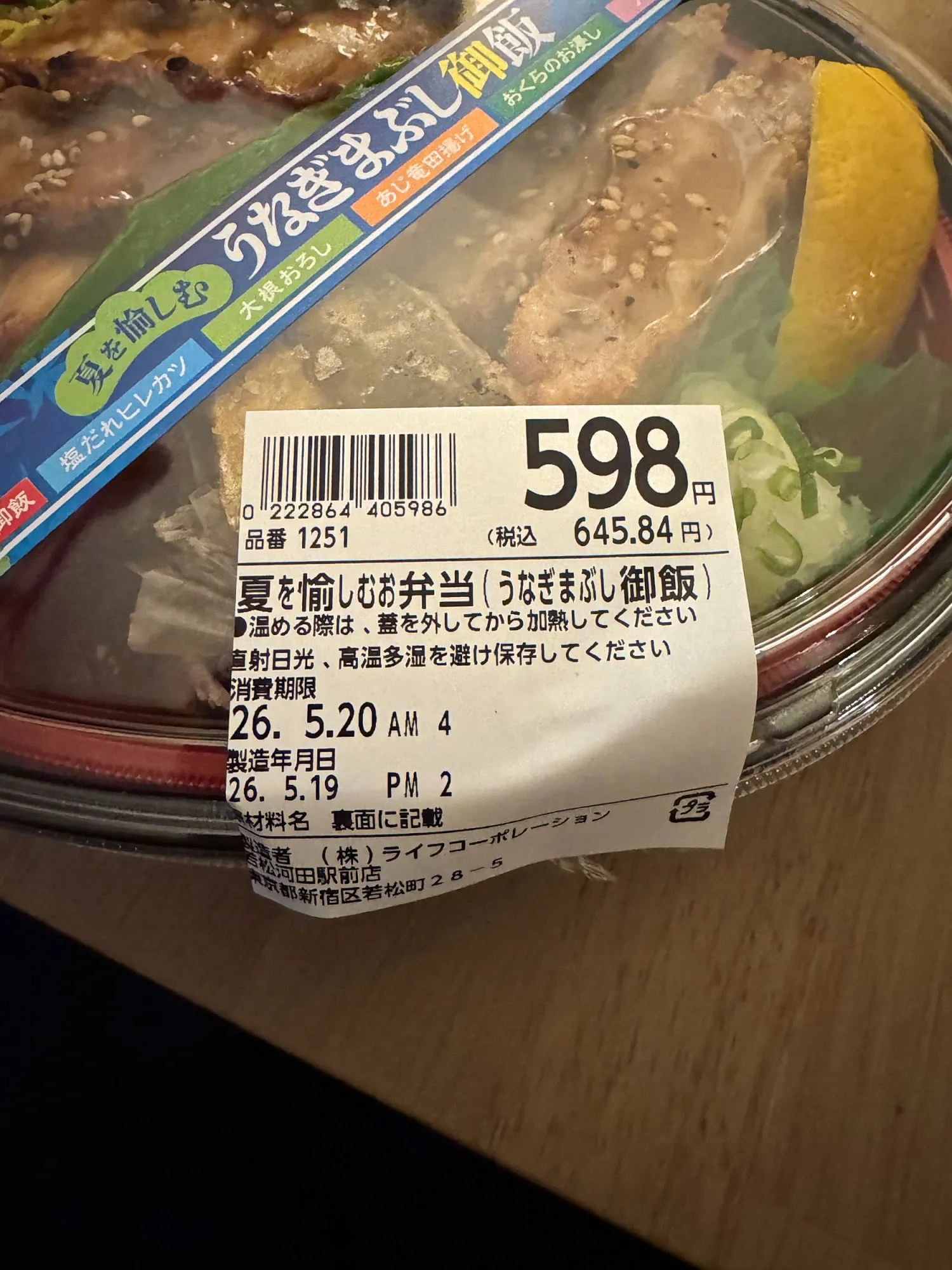
At our local supermarket, a Life store near our apartment, the big number on a bento label wasn't what we paid. Many Japanese stores print the price before tax large and the tax-included price small underneath. A 598 yen eel bento was really 645.84 yen.
Japan's consumption tax is 10%, with a reduced 8% rate on food and non-alcoholic drinks that you take away. Eating in a restaurant counts as dining out, so it's taxed at 10%.5 The tax-included number is the one to look at.
Do You Tip in Japan?
No, and trying to can come across as rude. We never tipped once in our month in Tokyo.
Japan's own tourism board says it's not common to tip in bars, cafes, restaurants, taxis, or hotels.1 The exception is a private guide or interpreter used to overseas customs, who may accept a tip given discreetly in an envelope. Even then, it isn't expected.
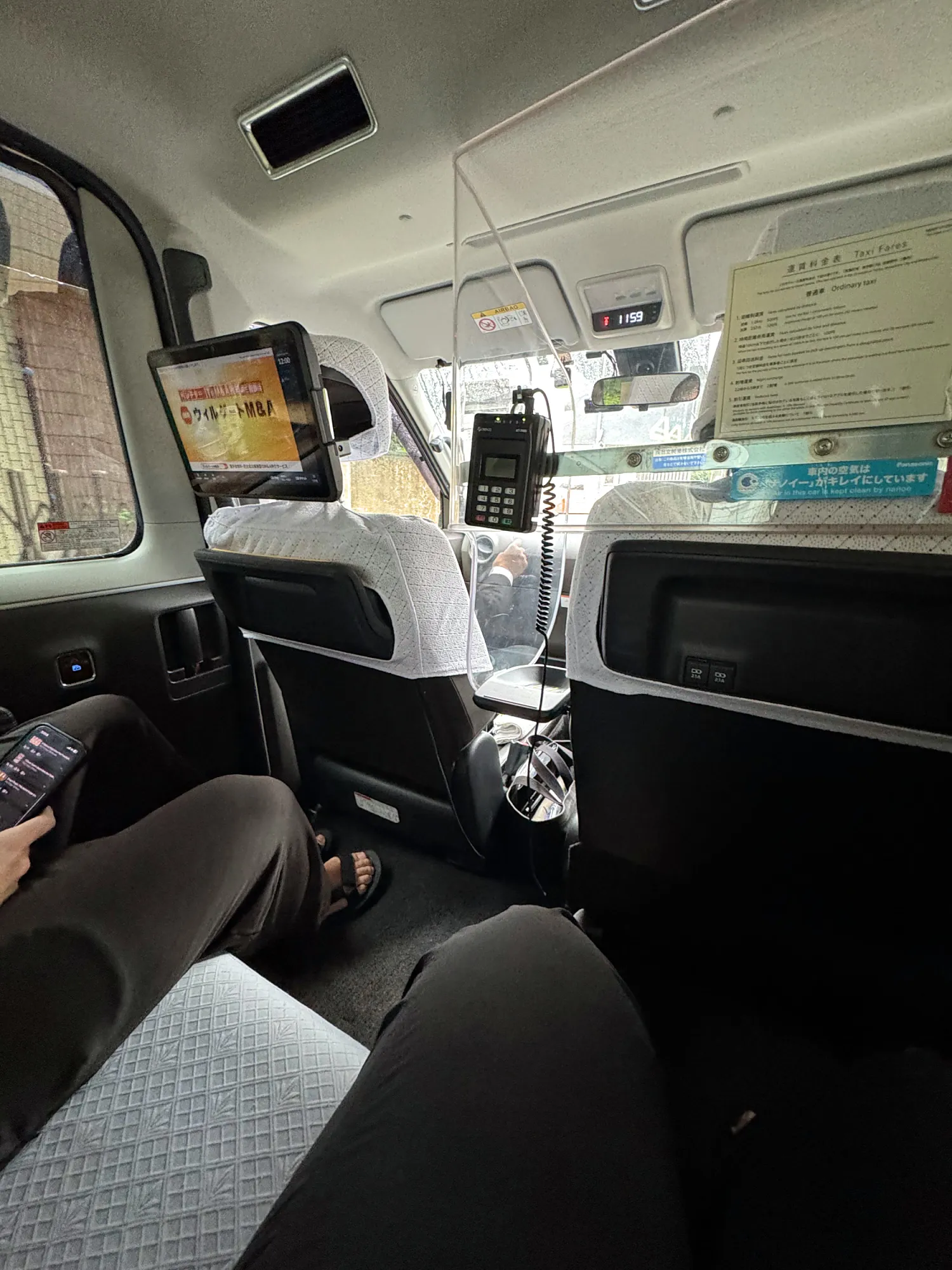
That includes taxis. Our one ride was a dash through the rain to make a Sushiro booking, and because I'd ordered it on Uber, the fare was charged in the app. There was no cash to hand over and no tip to wonder about when the door swung open.
The Closest Thing to a Service Charge: Otoshi
Japan doesn't add tips, but some izakaya (Japanese pubs) add a small charge for a starter dish called otoshi, served when you sit down whether you ordered it or not.7 It works more like a cover charge than a tip, so don't be surprised by it on the bill, and don't leave anything extra on top.
Our Verdict on Money in Japan
Bring a no-fee card, set up Suica on your phone before you land, and keep a little yen for street food. That covers nearly everything Tokyo throws at you. The only real ways to lose money are pressing USD at a card machine and leaving a tip that nobody wants.
Next Steps for Your Tokyo Trip
- Things to know before visiting Tokyo, the rest of our first-timer tips
Bernie & Cream@bernieandcream
Follow along on Facebook
Bernie & Cream@bernieandcream
Follow along on Instagram
Bernie & Cream@bernieandcream
Follow along on Threads
Bernie & Cream@bernieandcream
Watch us on TikTok
Bernie & Cream@bernieandcream
Follow along on X
Bernie & Cream@BernieAndCream