The first time you look at a Tokyo subway map, it looks impossible. Thirteen lines, hundreds of stations, and signs you can't read. The good news is that you can ignore most of it. Follow the numbers and you can get anywhere.
Heads up: some links in this guide are affiliate links. If you book or buy through them, we may earn a commission at no extra cost to you.
In this guide 9 sections
On our first Japan trip, in Osaka, we got lost every time we left Namba Station. We took the first exit we saw and came up with no idea where we were. I didn't know Apple Maps tells you the best exit. By the end of a month riding the subway in Tokyo, I'd figured it out, and I took photos of every sign so you know exactly what to look for.
How to Use the Tokyo Metro: The Quick Answer
Pay with Suica on your phone, then follow three numbers: your platform, your stop, and your exit.
- Before you go: look up your trip in Apple Maps or Google Maps. It gives you the platform number, the number of stops, and the exit number.
- At the gate: tap your phone to go in.
- On the platform: go to the platform number the app named.
- On the train: watch the station numbers and count down to your stop.
- At your stop: follow the yellow signs for your exit number before you leave the platform.
- On the way out: tap your phone again. The fare comes off automatically.
Ignore the Japanese characters. The numbers are all you need.
How to Ride the Tokyo Subway, Step by Step
1. Look Up Your Trip // Platform, Stops, and Exit
Put your destination into Apple Maps before you leave. Google Maps is a good backup. The app tells you:
- which station to start from
- your platform number
- how many stops to ride
- the fare
- which exit to take at the other end
- sometimes even which car to board
The catch is that the platform and the exit are in small print. Find both before you go underground. I missed the exit completely on our first trip to Japan.
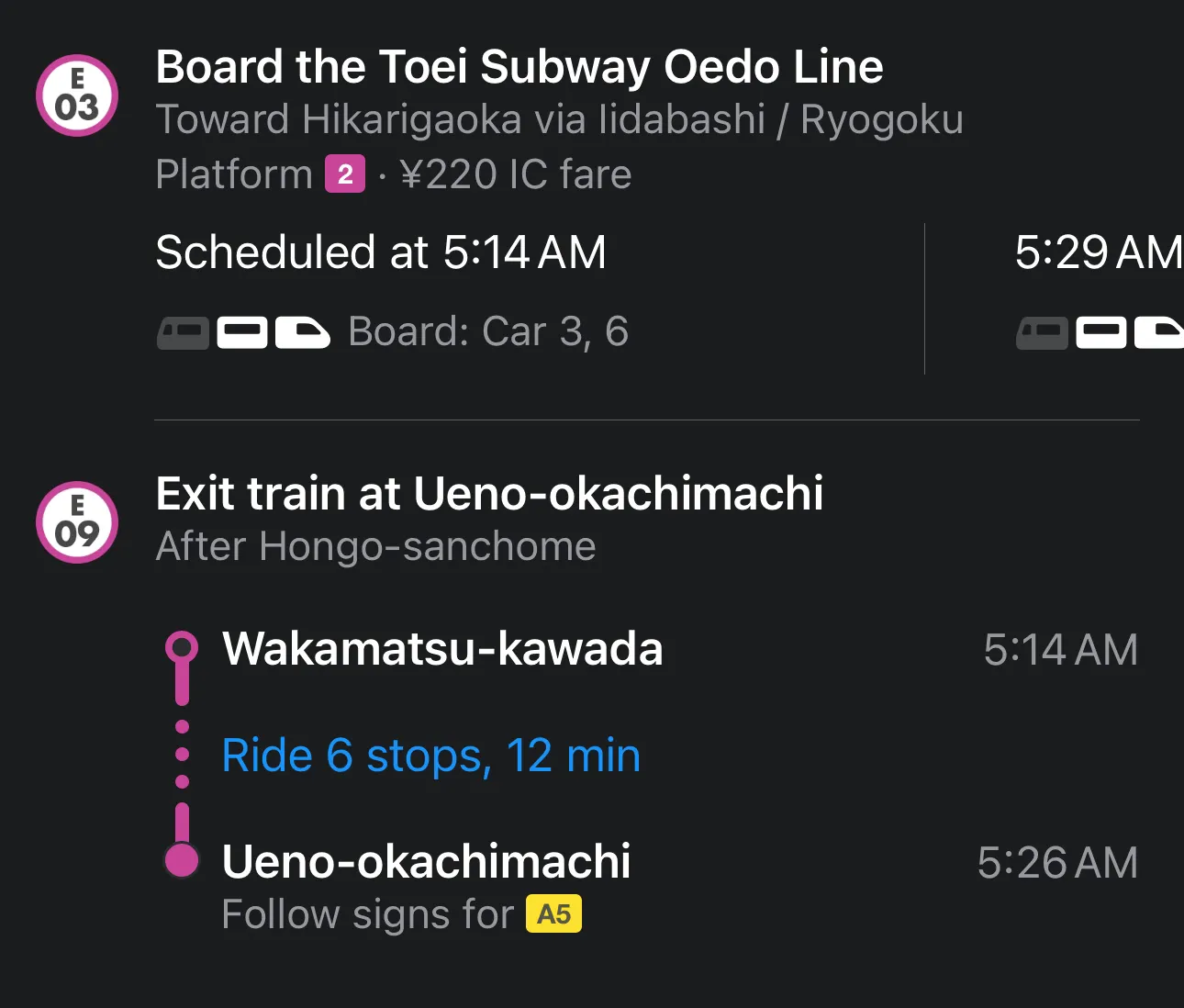
The map only works underground if your phone has data, so set that up before you fly. We buy an Airalo eSIM everywhere we go, and the Tokyo subway is where it earns its keep.

 Bernie & Cream@bernieandcream
Follow along on Facebook
Bernie & Cream@bernieandcream
Follow along on Threads
Bernie & Cream@bernieandcream
Watch us on TikTok
Bernie & Cream@bernieandcream
Follow along on X
Bernie & Cream@BernieAndCream


2. Tap In at the Gate // Your Phone Is Your Ticket
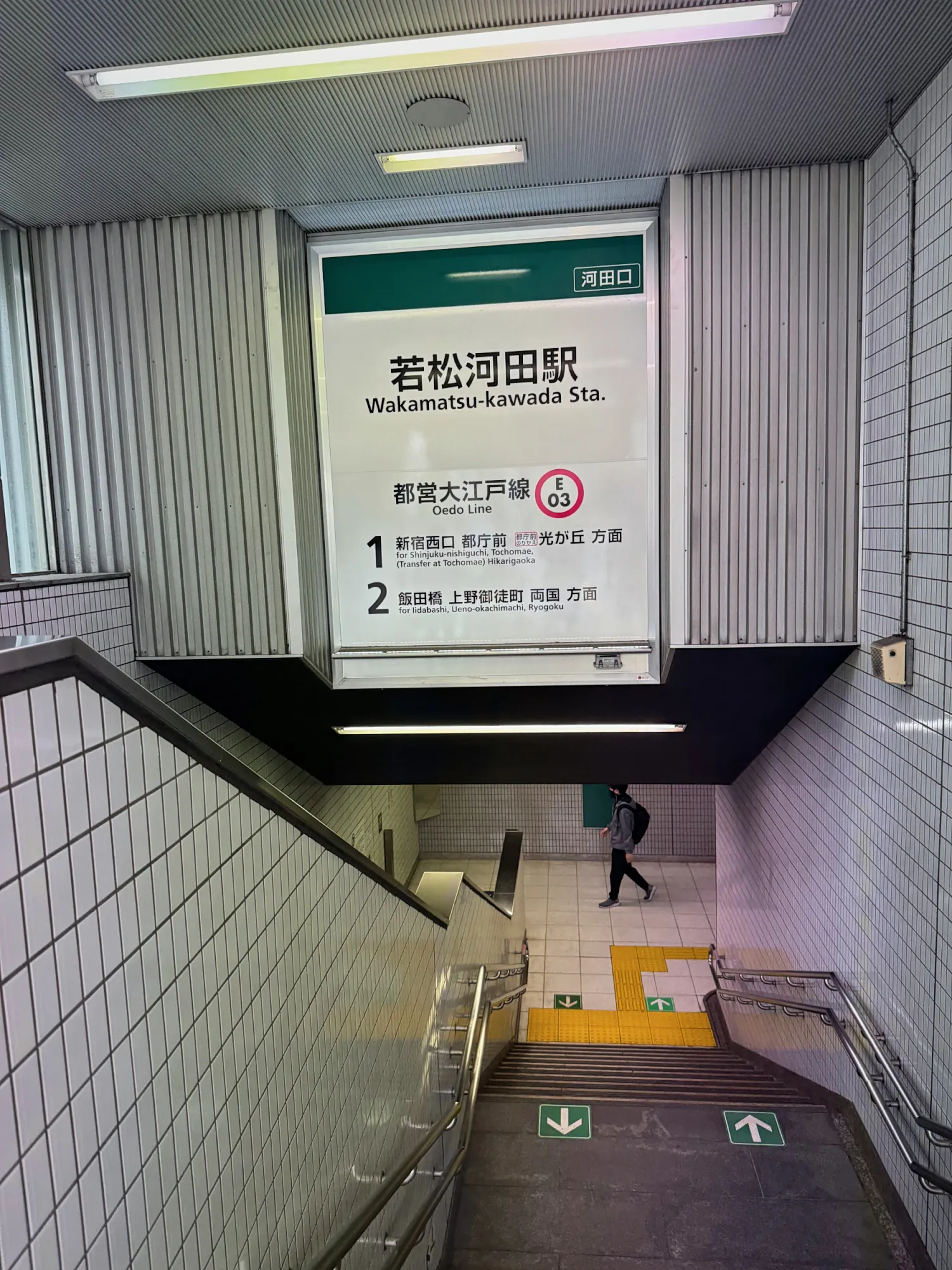
Station entrances show the station name and which way each platform goes, so you can check you're in the right place before you head down.
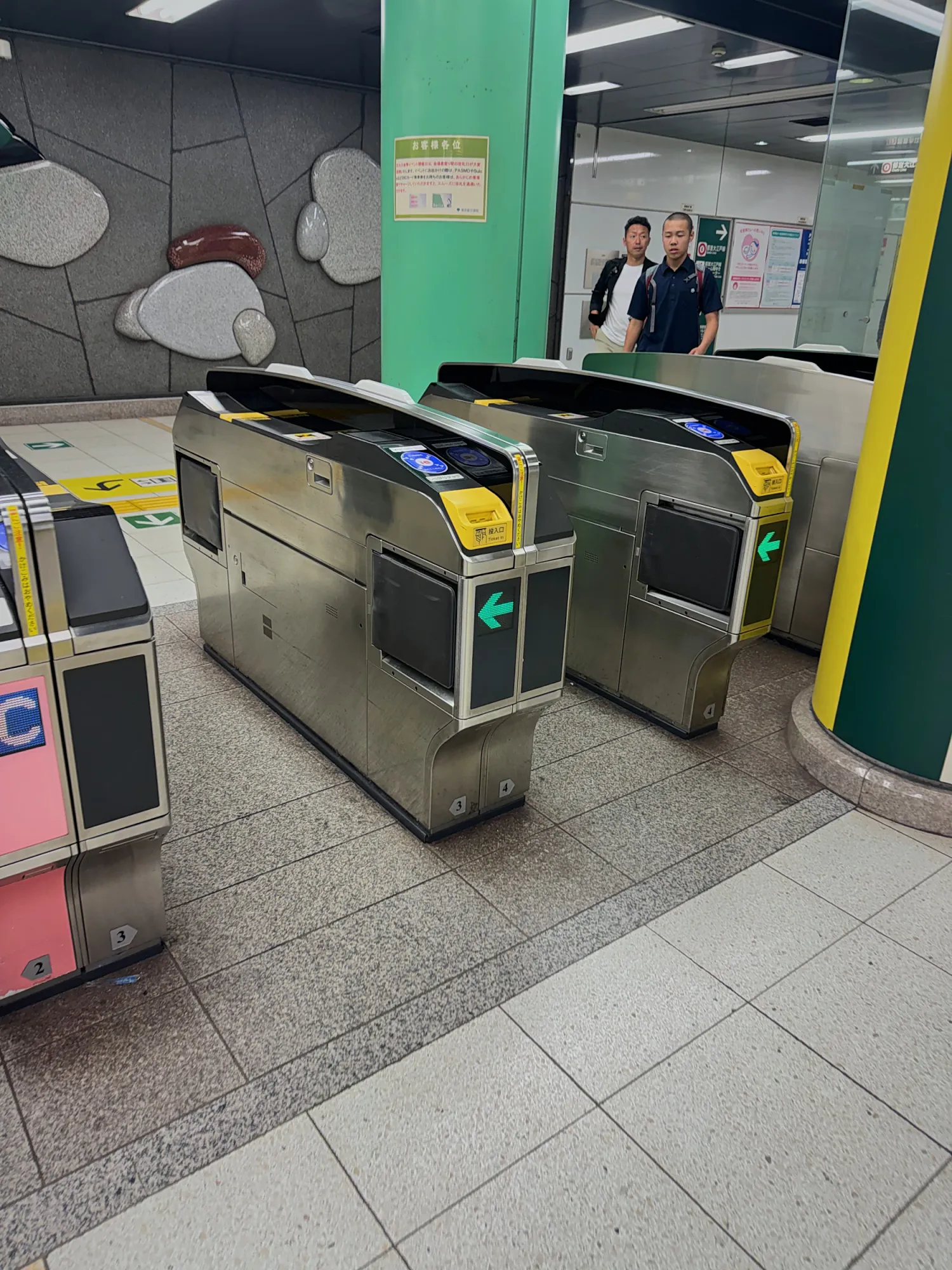
At the gates, hold your phone on the reader and walk through. You don't need to open an app or unlock anything. Not set up with Suica yet? See how to pay below.
3. Follow Your Platform Number // The Step Everyone Misses
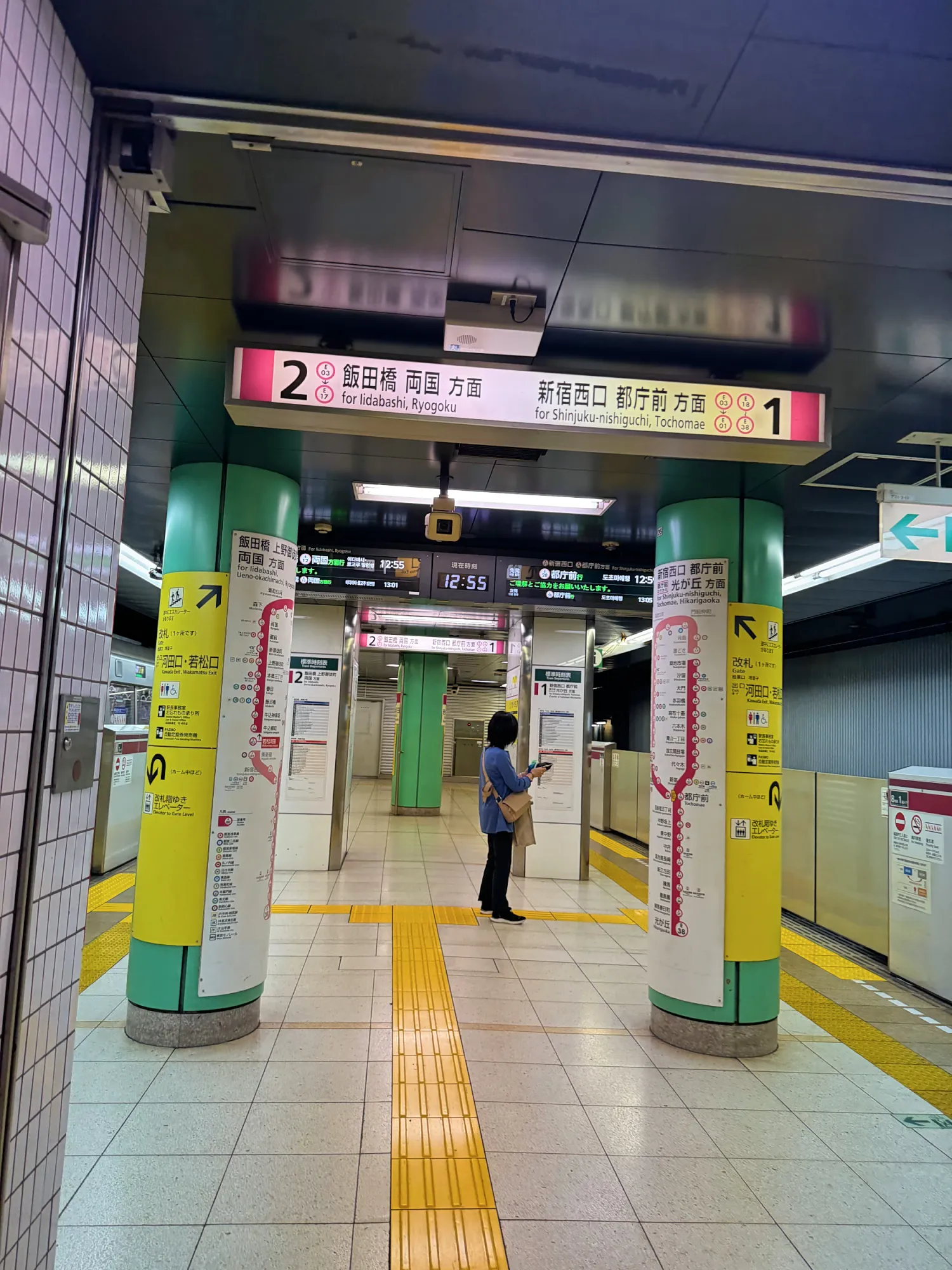
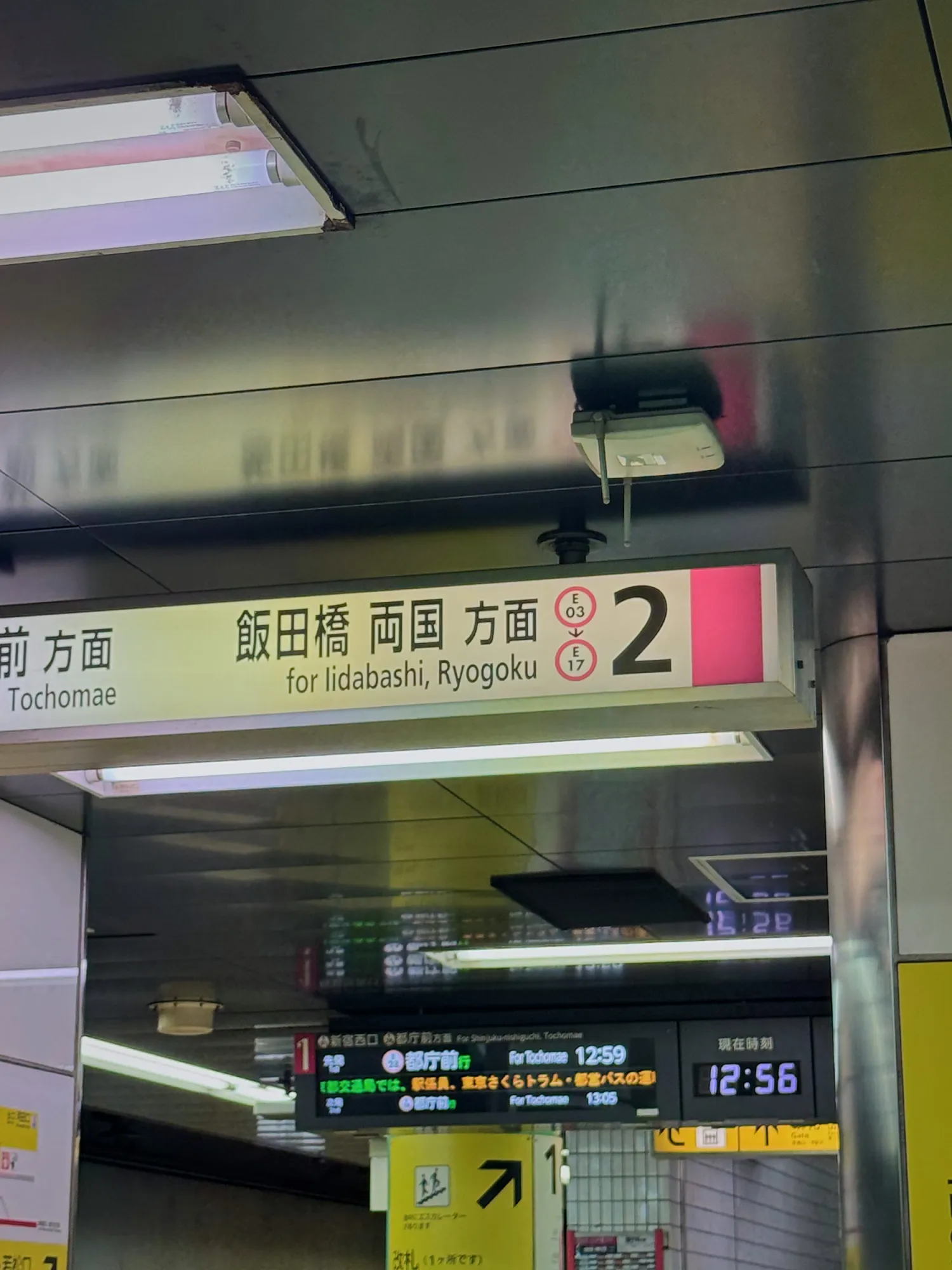
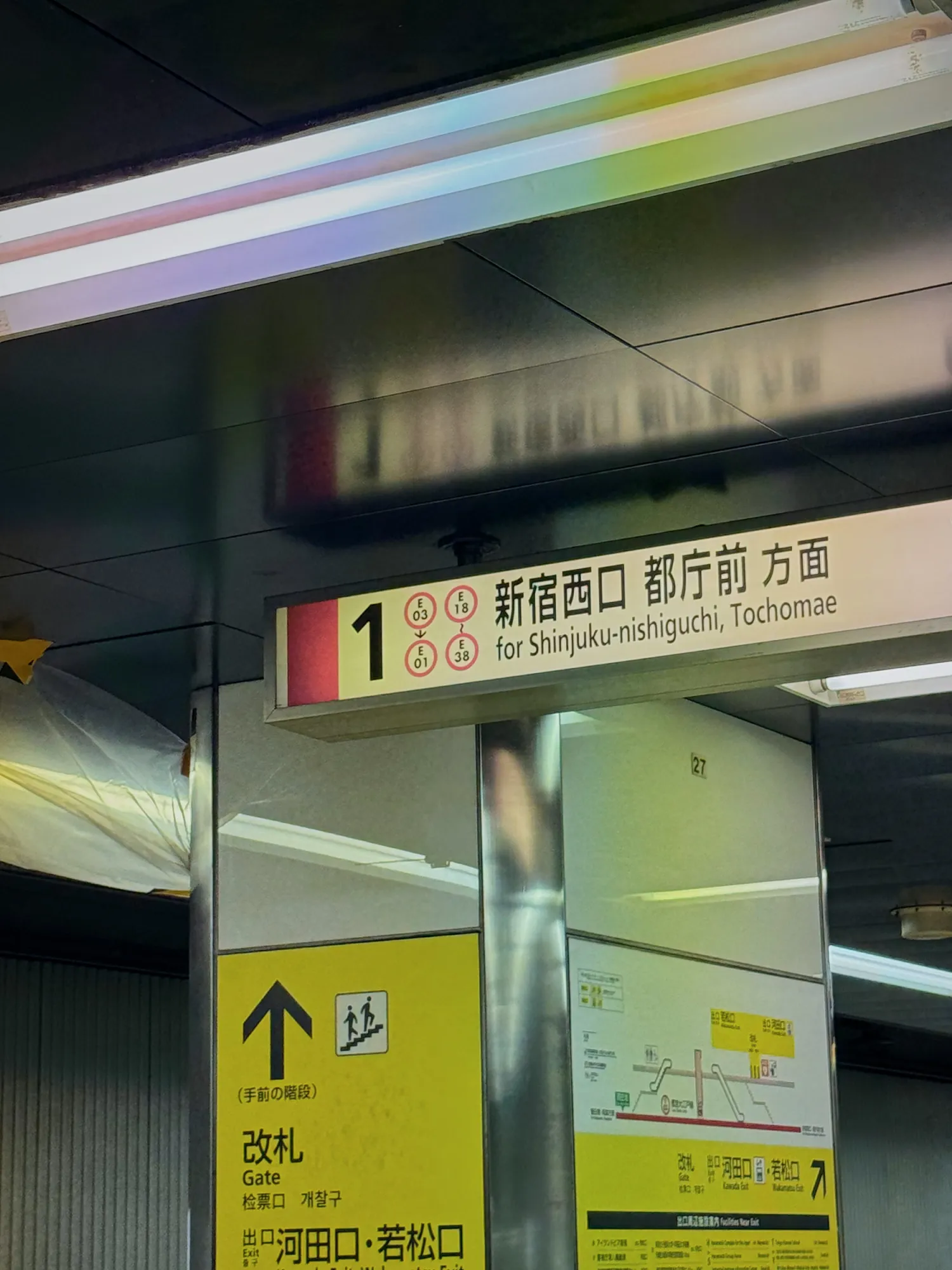
This is where it gets confusing. Don't just look for your station. Look for your platform number, follow the arrows for it, and stay on that side. The split is usually labeled clearly.
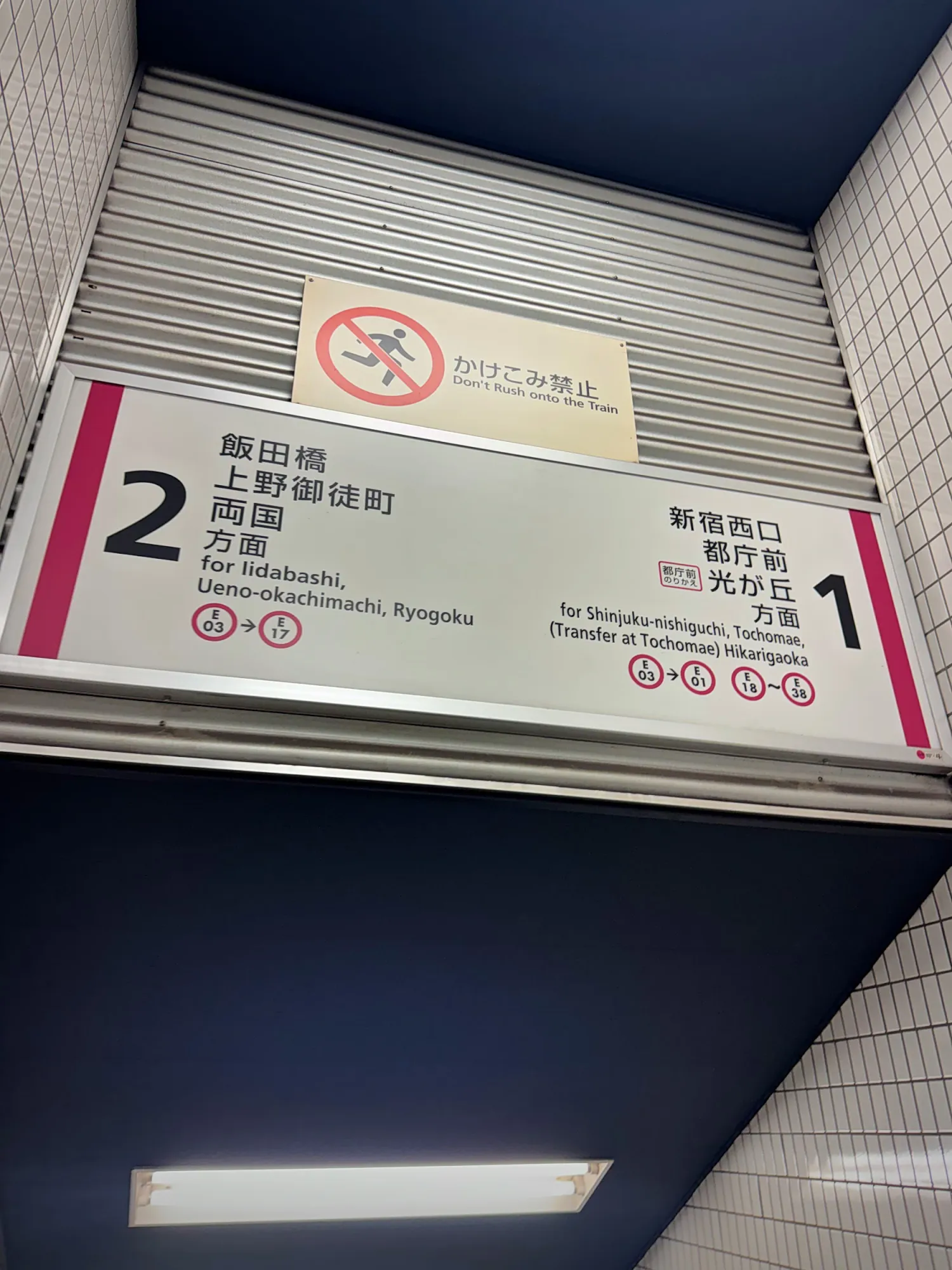
Down on the platforms, the numbers are big, and each sign lists the stations that train is heading toward.
4. Check the Station Numbers // Going Up or Down?
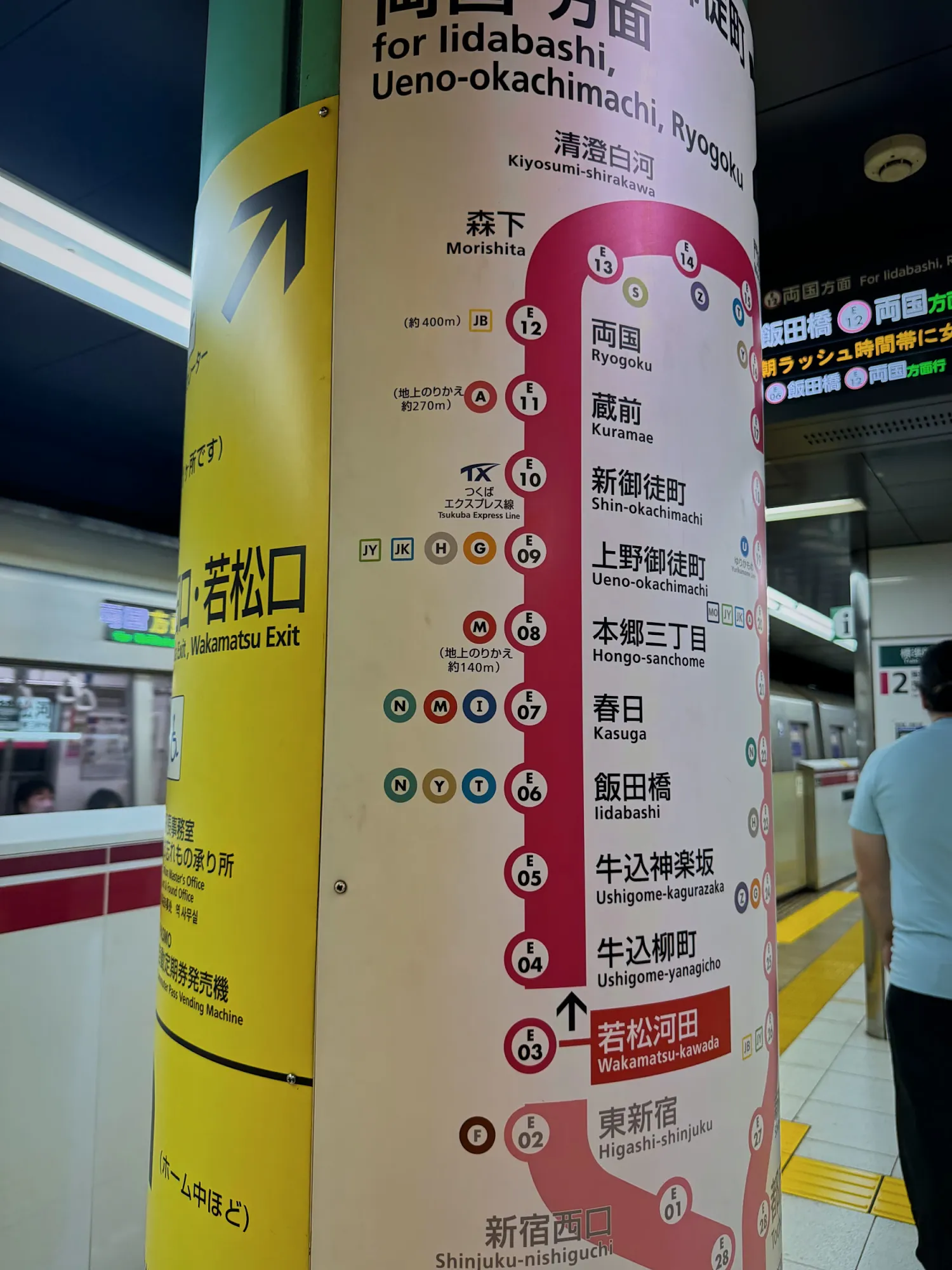
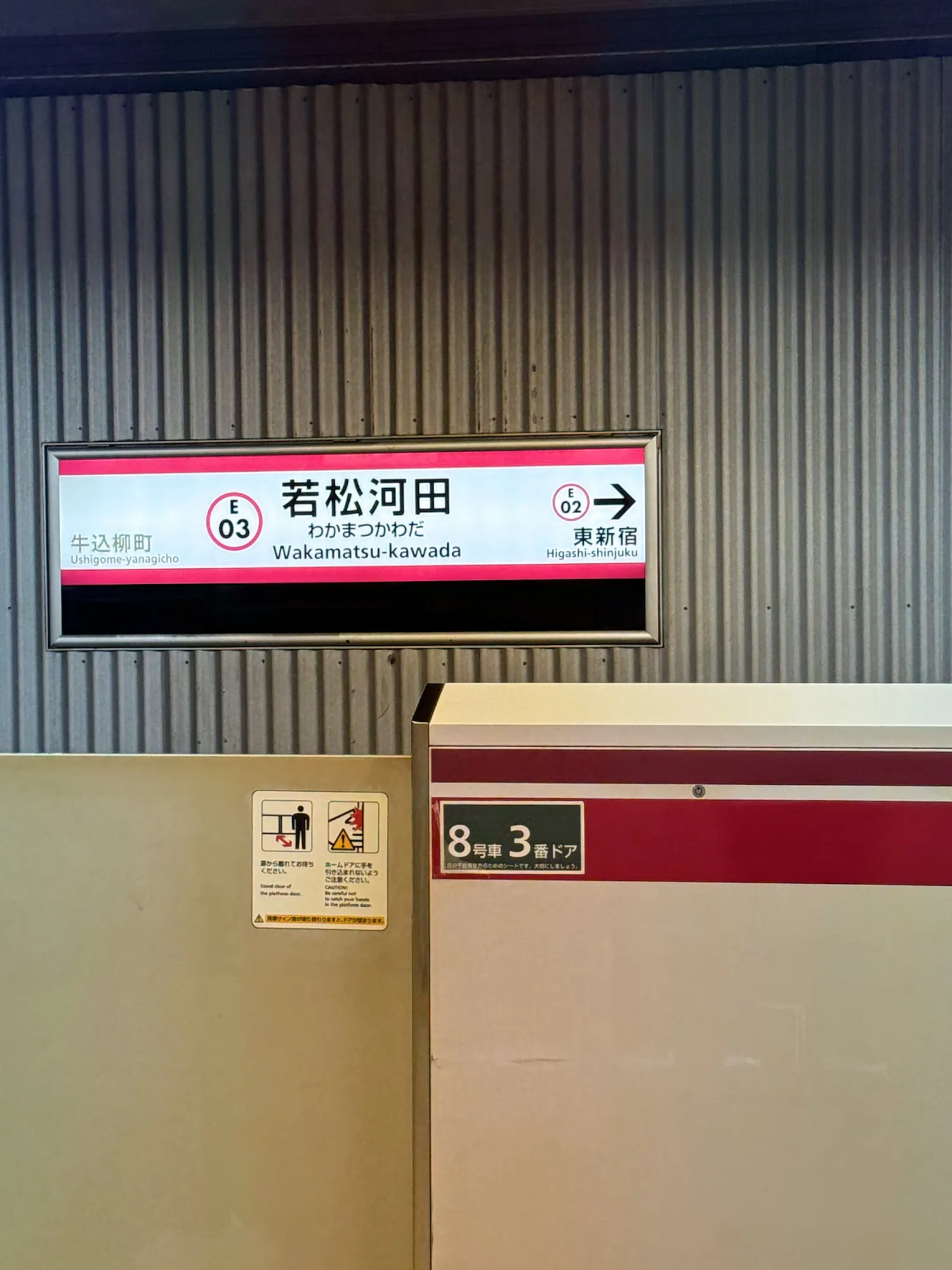
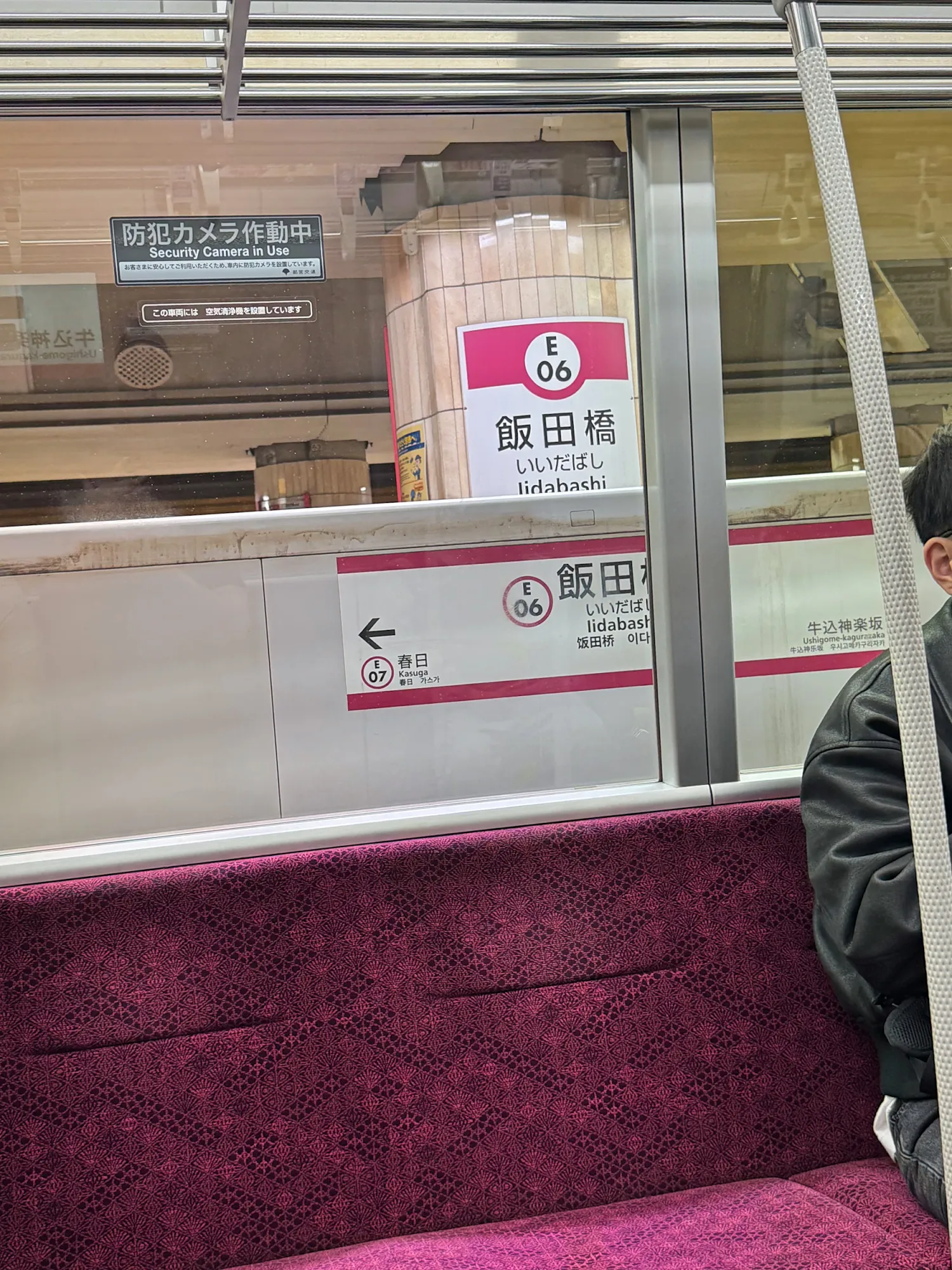
Every station has a code: a letter for the line and a number for the stop. Find your stop's number, then check that the numbers on your platform go the right way. If you start at 3 and your stop is 9, the numbers need to go up.
- Route maps on the platform pillars let you trace your stops.
- Station name signs show where you are and the next stop in each direction, with an arrow.
5. Line Up and Board // Leave the Middle Clear
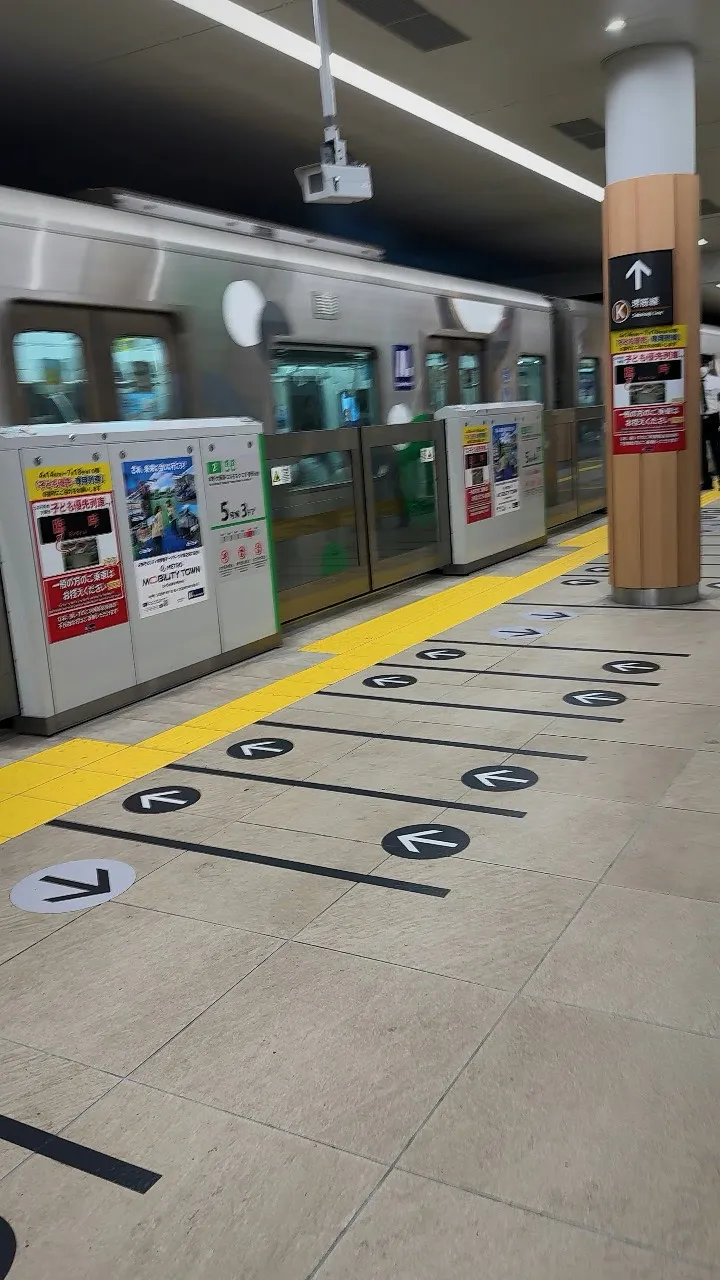
- Floor markings show where the doors will open.
- Line up on the left or the right of the door.
- Leave the middle empty so everyone getting off can walk straight out.
- Once they're off, board from your side.
6. Watch the Numbers Out the Window // Ignore the Japanese
Every station shows its number, so you always know where you are. The announcements are in English too. My best tip: pretend the Japanese characters don't exist. Trying to read them will only confuse you.
Going the wrong way? Get off, cross to the other platform, and go back. It's not a big deal. We've done it a lot, and we've gotten off a stop early too.
7. Pick Your Exit Before You Leave the Platform // The Real Challenge
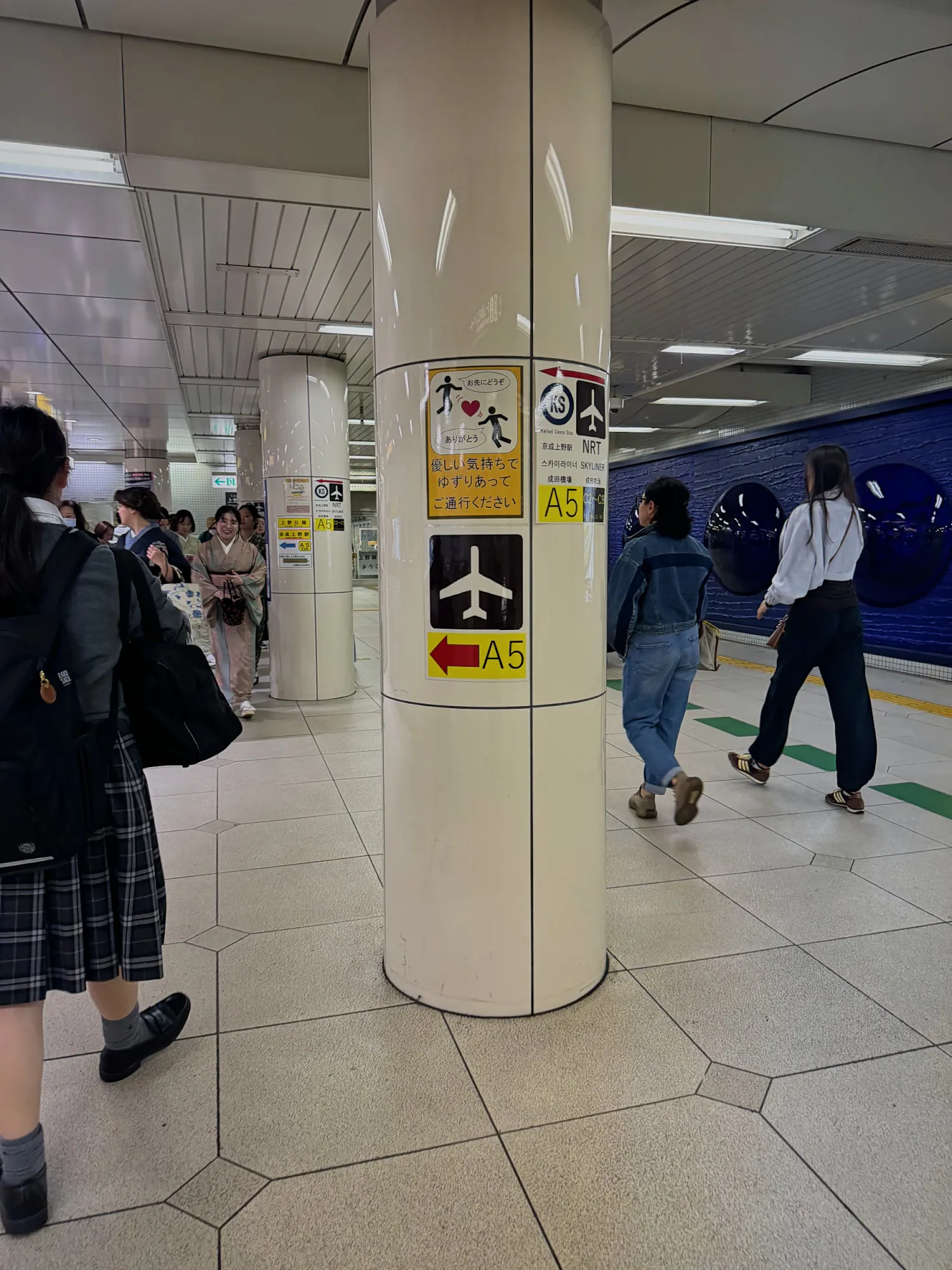
Big stations have a lot of exits, and the wrong one can leave you a long walk from where you meant to go. That's exactly what kept happening to us in Osaka.
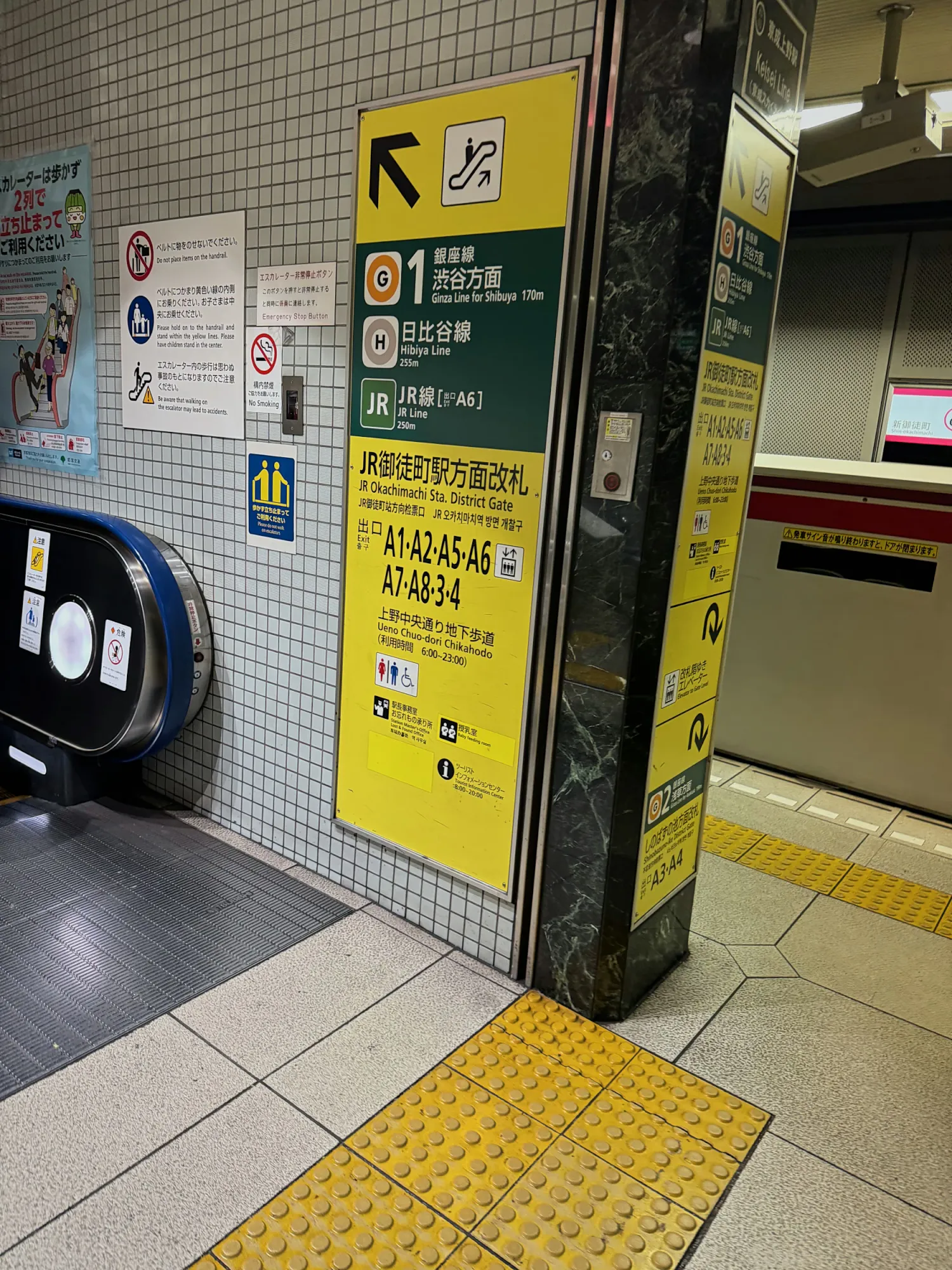
- Check the exit number in your app before you leave the platform.
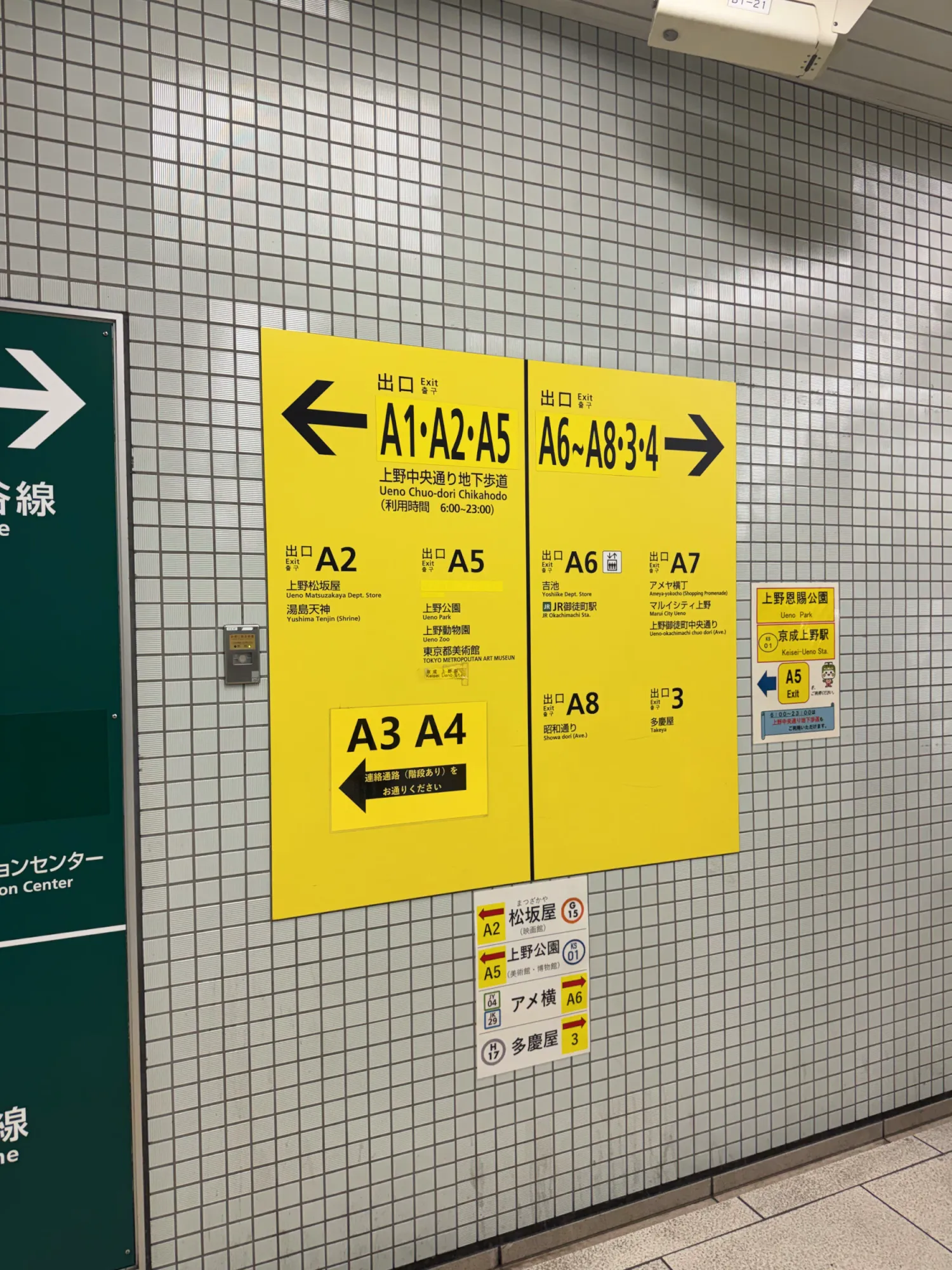
- Exit signs are yellow, with the code in big letters.
- Keep following that one code through the station.
- Some signs bundle several exits together, so look for yours in the list.
8. Tap Out // The Fare Comes Off Automatically
At the gate on the way out, tap your phone again. That's when Suica works out the fare and takes it from your balance, so you never need to know the price in advance.
How to Pay for the Tokyo Subway
Payment is the biggest hurdle, because you need it sorted before you reach the gate.
- Suica on your phone (what we used). We added Suica to Apple Wallet on our iPhones and tapped our phones on every gate. Once it was set up, it was the easiest part of the whole system.
- The topping-up snag. Not every foreign card will add money to a Suica in Apple Wallet. Out of every card we carried, only our Capital One Savor worked. We found that out the awkward way in Osaka, when only Cream had one. Once you have a card that works, a top-up takes seconds. Before you fly, check which cards work in Japan and what to carry as a backup.
- Welcome Suica Mobile. Visitors can get a Suica on an iPhone through JR East's Welcome Suica Mobile app and charge it with a credit card.2
- The Tokyo Subway Ticket. An unlimited pass for visitors. As of March 14, 2026 it costs 1,000 yen for 24 hours, 1,500 yen for 48 hours, and 2,000 yen for 72 hours.1 It's worth it if you'll ride four or five times a day. We walked so much that paying ride by ride was cheaper. You can book the Tokyo Subway Ticket on Klook before you go.
- Paper tickets. Every station has machines with an English button, but you have to work out each fare yourself.

Suica works on the Tokyo Metro, the Toei Subway, and JR trains, and plenty of shops and restaurant kiosks take it too.3
Tokyo Metro vs Toei vs JR
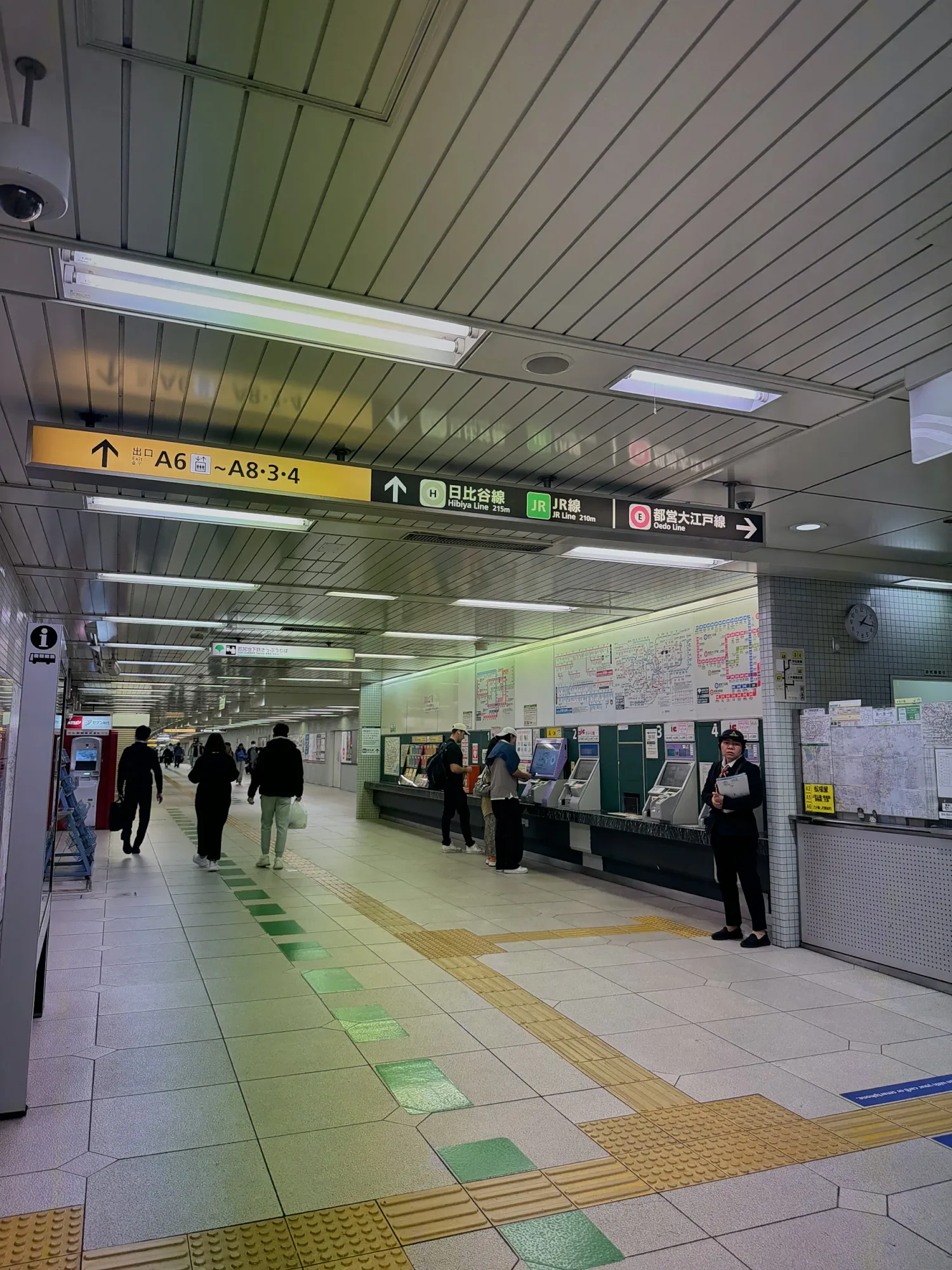
- Tokyo Metro runs nine lines and the Toei Subway runs four.4 You won't feel the difference. The gates, the signs, and the station numbers work the same way, and one Suica pays for both.
- JR trains, like the loop line around central Tokyo, are a separate railway. Suica works there too.
- The one place the split matters is the Tokyo Subway Ticket, which covers both subway companies but not JR.
- Every line has a letter and a color, and every station on it has a number. That code is the most useful thing on any sign.
Changing Lines
Changing lines works the same way, with one more set of signs. Inside the station, follow the color and the letter of the line you're changing to. The signs often show walking distances too. Your Suica covers the next line.
Tokyo Subway Etiquette
I commuted on Denver's light rail for a year and a half, and Tokyo is the total opposite.
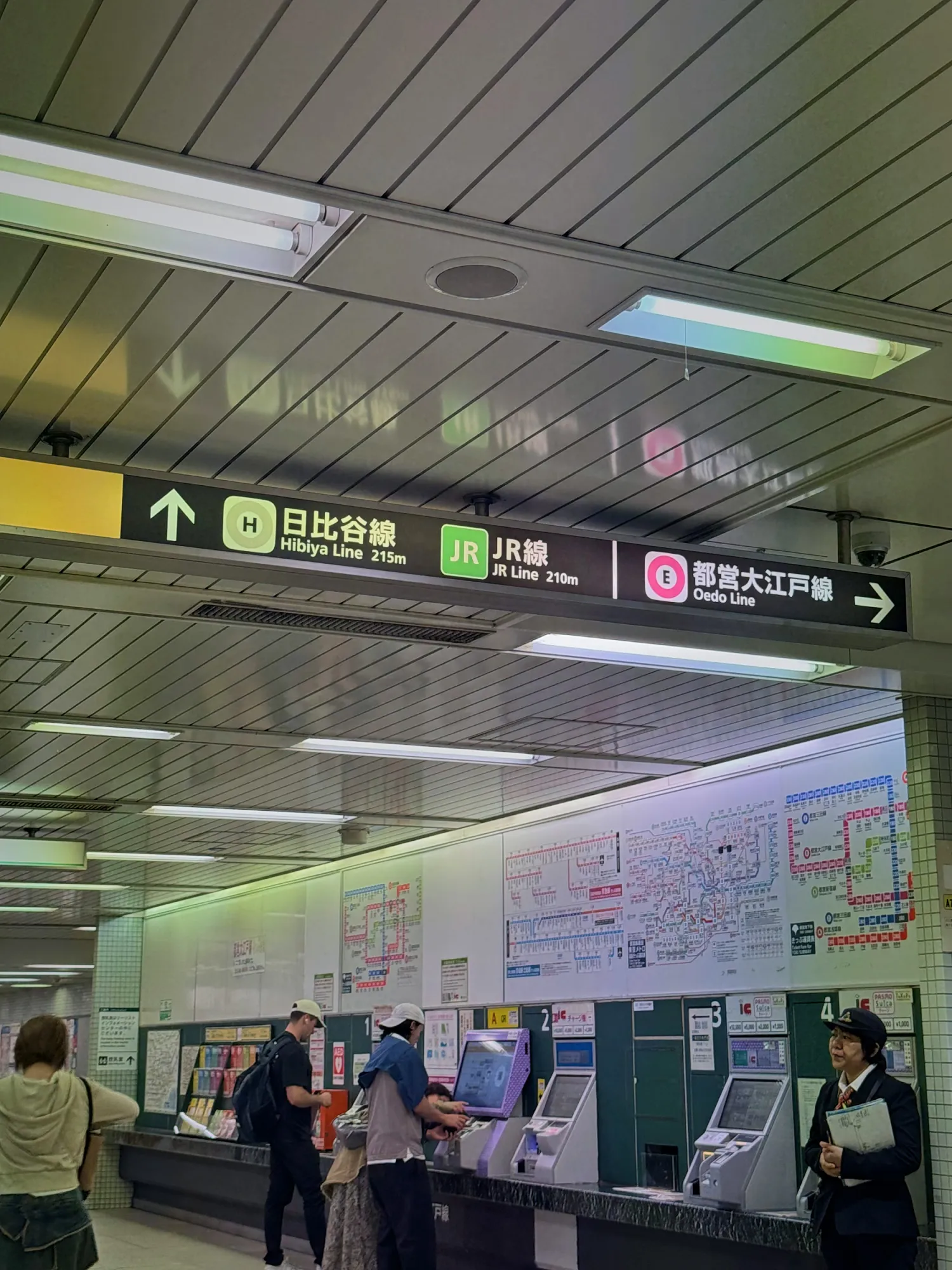
- It's quiet. No one talks on the phone, and no one plays music.
- No eating or drinking on the train.
- Give up your seat for older passengers. We did it too.
- Line up at the sides of the doors and let everyone off first.
- Avoid rush hour if you can. The trains get packed, and Shibuya is busy pretty much all the time.
The train is only the start. Restaurants, shrines, and even trash have quiet rules too, and these are the dos and don'ts in Japan worth knowing before you go.
Stairs, Luggage, and Accessibility
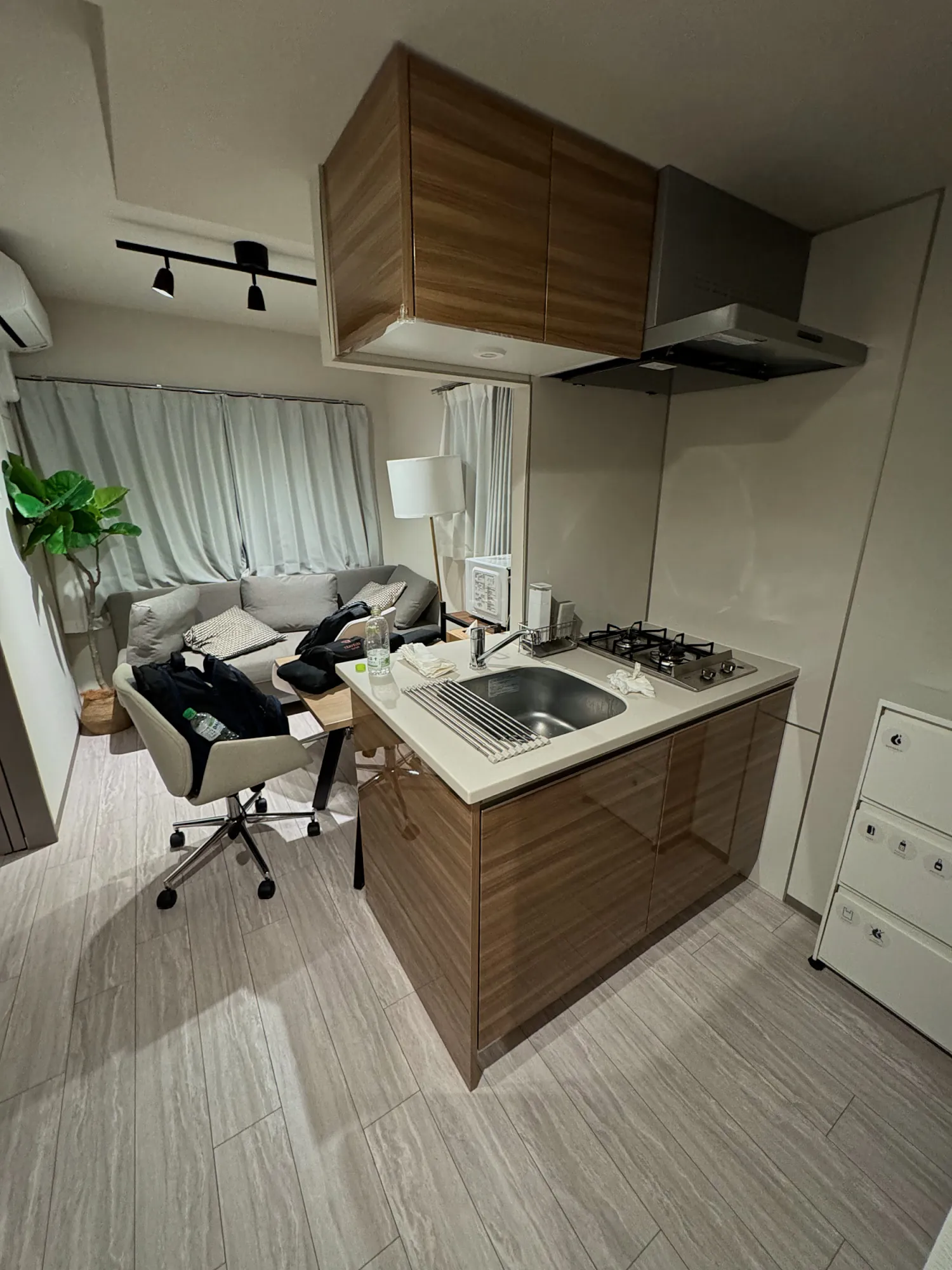
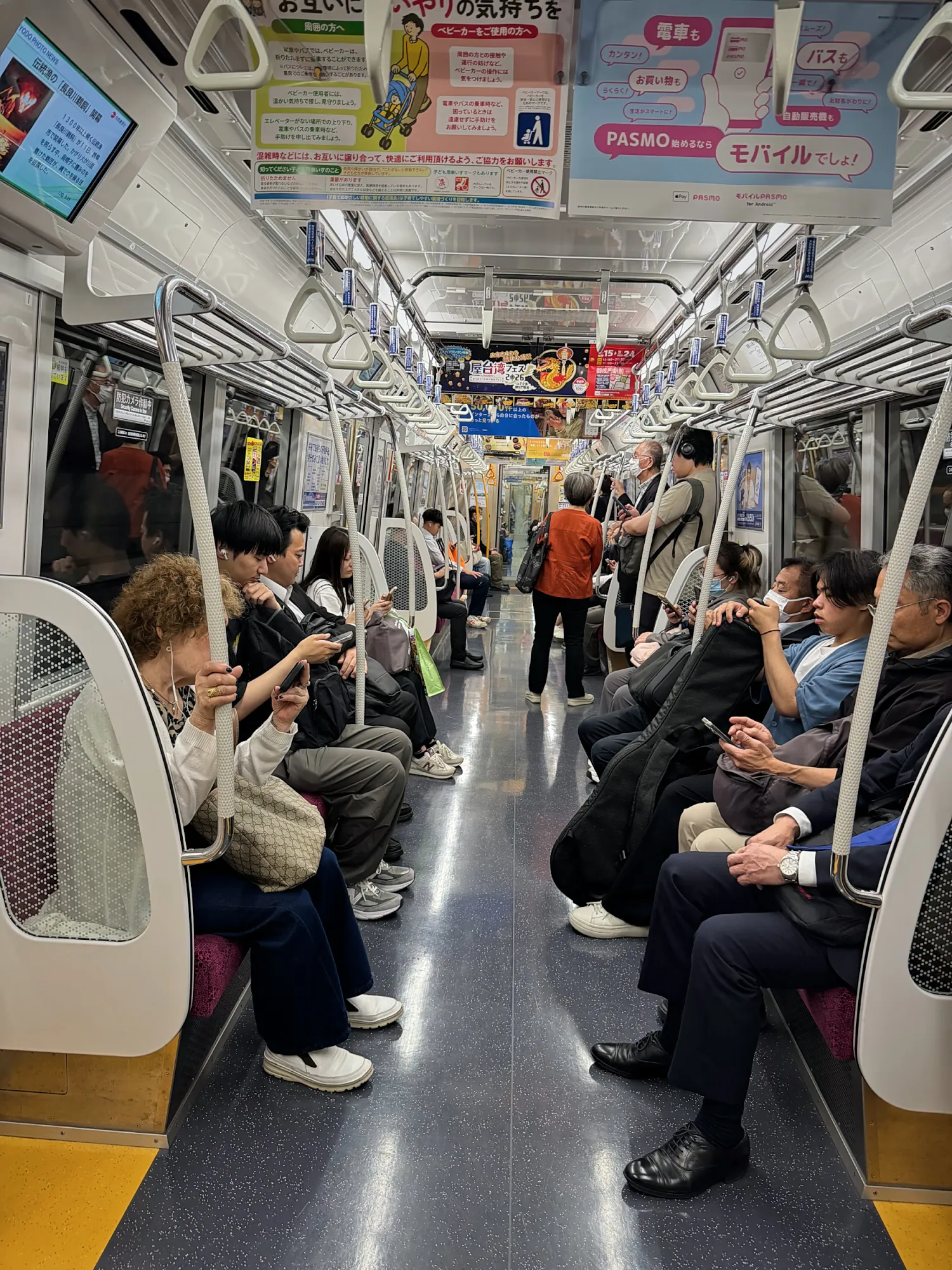
Not every station has an elevator, and ours didn't. Wakamatsu-kawada, the stop by our apartment in a quiet corner of Shinjuku, had none. The day we arrived, we carried our suitcases down the stairs. That's the reality of a lot of Tokyo stations: stairs, and more stairs. You'll get in shape fast.
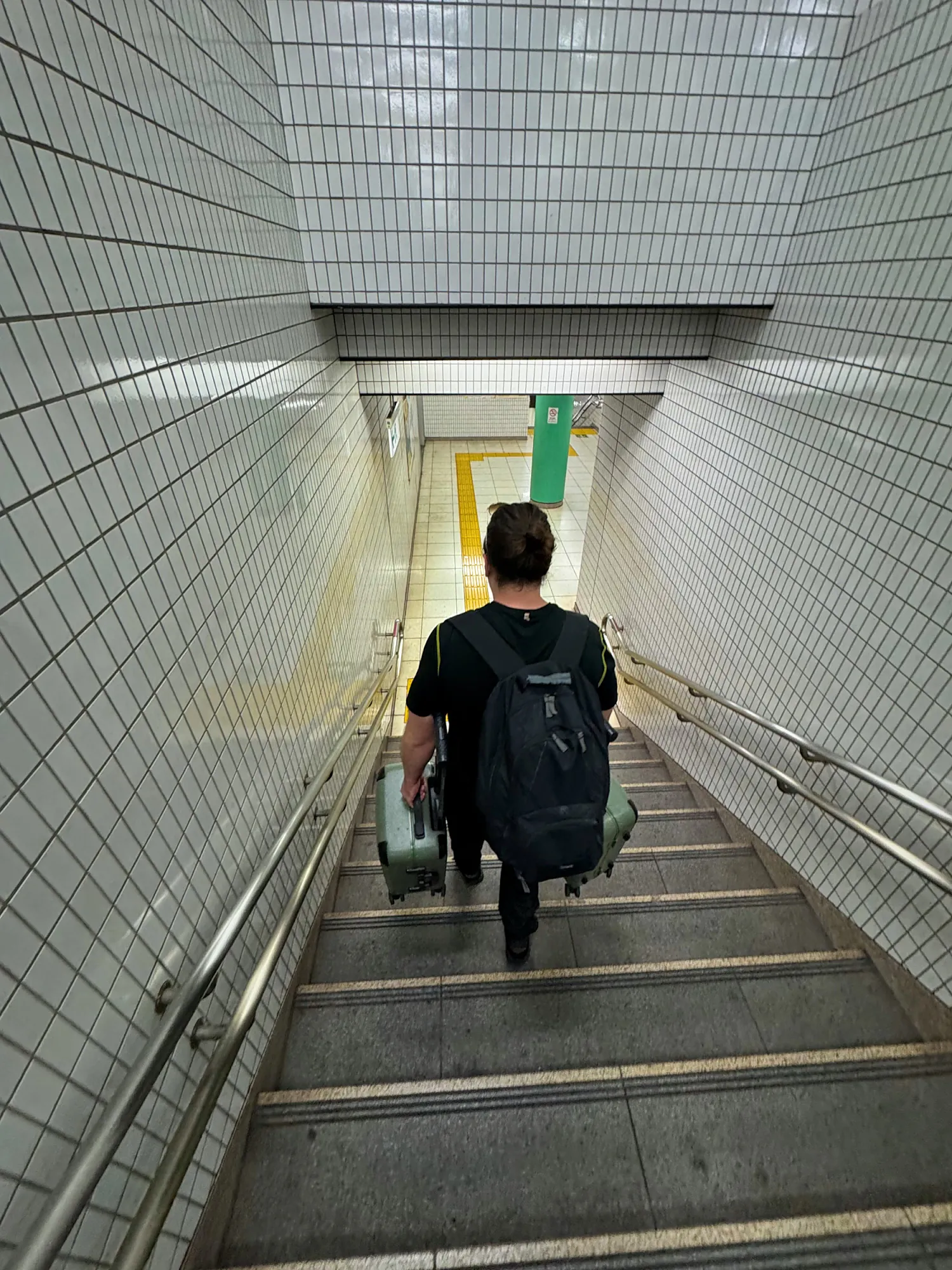
If stairs are a problem for you, plan around them. Google Maps has a "wheelchair accessible" option in its transit route settings, and Tokyo was one of the first cities where it worked.5 I've heard there's a way to ask Apple Maps for accessible stations too, but we haven't tried it.
Is the Tokyo Subway Hard for First-Timers?
It depends. If you're on your own, or you've never used public transit before, it can be really hard at first. Payment is the big hurdle, so sort out Suica before you get to the gate. Then follow a guide like this one for your first ride, and it clicks. It's hard at first, and then it isn't.
Final Thoughts
Once we stopped trying to read everything and just followed the numbers, the Tokyo subway was easy. Get Suica on your phone, find your platform, count your stops, and pick your exit before you leave the platform. It's how we got across town to the Starbucks Reserve Roastery in Nakameguro. Some trips are faster on foot, though, and how to get around Tokyo shows when we walked instead and the one time we took a taxi.
Next Steps for Your Tokyo Trip
Bernie & Cream@bernieandcream
Follow along on Facebook
Bernie & Cream@bernieandcream
Follow along on Threads
Bernie & Cream@bernieandcream
Watch us on TikTok
Bernie & Cream@bernieandcream
Follow along on X
Bernie & Cream@BernieAndCream