The first kiosk chain we tried in Tokyo was Tempura Tendon Tenya, and it gave us three puzzles in one meal. I'd walked past a branch in Ueno, looked it up, and seen the word tempura. That was the next meal decided.
Heads up: some links in this guide are affiliate links. If you book or buy through them, we may earn a commission at no extra cost to you.
In this guide 7 sections
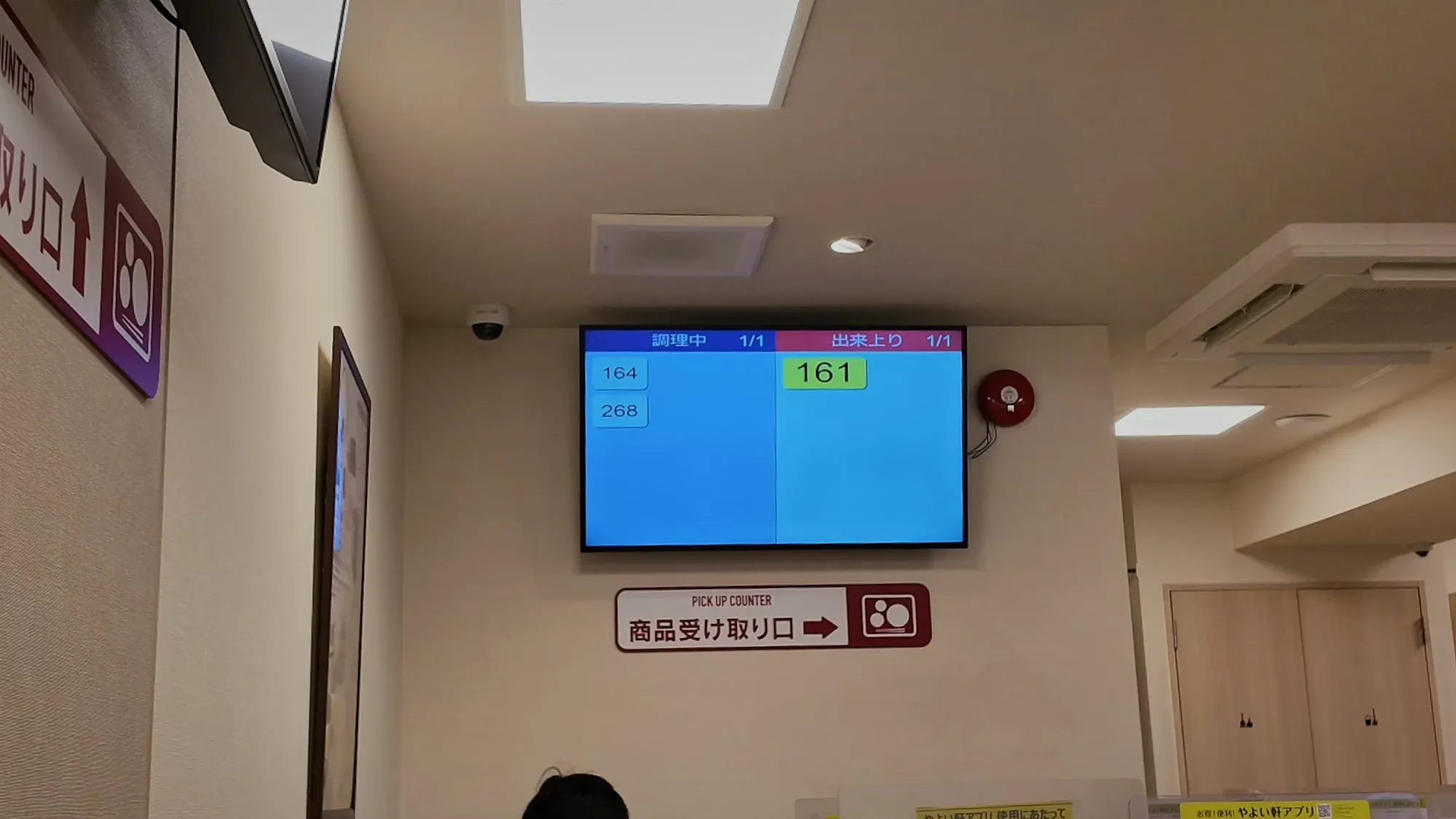
The English screen was the easy part. Next, the kiosk refused our credit card. It took cash or a transit card only, and we had no yen on us. Then we remembered the Suica cards on our phones. Once we'd paid, we had no clue where the food would come from, so I watched the regulars. Their numbers popped up on a screen, and they walked over to collect their trays. We did the same. When someone went to pour a hot drink, I followed. (Our Tenya review has the whole meal.)
A month later, Cream and I could do all of that without thinking. That's the secret to how to order food in Japan: every restaurant runs on a system. Once you can spot which one you're looking at, it's simple. Reserve on your phone, check in at a screen by the door, find your numbered table, order on a tablet, and pay at a machine. People tell you about it before you go, but it doesn't click until you're standing in front of one.
This guide walks through every way we ordered at Japanese chain restaurants, one system at a time, so you can do it without speaking Japanese.
How Do You Order Food in Japan? The Quick Answer
At most chain restaurants in Japan, you can order without speaking to a soul. You either use a kiosk or ticket machine by the entrance (Matsuya, Tenya, Ichiran, Yayoiken), a tablet at your table (Sushiro, Kura Sushi, Torikizoku), or a call button that brings a server over (Osakaya). Every kiosk and tablet we touched had an English option, nearly all of them accepted a credit card or Suica, and tipping never comes into it.
| How you order | Where we used it | How we paid |
|---|---|---|
| Kiosk or ticket machine at the door | Matsuya, Tenya, Yayoiken, McDonald's | Card or Suica (Tenya: Suica or cash only) |
| Kiosk plus a paper order sheet | Ichiran | Card at the kiosk |
| Tablet at your table | Sushiro, Kura Sushi, Torikizoku | Bill on the tablet, card |
| Call button | Osakaya | Card |
| Menu book | CoCo Ichibanya | Card |
 Bernie & Cream@bernieandcream
Follow along on Facebook
Bernie & Cream@bernieandcream
Follow along on Instagram
Bernie & Cream@bernieandcream
Follow along on Threads
Bernie & Cream@bernieandcream
Watch us on TikTok
Bernie & Cream@bernieandcream
Follow along on X
Bernie & Cream@BernieAndCream


Before You Order: Reservations and Check-In Kiosks
At the busiest chains, ordering starts before you walk in. Many restaurants let you join the waiting list or book a time on your phone, then check in at a kiosk at the entrance that prints your ticket and table number.
We booked Sushiro on its app every time we went, and a reservation for Torikizoku's opening time, around 3 p.m., got us straight to a table.
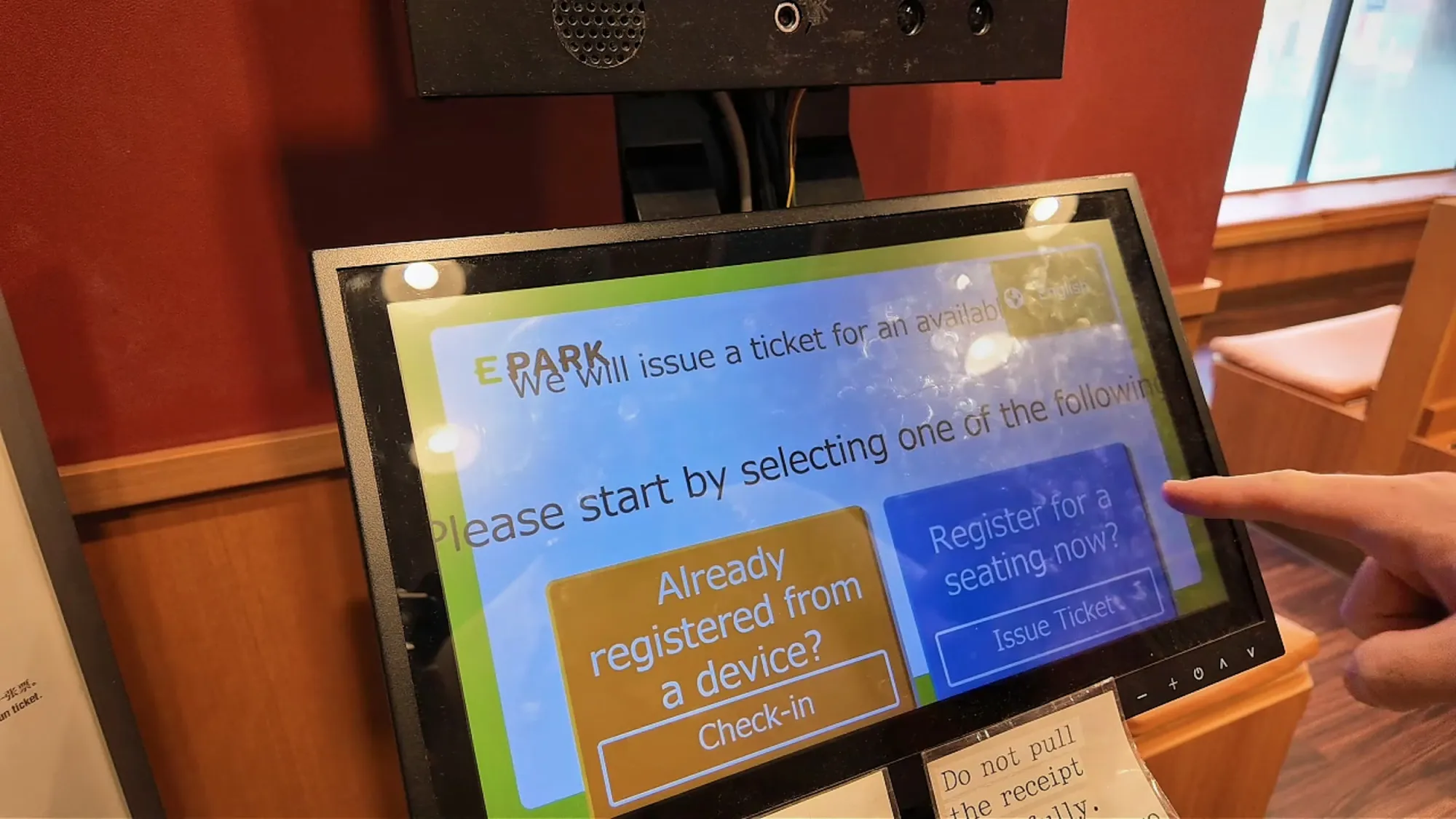
If you didn't book, the same kiosk usually has a button to take a ticket for the next table. Tap English, take the paper slip, and wait for your number to be called or shown on a screen.
The 5 Ways You'll Order Food in Japan
1. Kiosk or Ticket Machine at the Door // Matsuya, Tenya, and Yayoiken
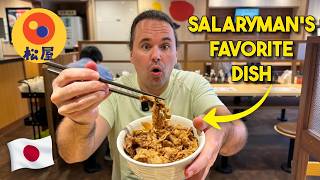
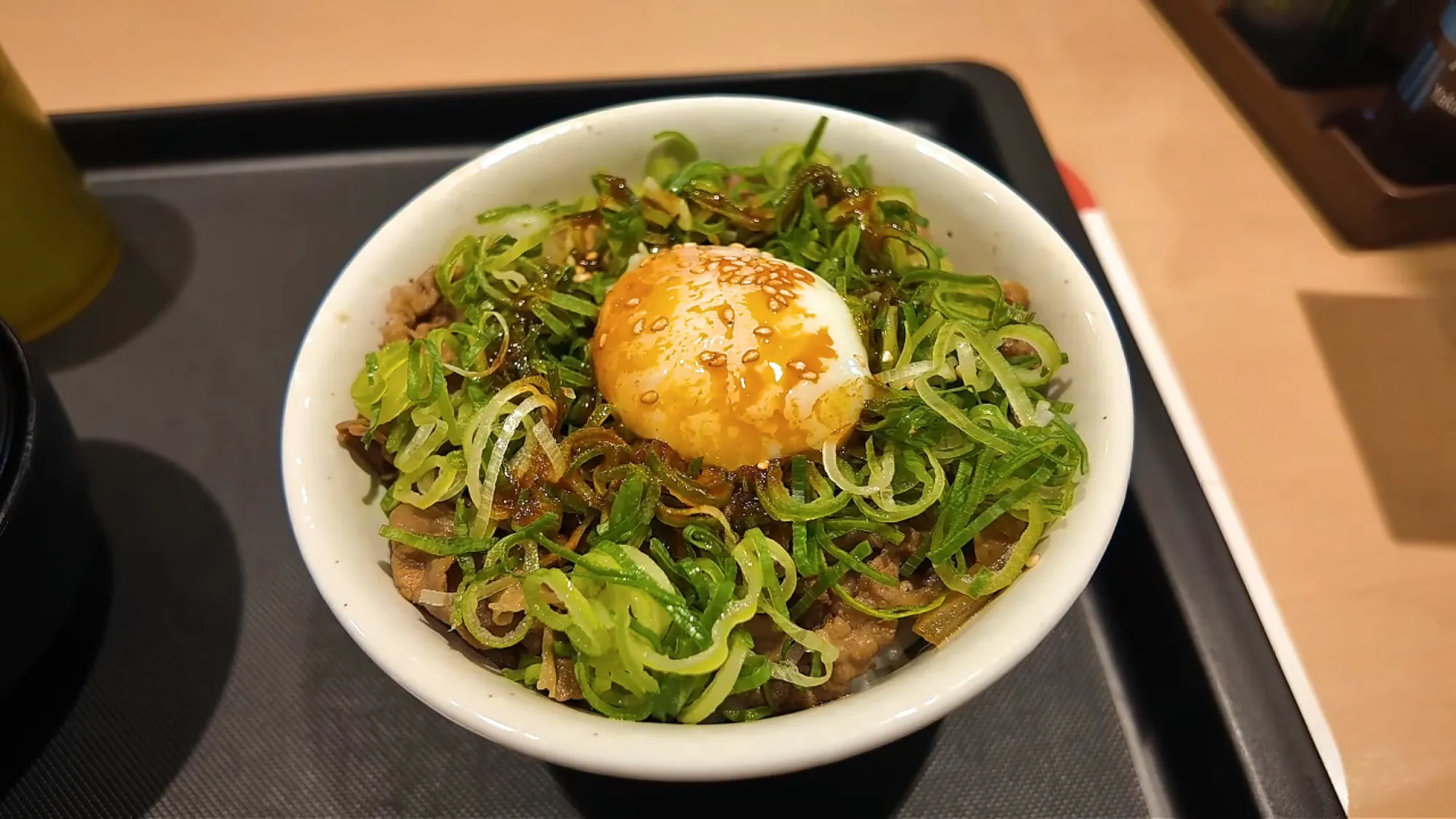
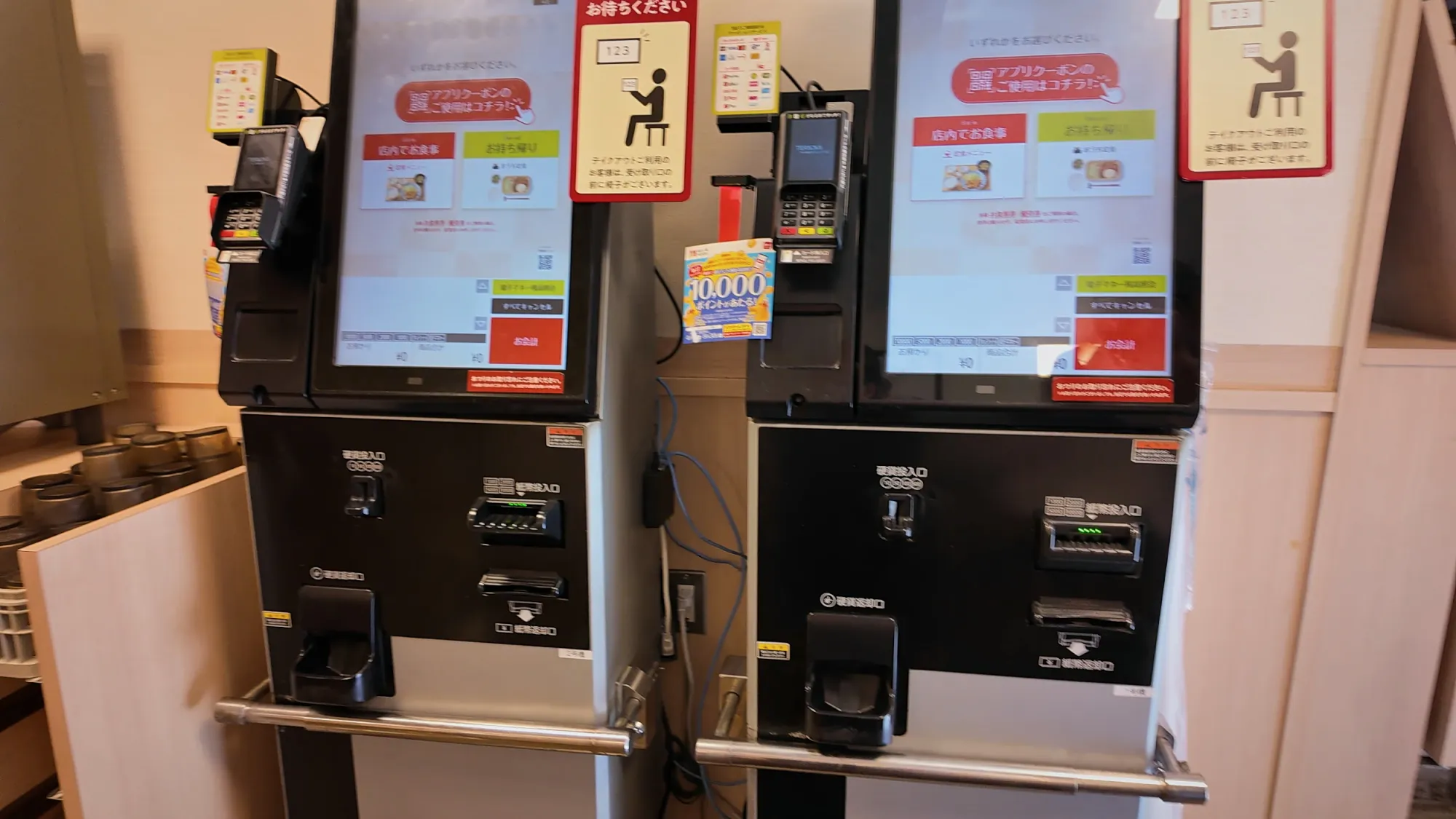
You'll probably meet this one first, and it looks scarier than it is. The machine is the menu, the cashier, and the waiter all in one, and our Matsuya review shows how friendly it turns out to be.
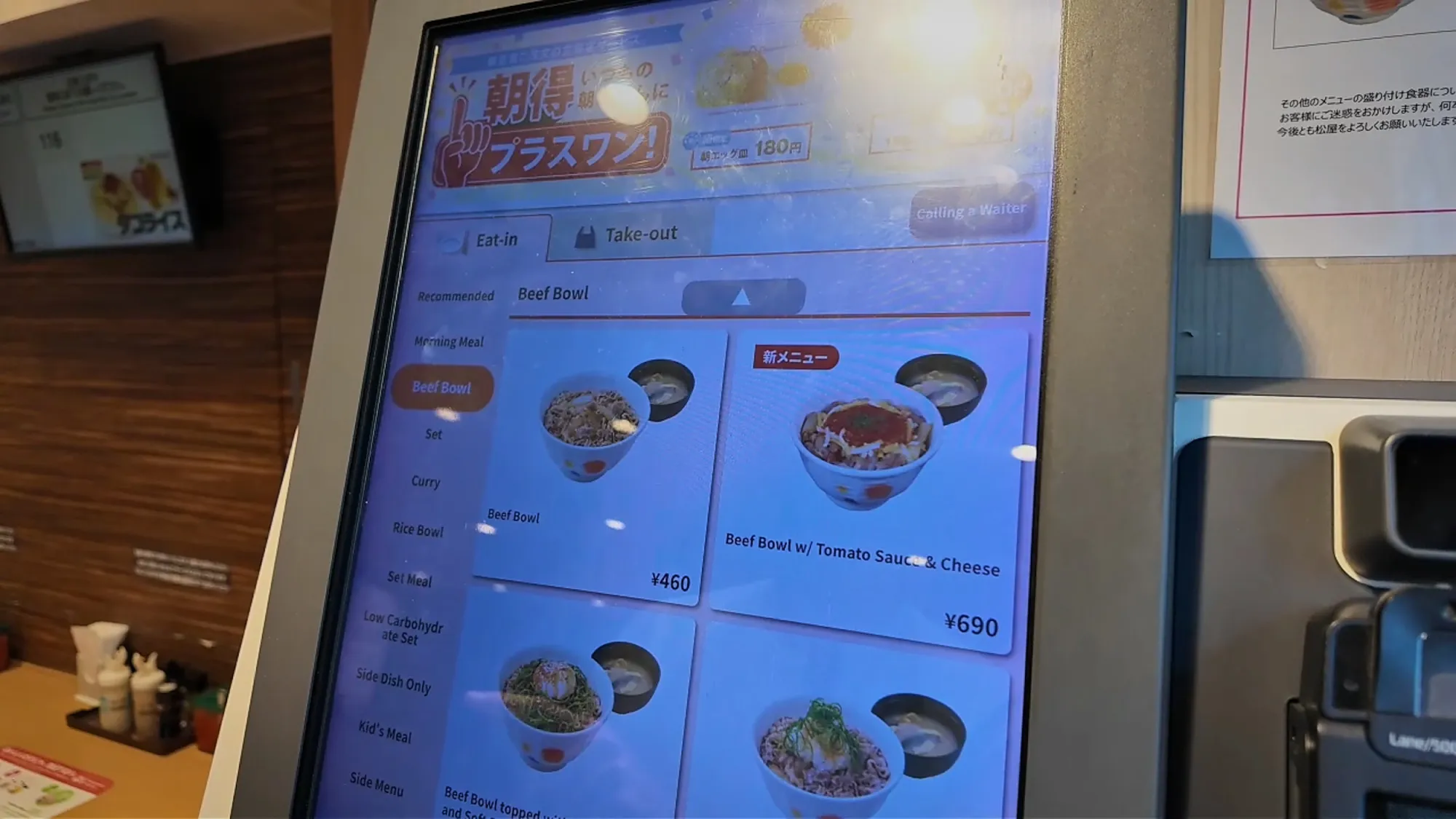
Here's how a Japanese restaurant ticket machine works at a chain like Matsuya, a gyudon (beef bowl) chain:
- Tap the English button. On the first screen, you also pick eat in or takeout (店内 means eat in).
- Browse the menu by photo and pick your meal. A plain beef bowl was 460 yen on the Matsuya kiosk in May 2026, and it goes up to 480 yen from October 13, 2026.5
- Pay with a credit card or a transit card like Suica.
- Take the ticket the machine prints.
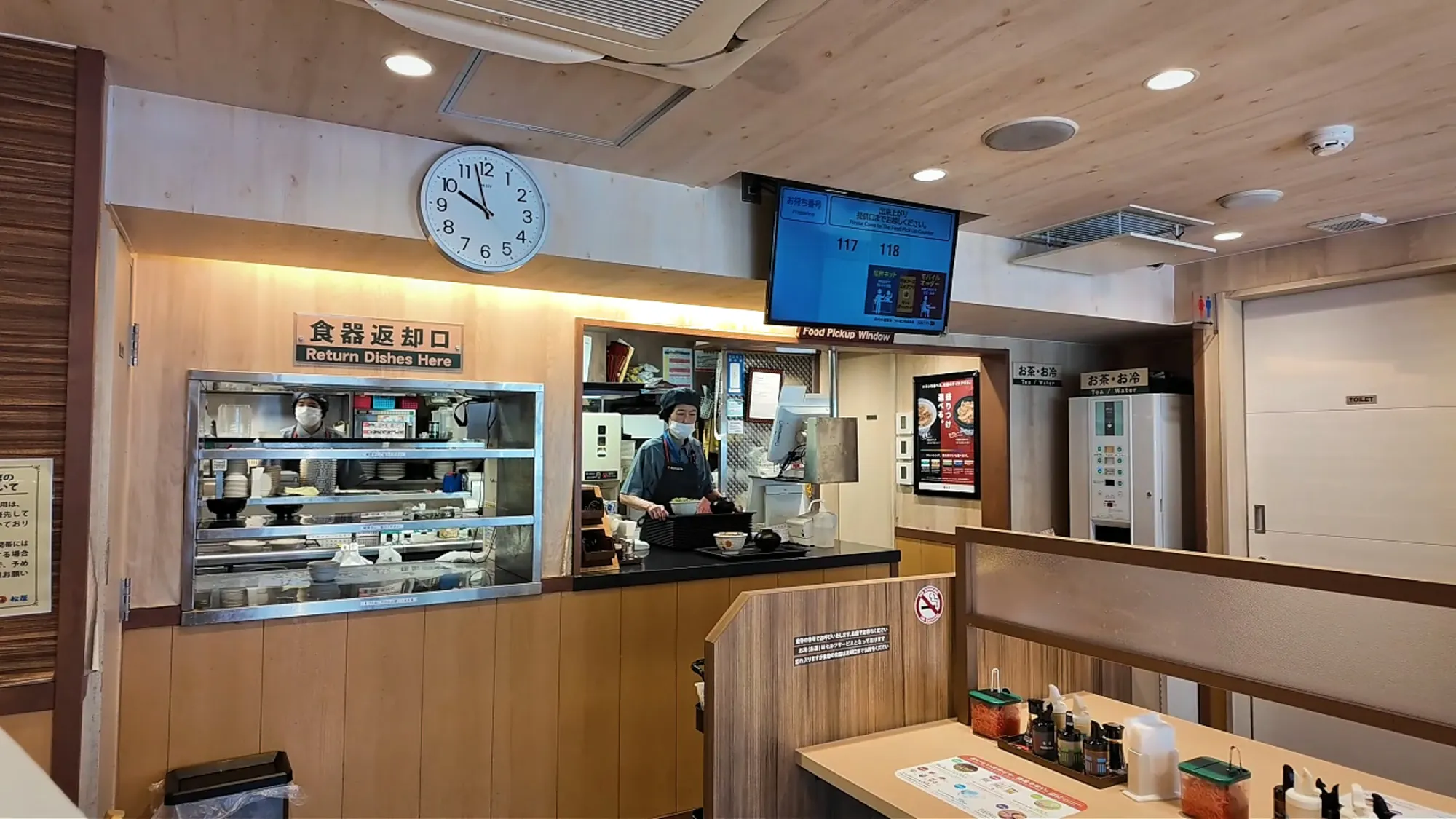
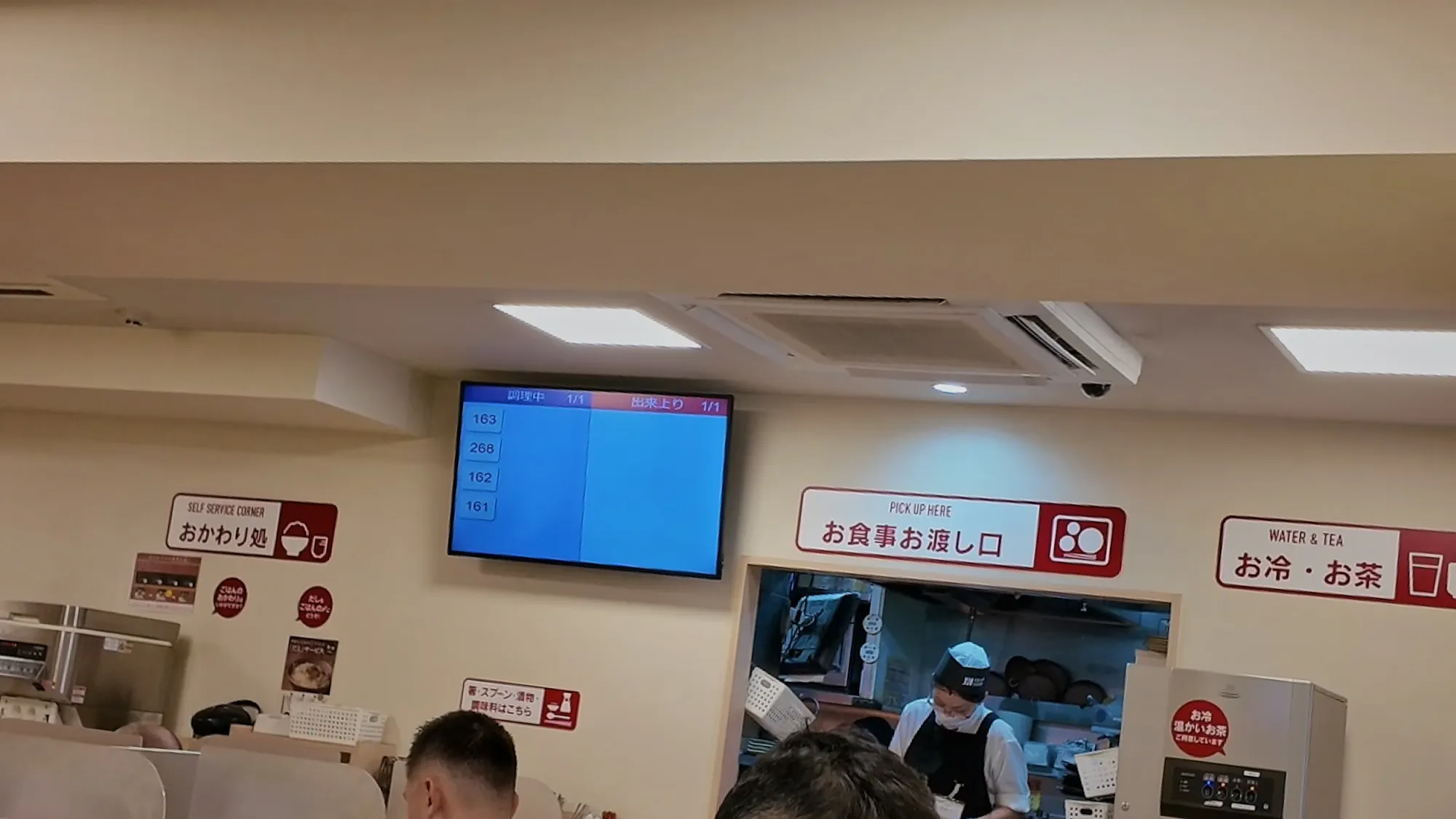
- Sit down, watch the screen by the counter, and when your number appears, hand over your ticket and pick up your food.

Cream is a fan of the kiosk because the whole menu is in front of you, with pictures, before you commit. As he put it, "it's an easy way for us to overcome the language barrier."
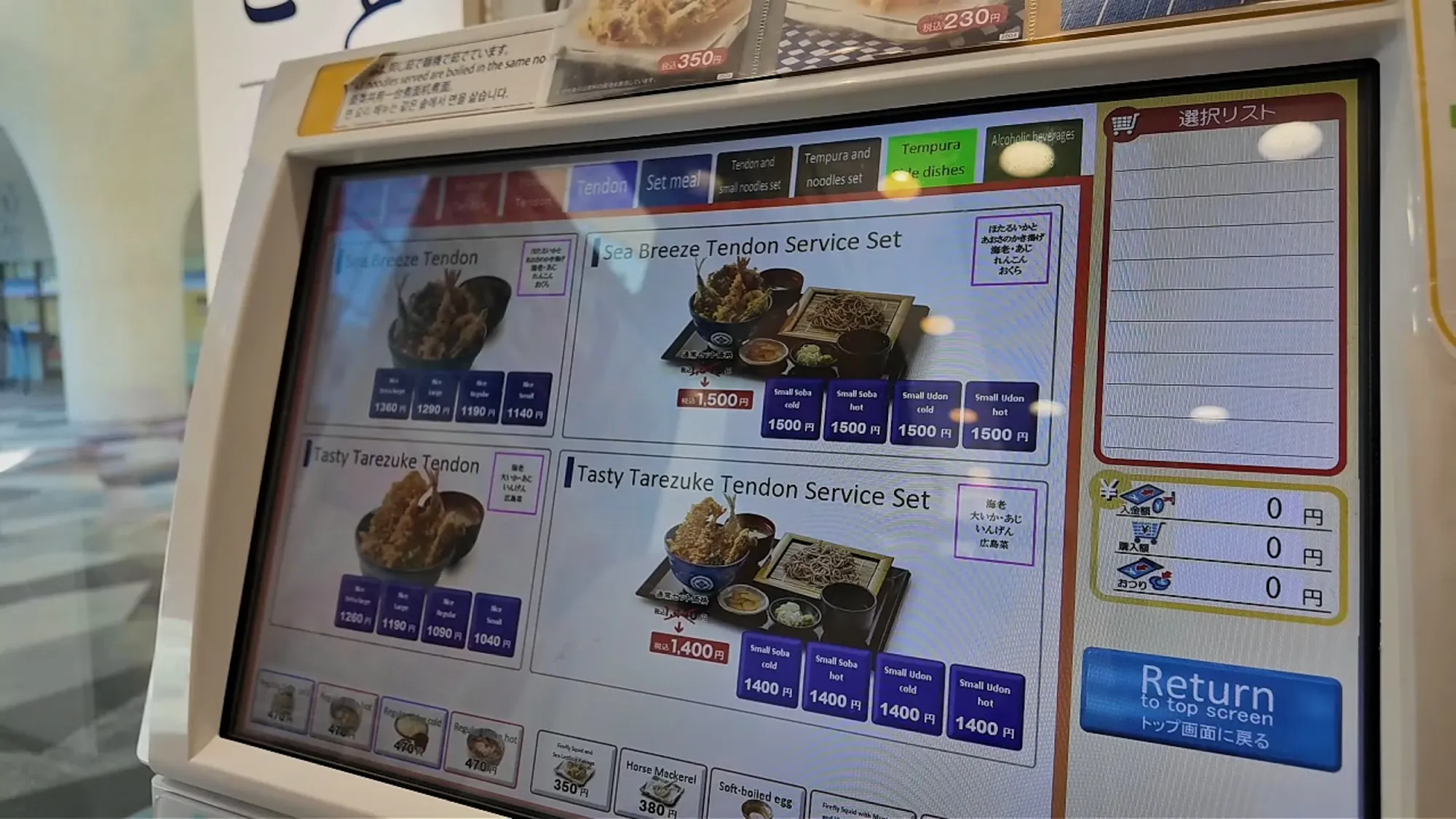
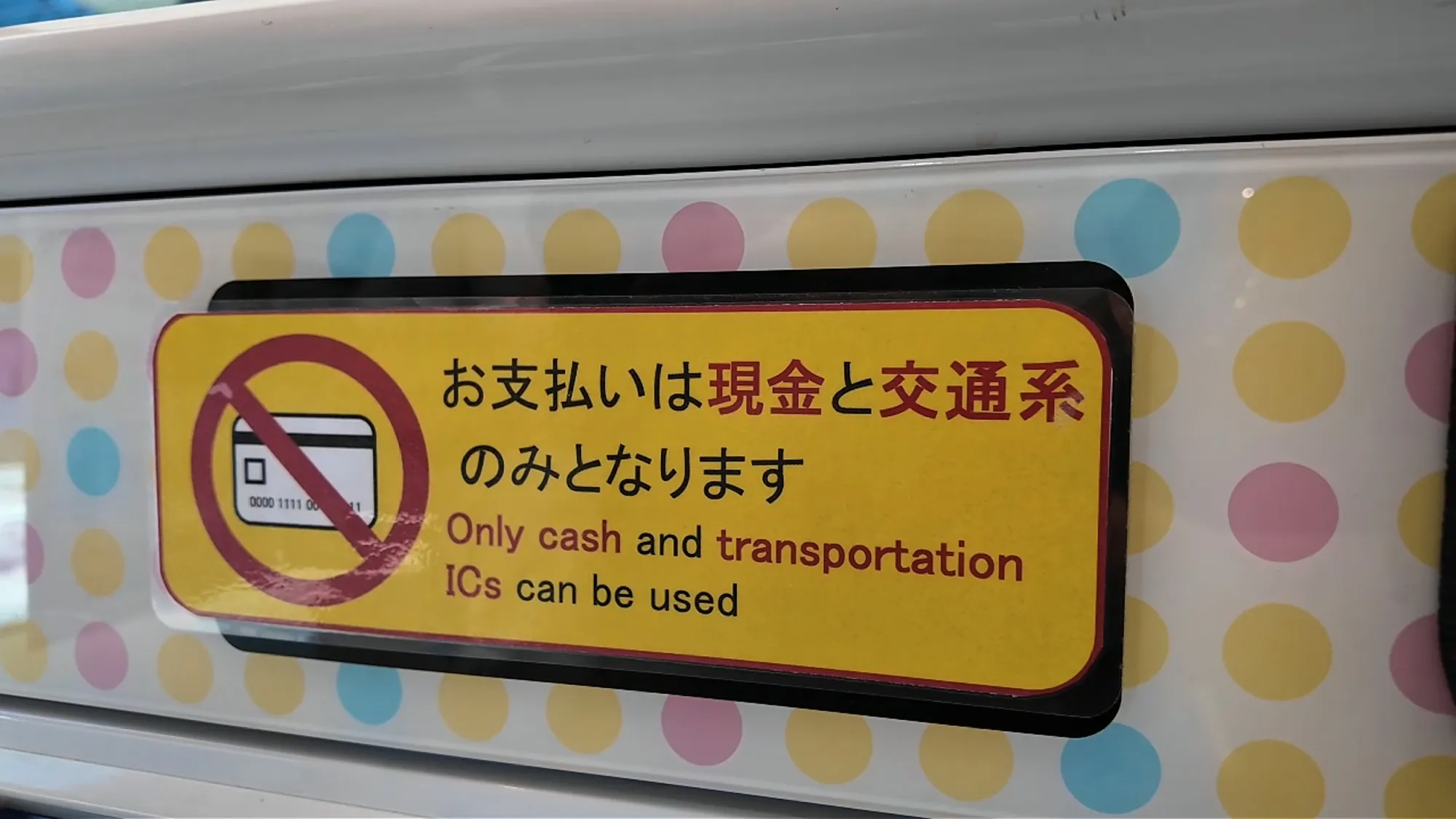
Tempura Tendon Tenya uses the same kind of kiosk with one extra decision: how much rice you want under the tempura. You can also add single pieces of tempura, or go lighter on the rice if a full bowl sounds like too much. The one we used wouldn't accept credit cards, only cash or a transit card, so load Suica before you go.
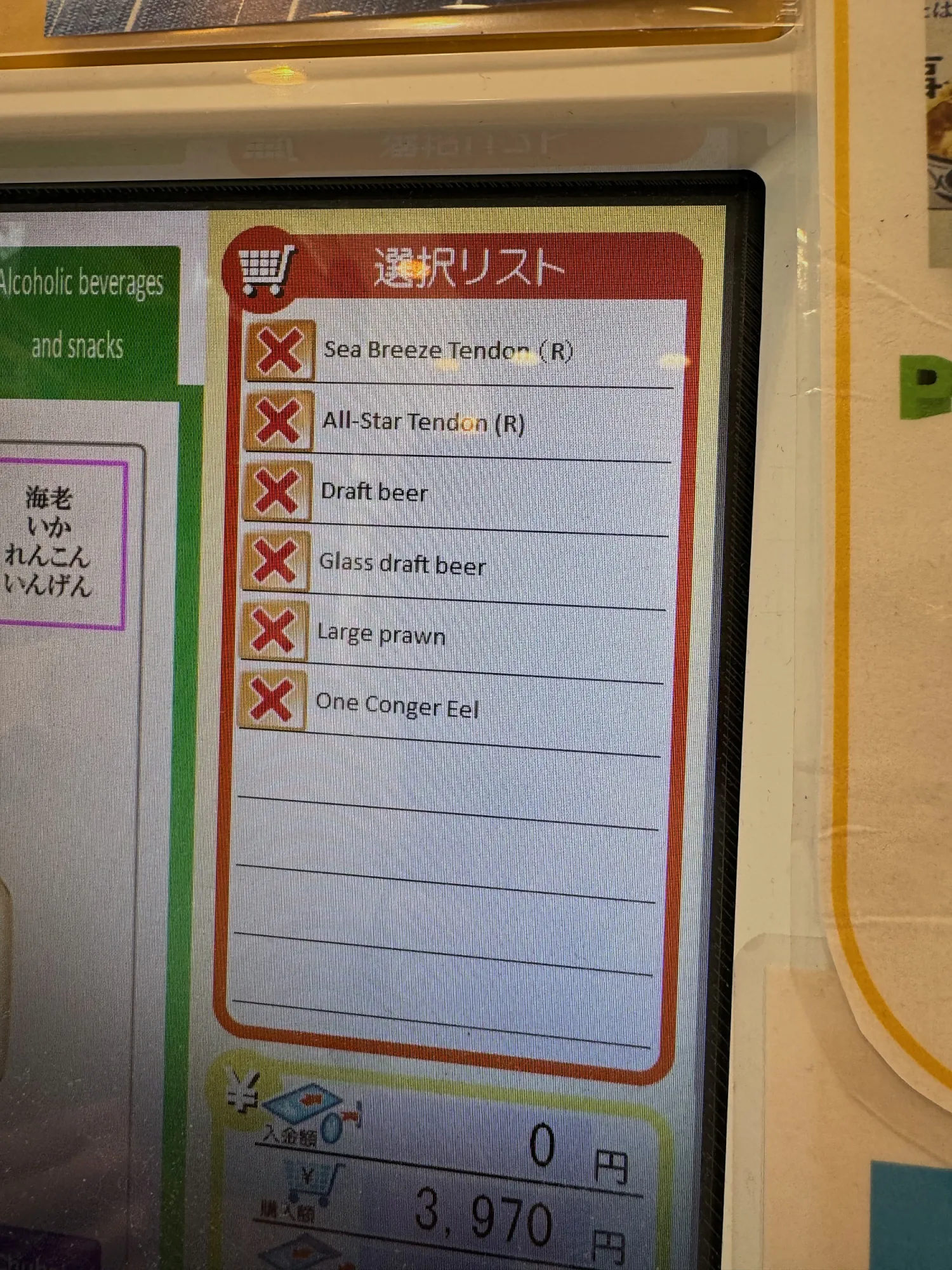
On that first visit, two tendon bowls, a large prawn, a conger eel, and two draft beers added up to 3,970 yen on the screen.
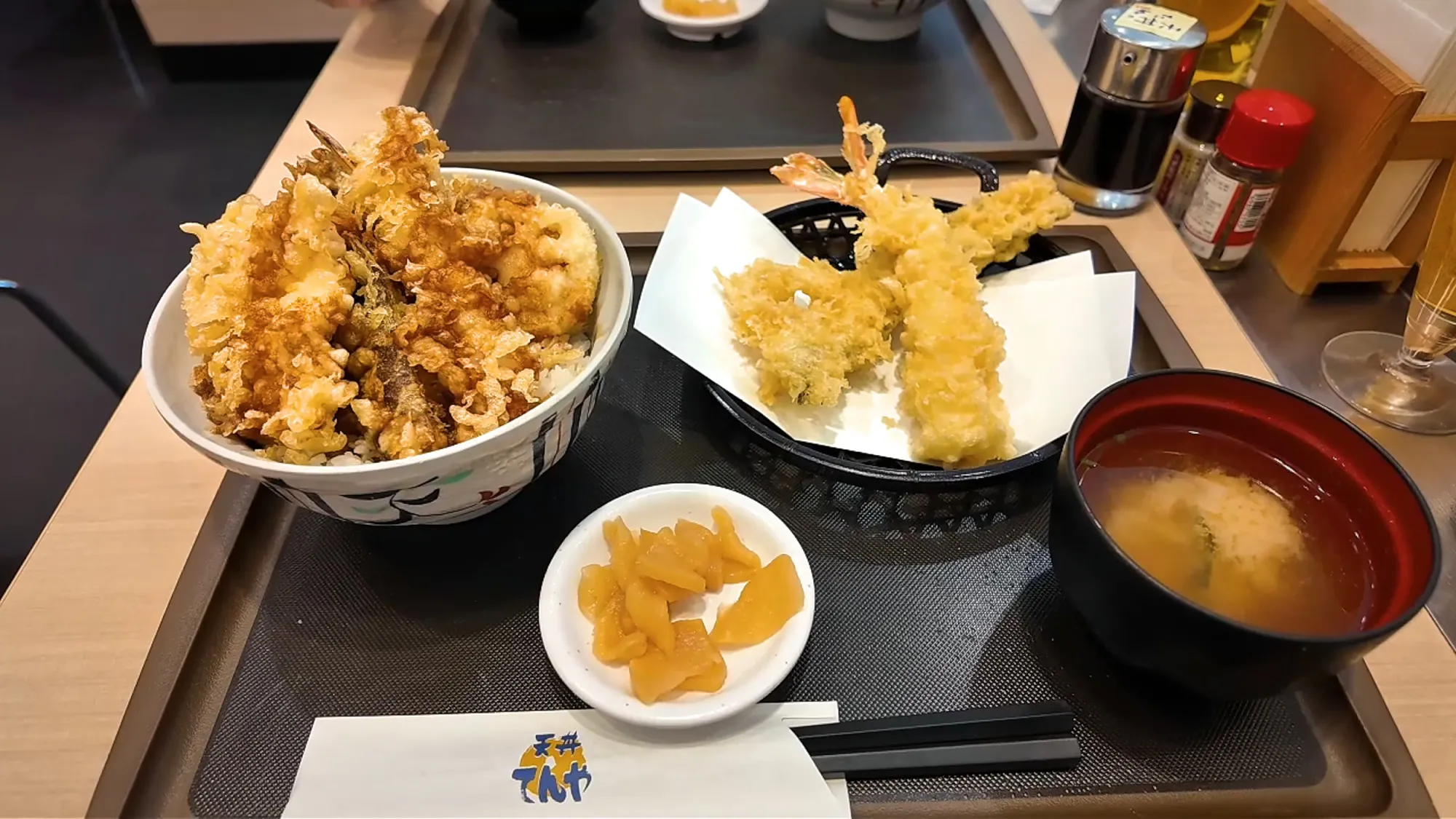
Yayoiken, the set-meal chain, runs the same way: order at the kiosk in English, keep your ticket, and watch for your number above the pickup counter. Ours had a rice refill corner and a tea and water station on either side of that counter.
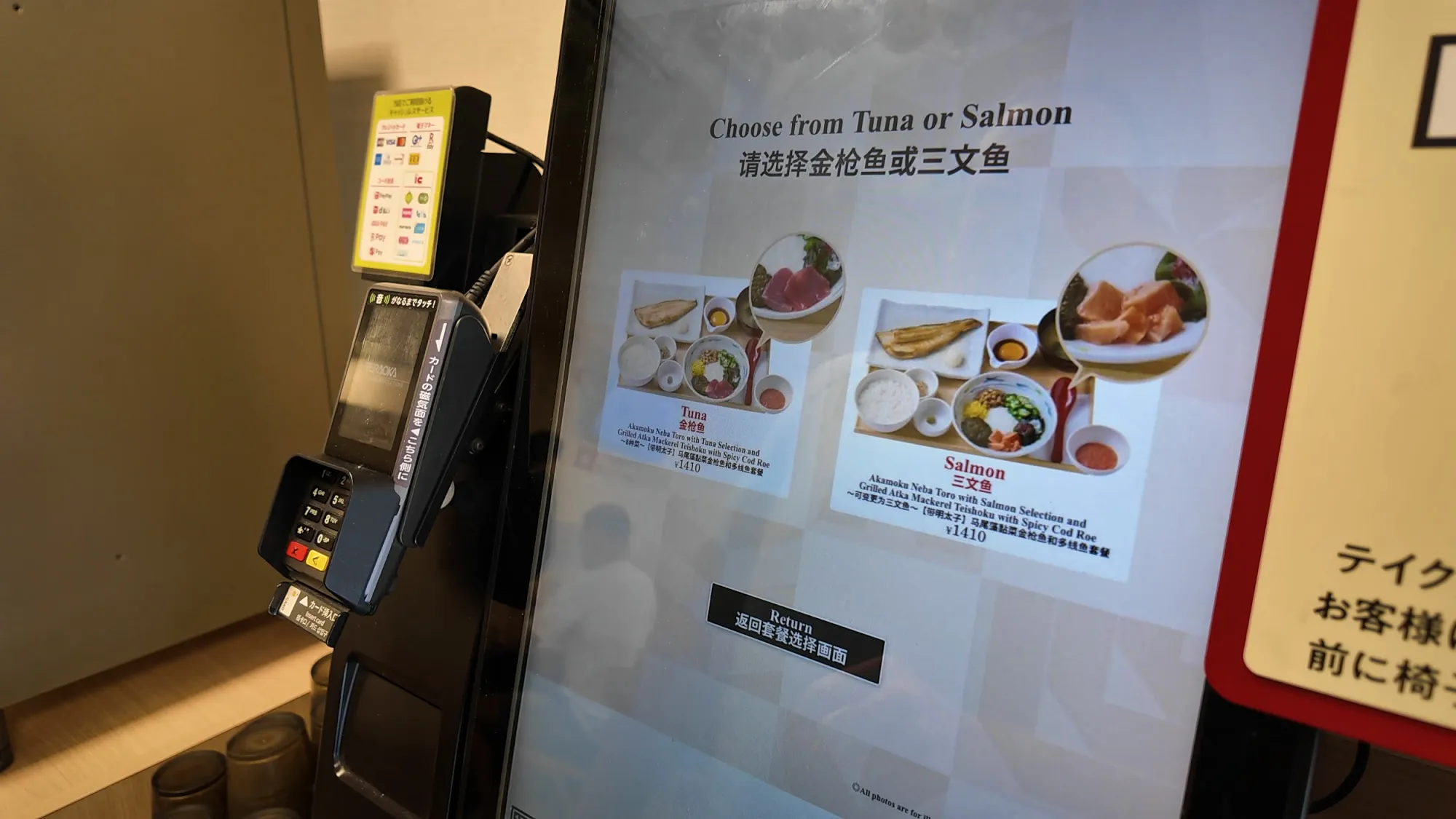
McDonald's in Japan uses the same style of kiosk, with English right on the opening screen. If you're nervous, it's a low-stakes place to practice, and it's one reason we eat McDonald's first in every new country.
The first kiosk we ever used was at a ramen shop in Osaka, a year before this trip, and it baffled us. In the end, it was no harder than checking in for a flight or scanning your own groceries. The trickiest part is finding the language button. The real question came afterward: we were holding a ticket and didn't know whether to keep it or hand it over. It varies. That ramen shop collected it from us, while other places let you hang on to it until your number comes up.
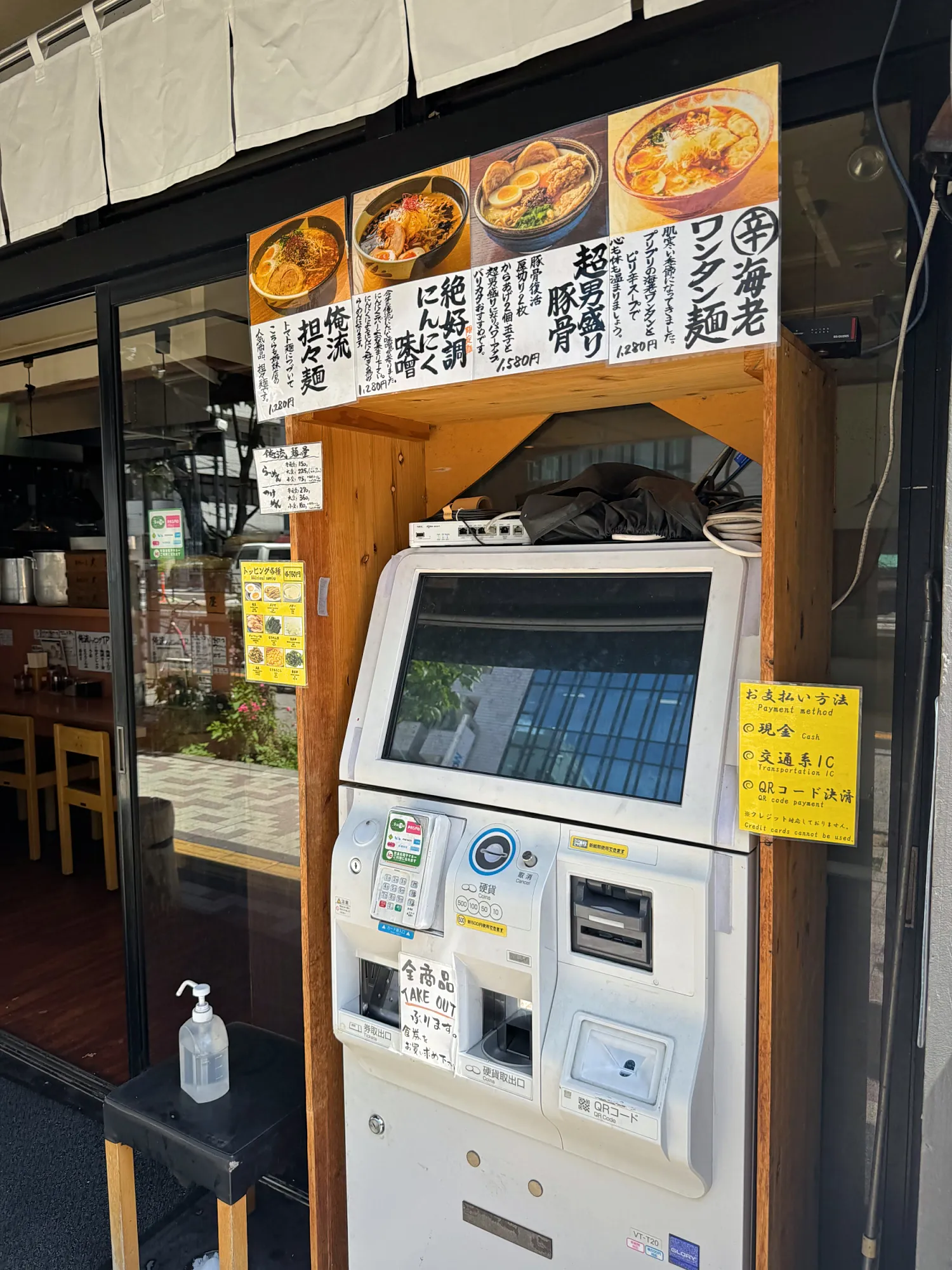
The old-school version. Small ramen shops often still use a meal ticket machine (shokkenki) with rows of buttons instead of a touchscreen.3 The process is the same: press the button for your dish, pay, and hand the ticket to the staff. These are more likely to be in Japanese only and to want cash, so check the payment sign on the machine first.
2. Kiosk Plus an Order Sheet // Ichiran
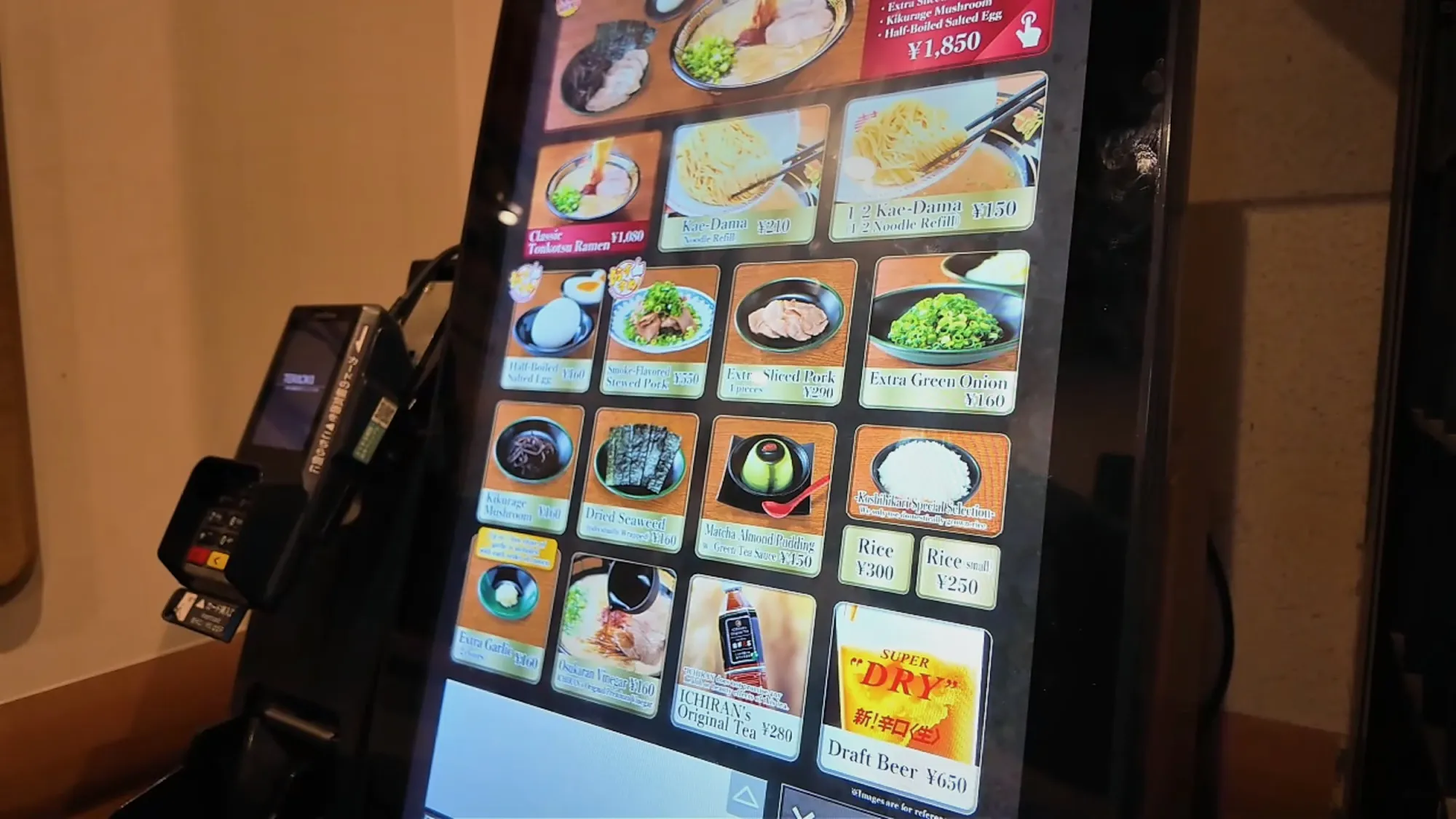
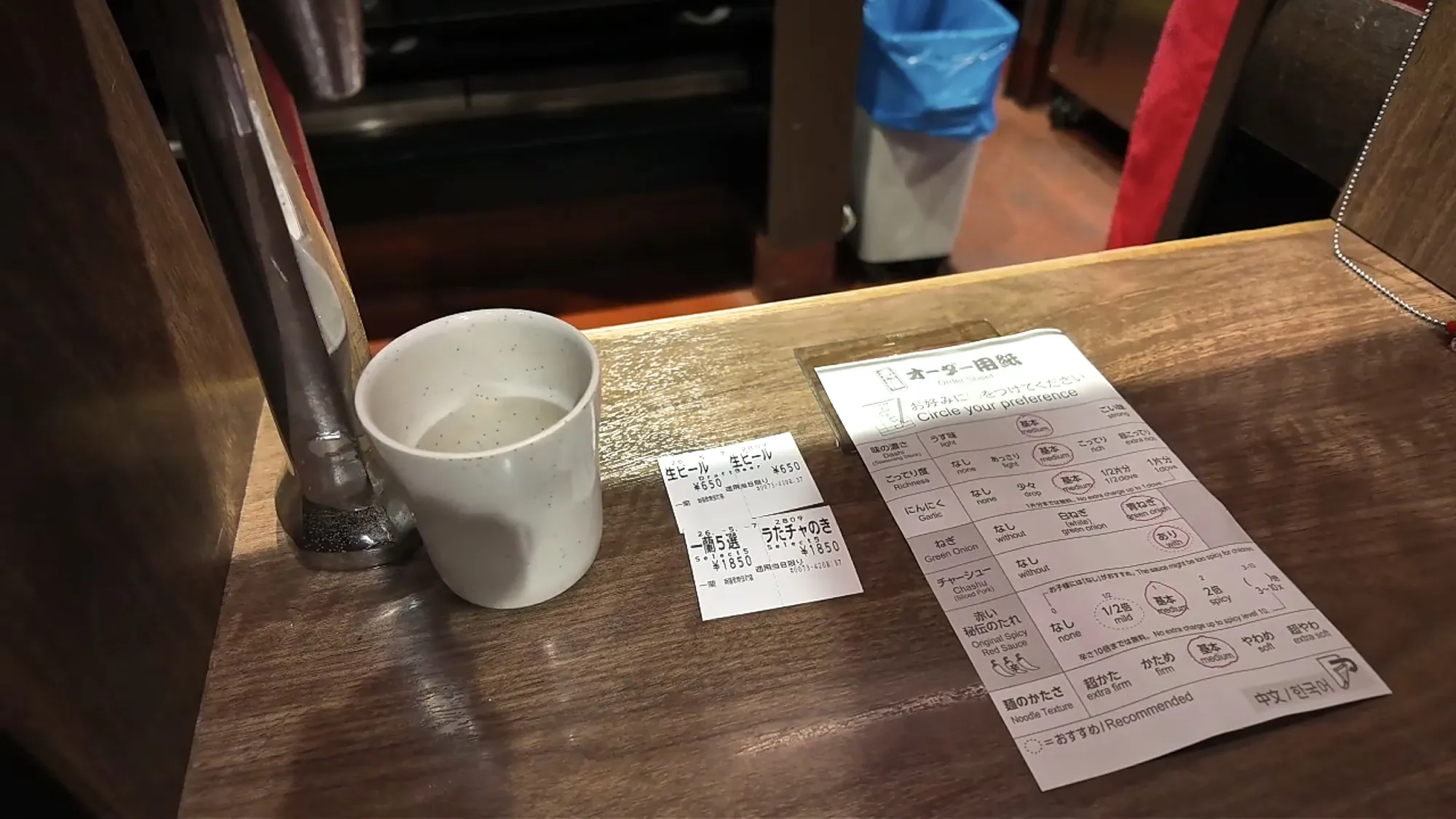
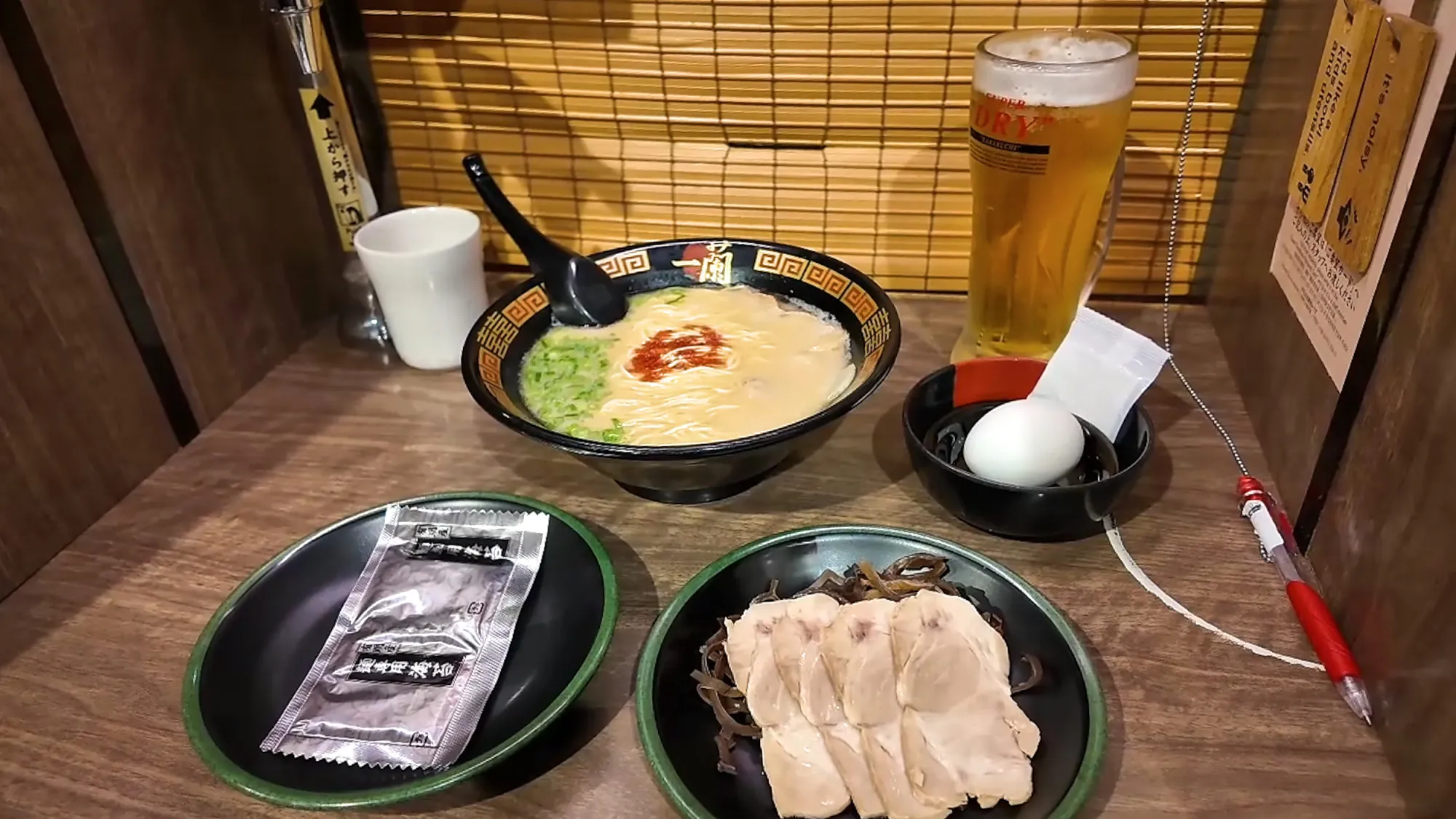
Ichiran, the famous tonkotsu ramen chain, adds one step. You order and pay at a touchscreen kiosk outside the dining room (ours took a credit card), and it prints a ticket for the attendant.
Then you sit in your own solo booth with a bamboo curtain in front of you, and there's a paper order sheet waiting. You circle how you want your bowl: flavor strength, richness, garlic, green onion, chashu pork, the spicy red sauce, and how firm you want the noodles.2 The sheet comes in English, and if you can't decide, Ichiran marks its recommended settings.
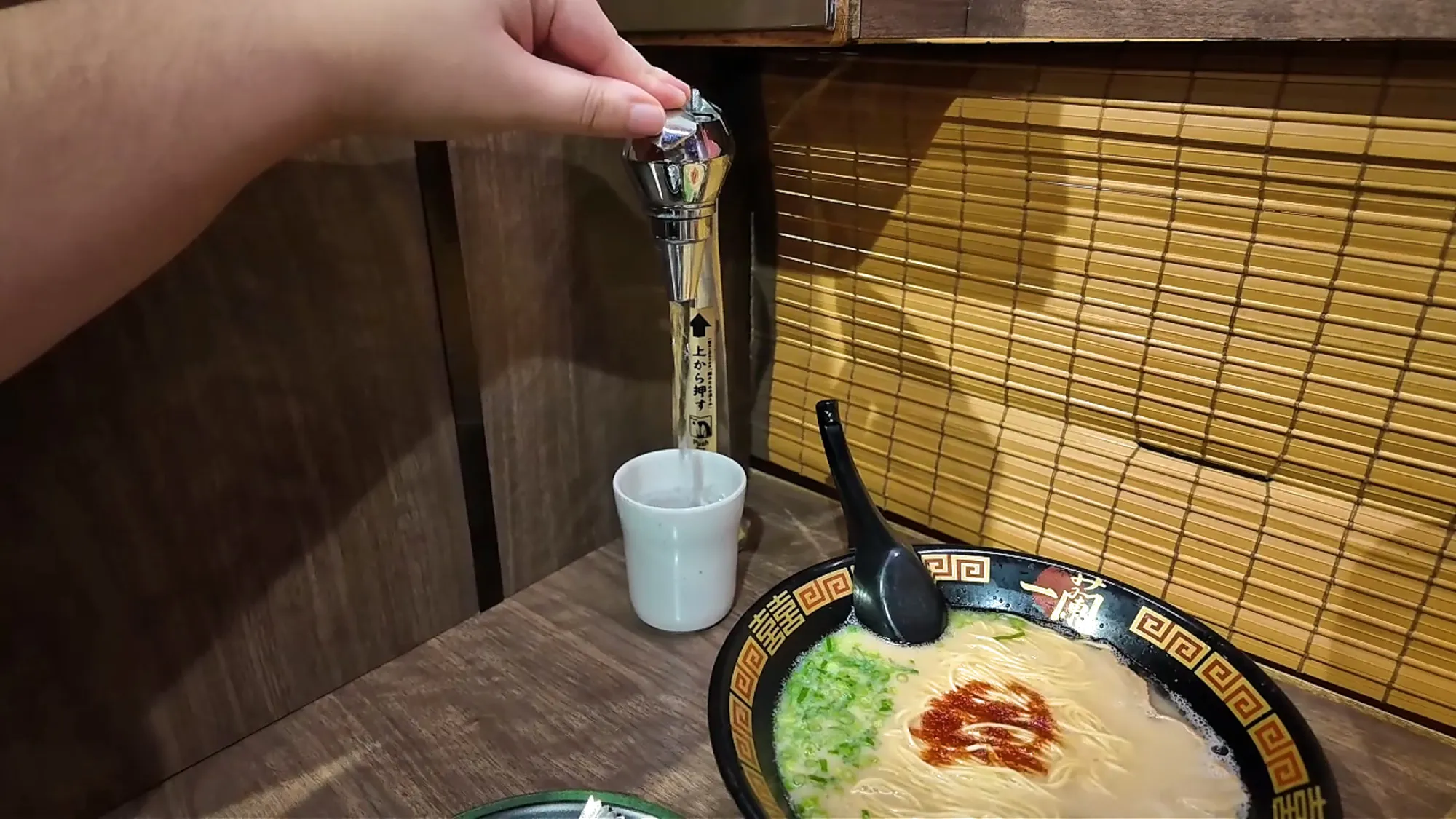
When you're set, the bowl comes through a small window at the front of your booth, and there's a water tap right at your seat. We went at 8 a.m. (here's why) and had the kiosk to ourselves, though the dining room behind it was already full. The only wait was for the noodles.
3. Tablet Ordering at Your Table // Sushiro, Kura Sushi, and Torikizoku
Tablets let you keep ordering in small rounds without waiting for anyone.
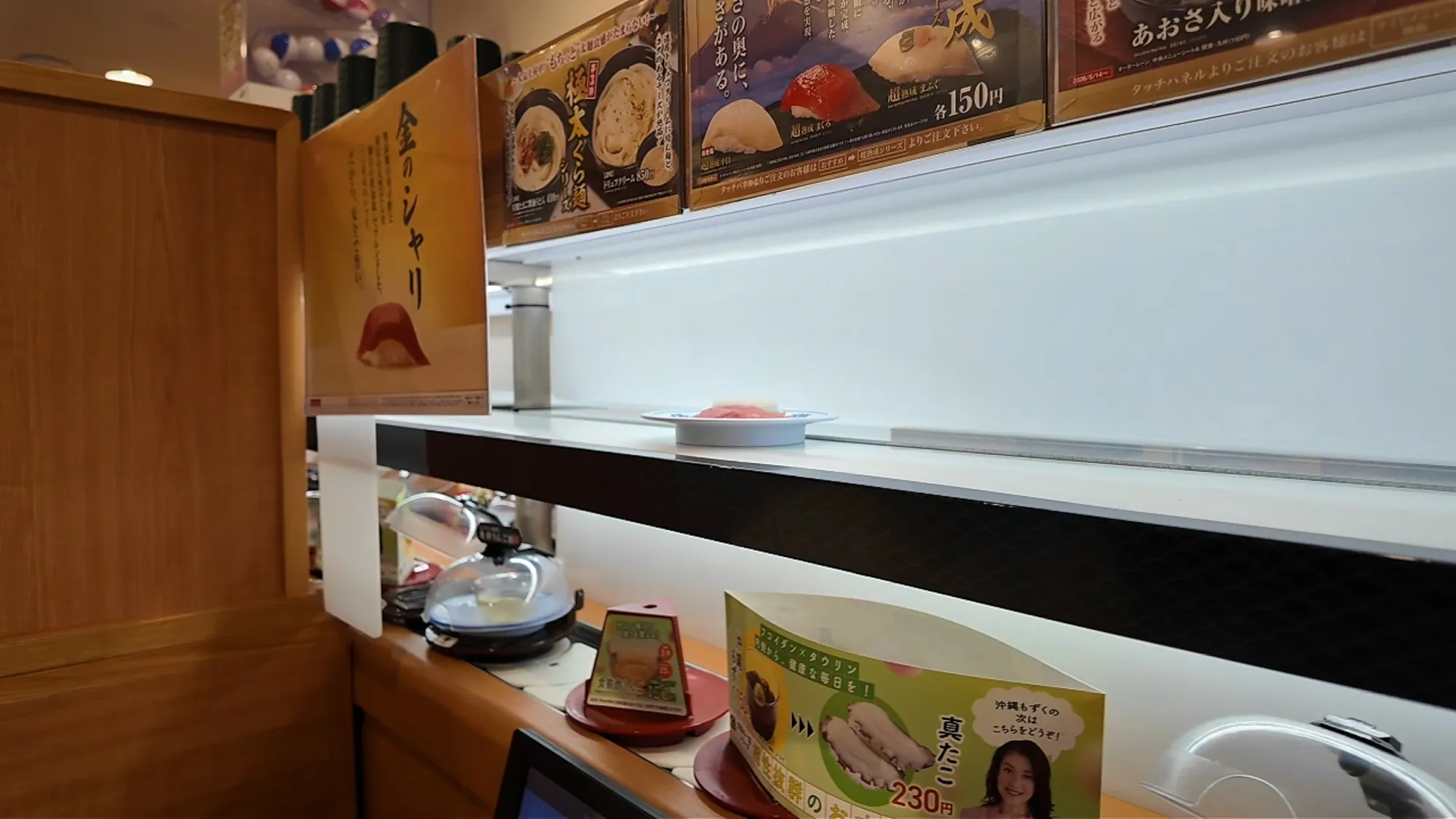
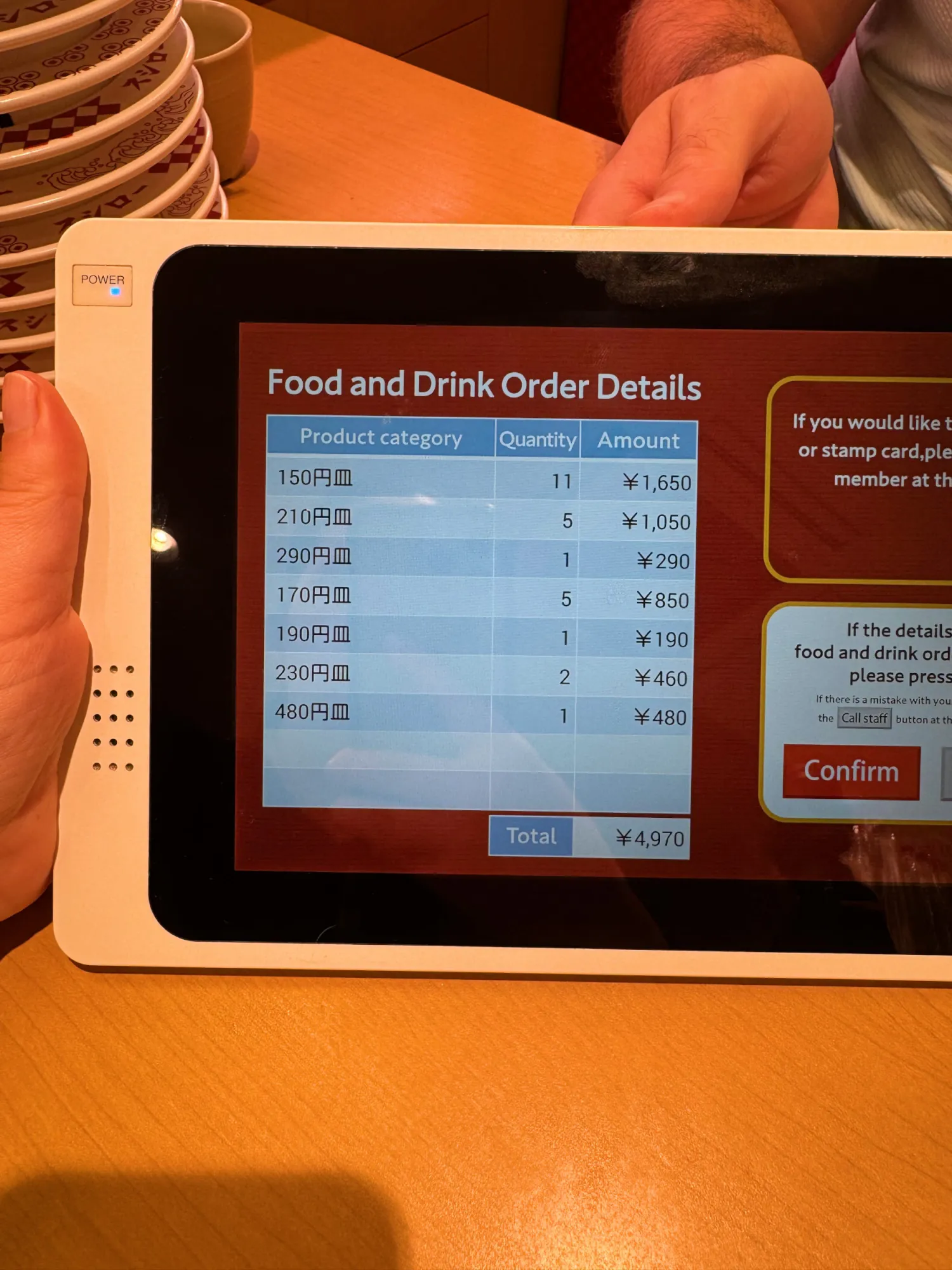
Sushiro's table tablet comes in four languages. You can send up to four plates at a time, and each order rides an express lane that stops right at your seat. Because nobody's watching you order, it's easy to experiment, which is how I ended up sneaking a few surprise plates into a round for Cream. Our Sushiro review has the results.
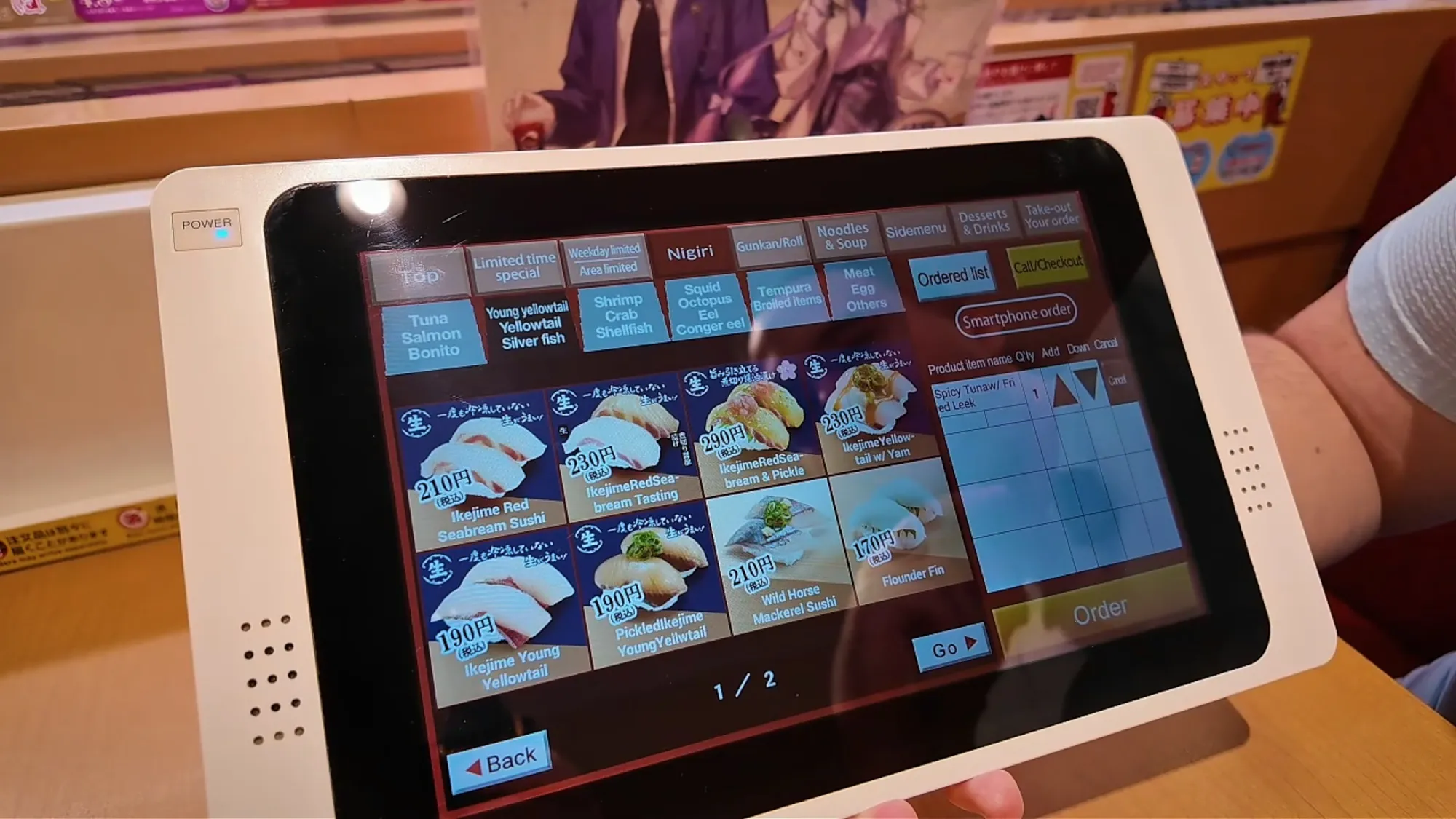
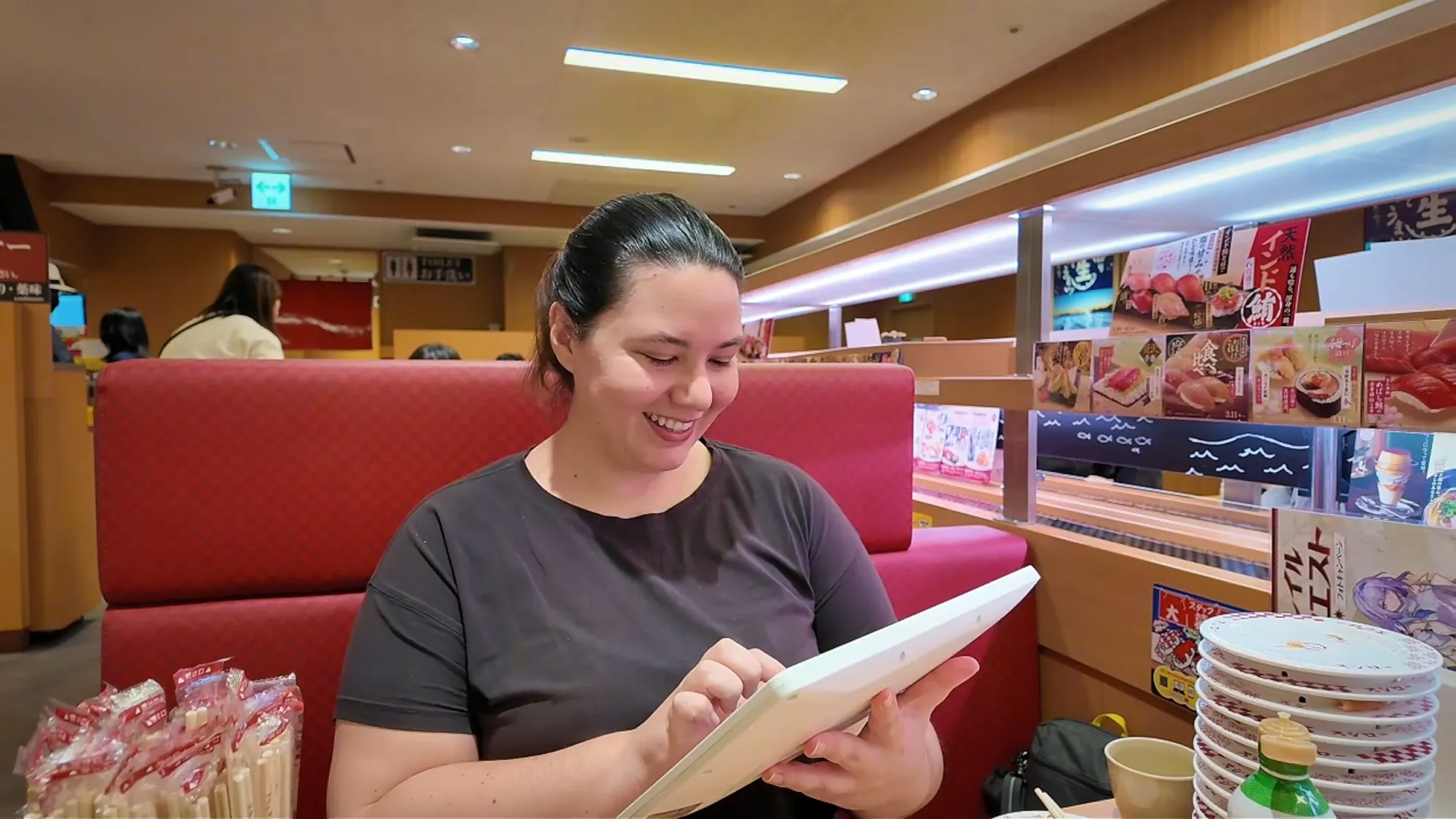
When you're finished, the same tablet pulls up your bill.
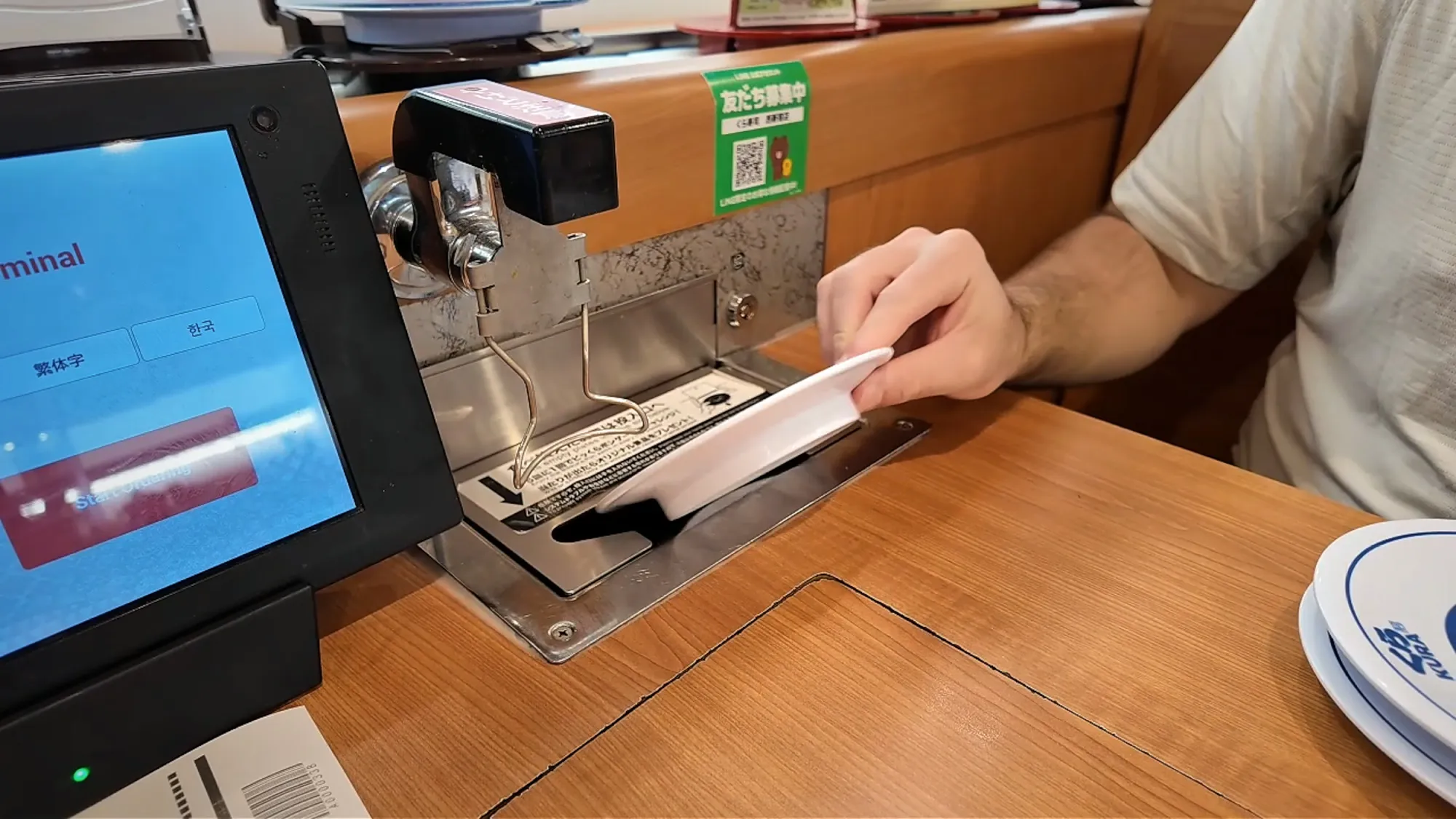
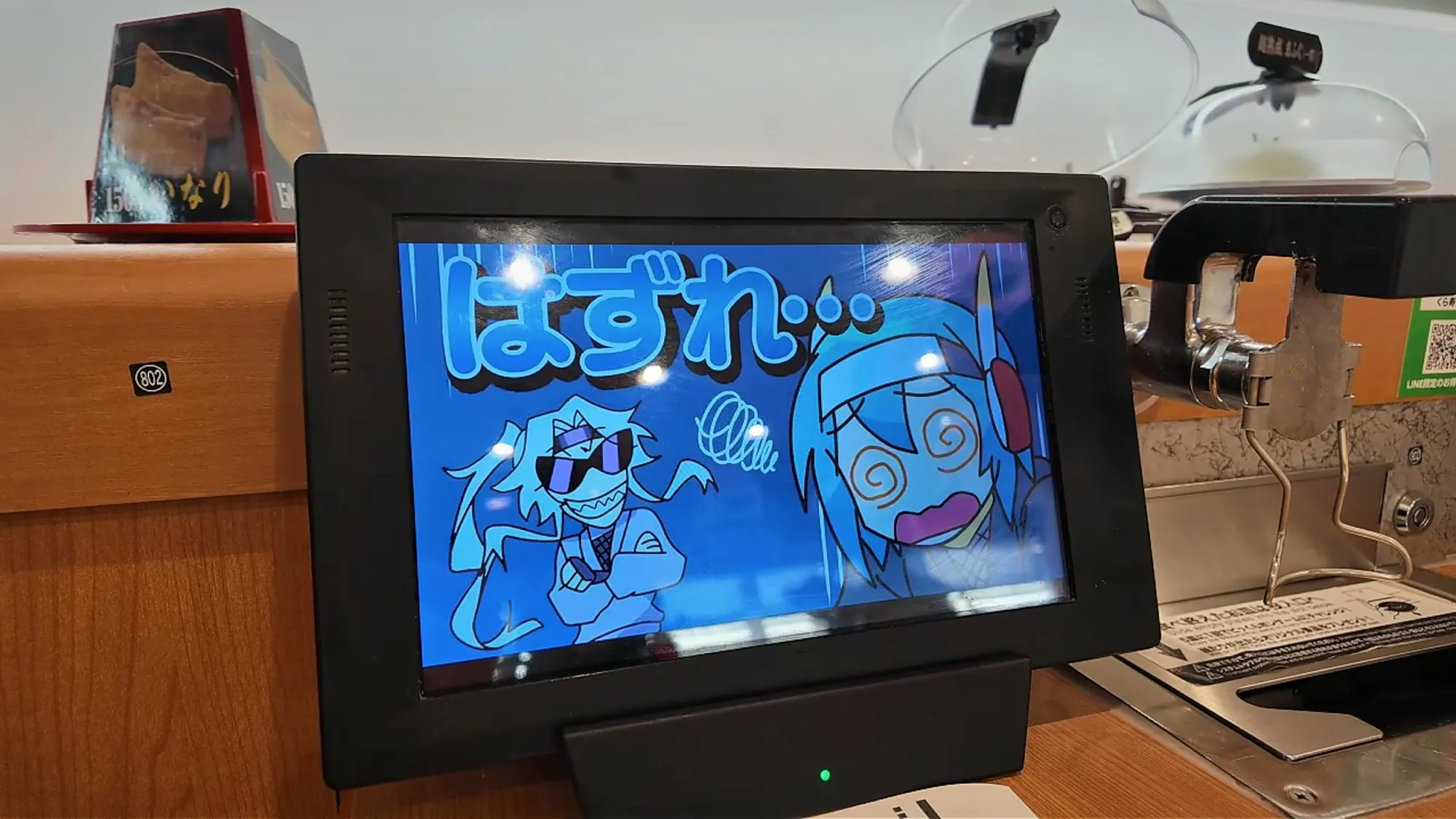
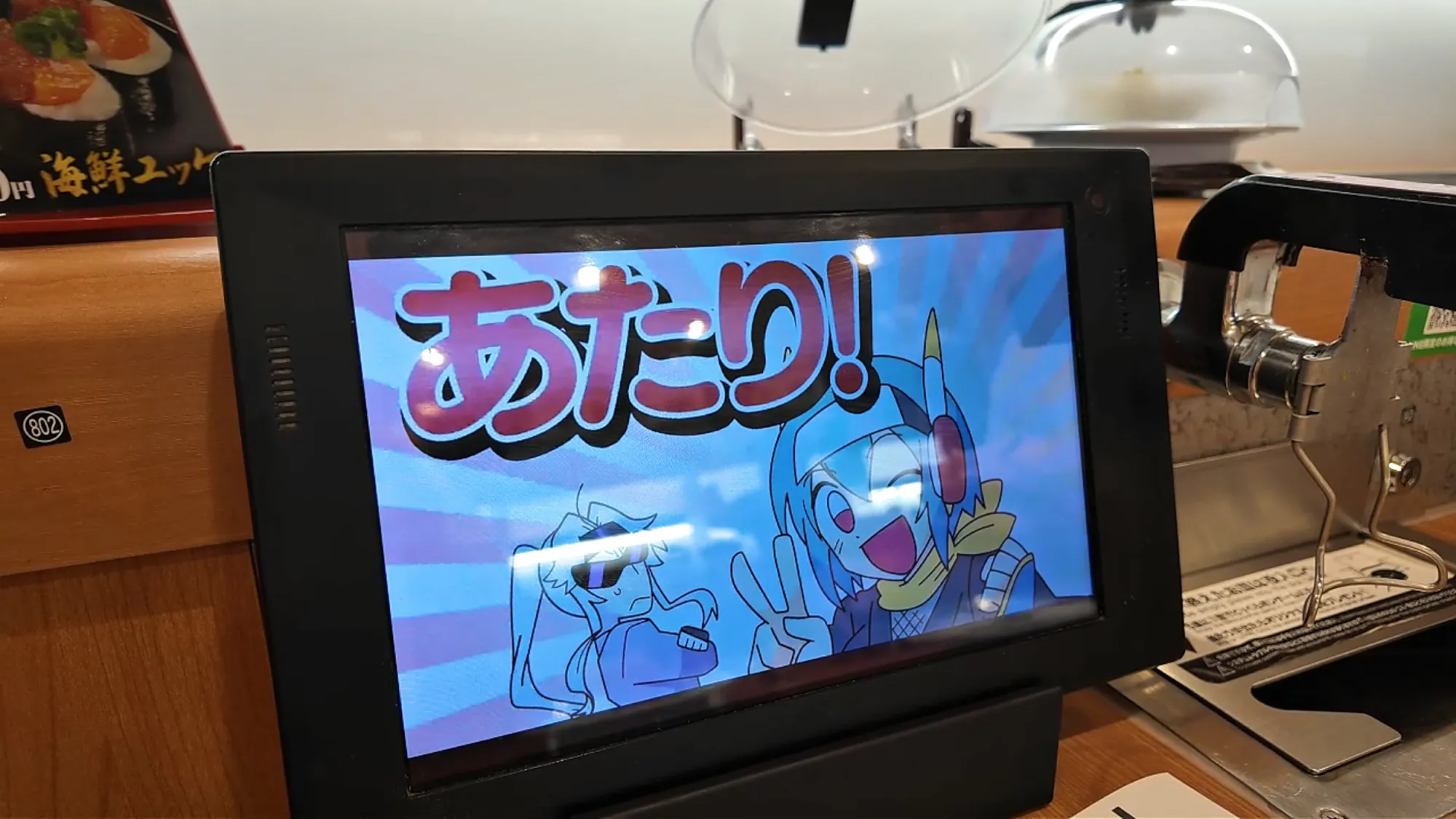
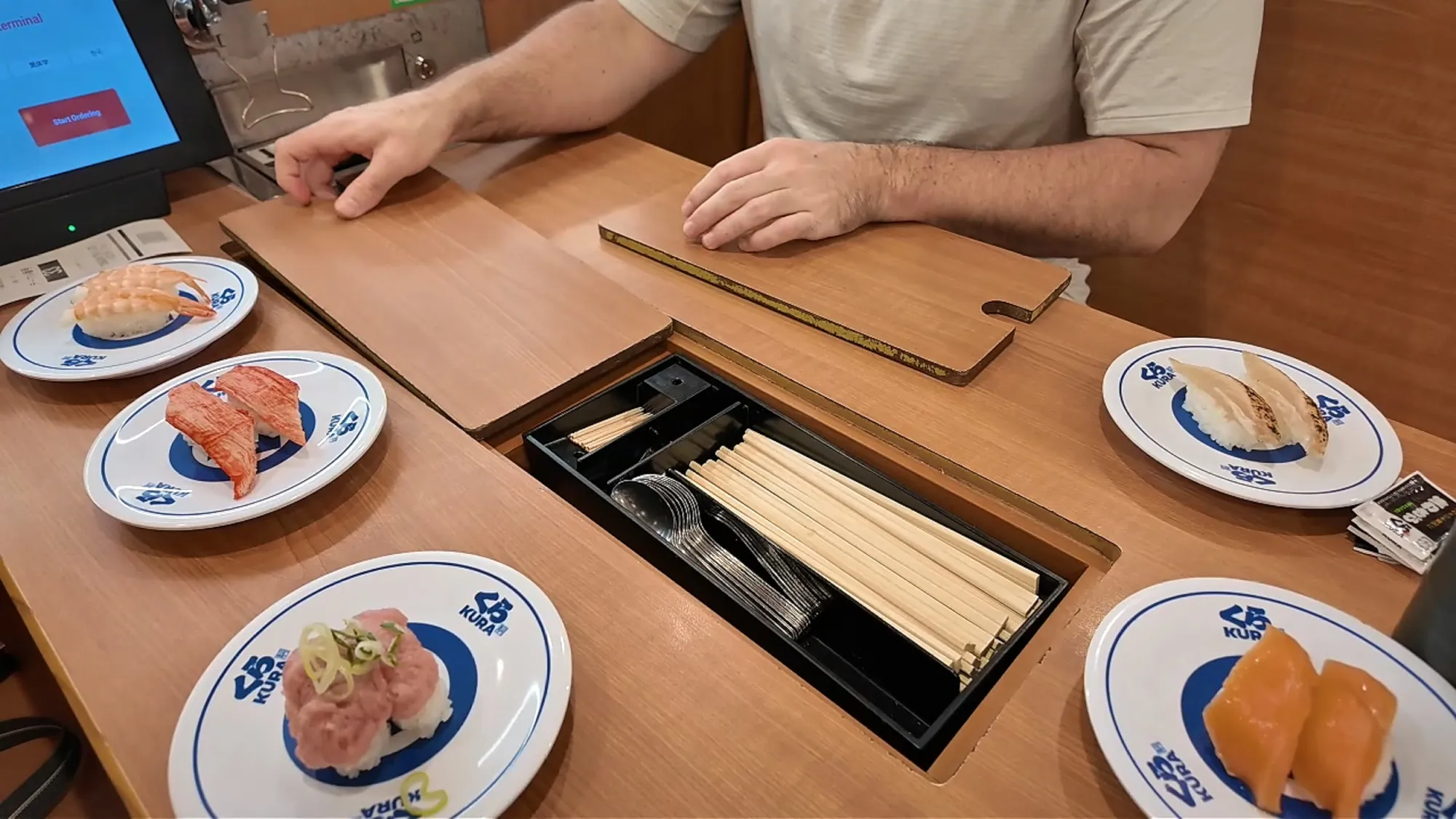
Kura Sushi works the same way, with a game on top. Finished plates go down a slot built into the table, and each batch of five earns you one spin of the Bikkura Pon prize game on the screen.4 We played, of course, and walked away with a small keychain.
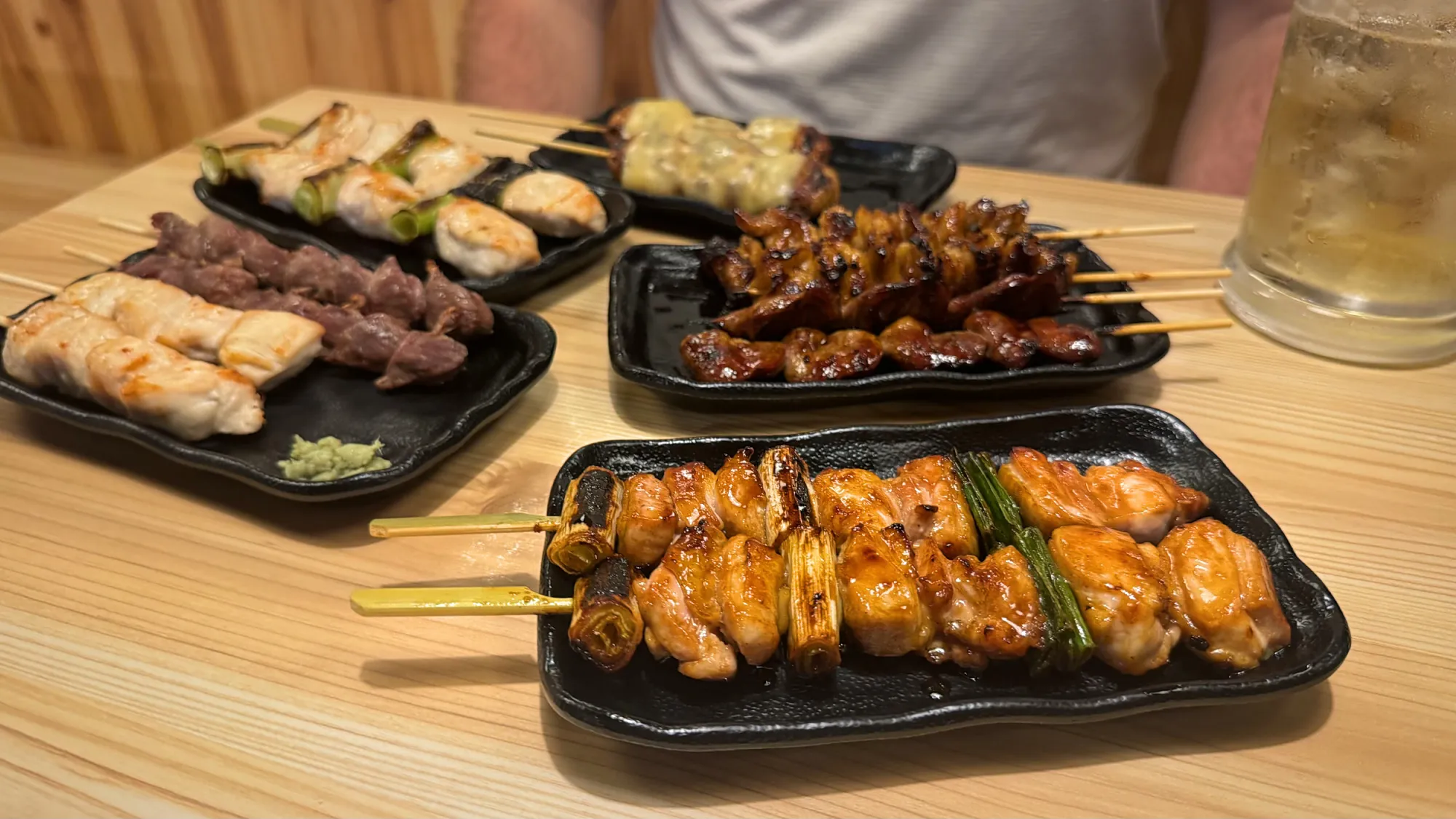
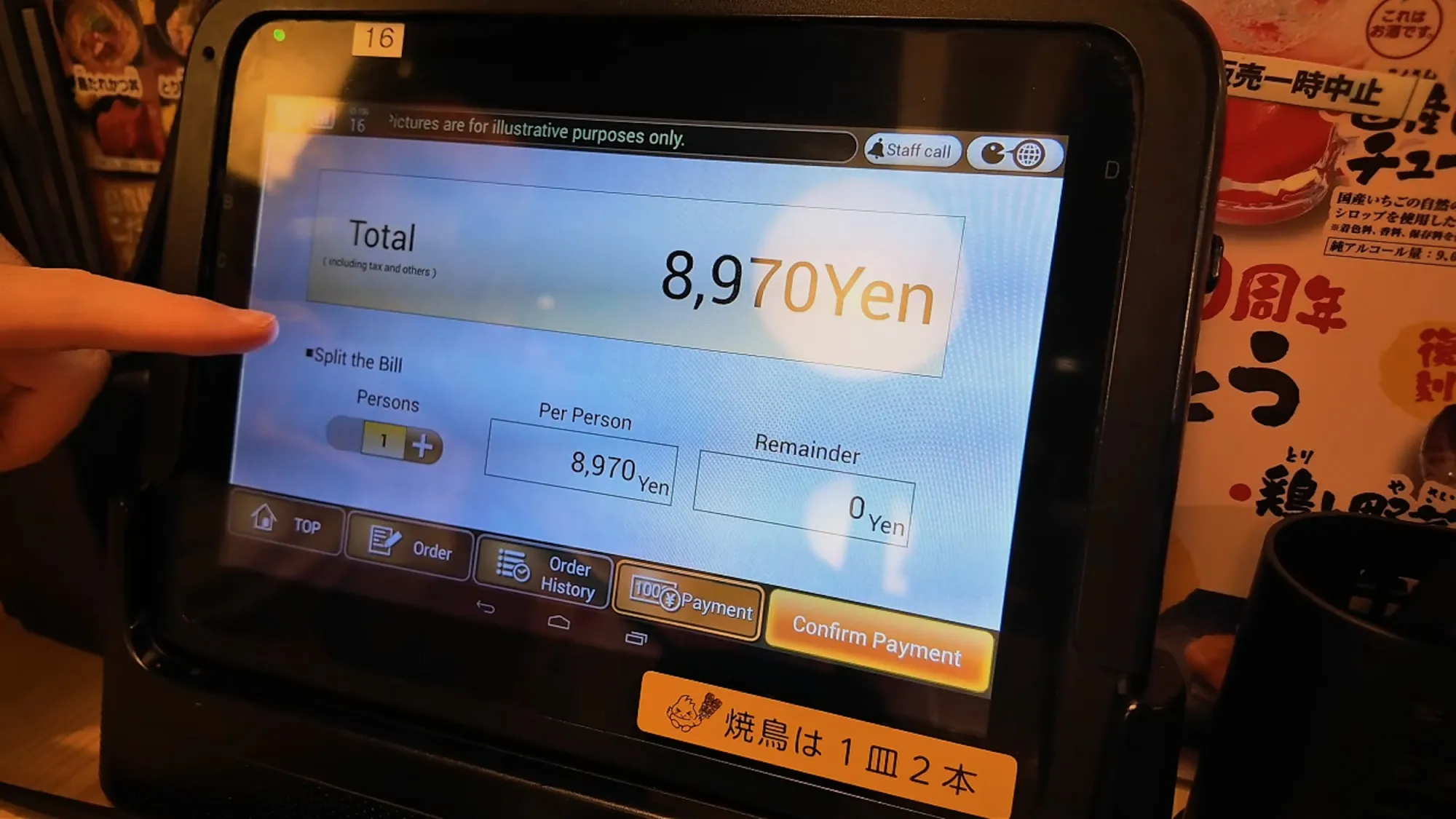
Torikizoku, the yakitori chain, priced everything on its tablet at 390 yen when we went, and each order is two skewers. You order in rounds, and the order history puts a "Reorder" button next to everything you've had, which gets dangerous once the mega highballs start. There's a staff call button on it too, and at the end you can split the bill right on the screen.
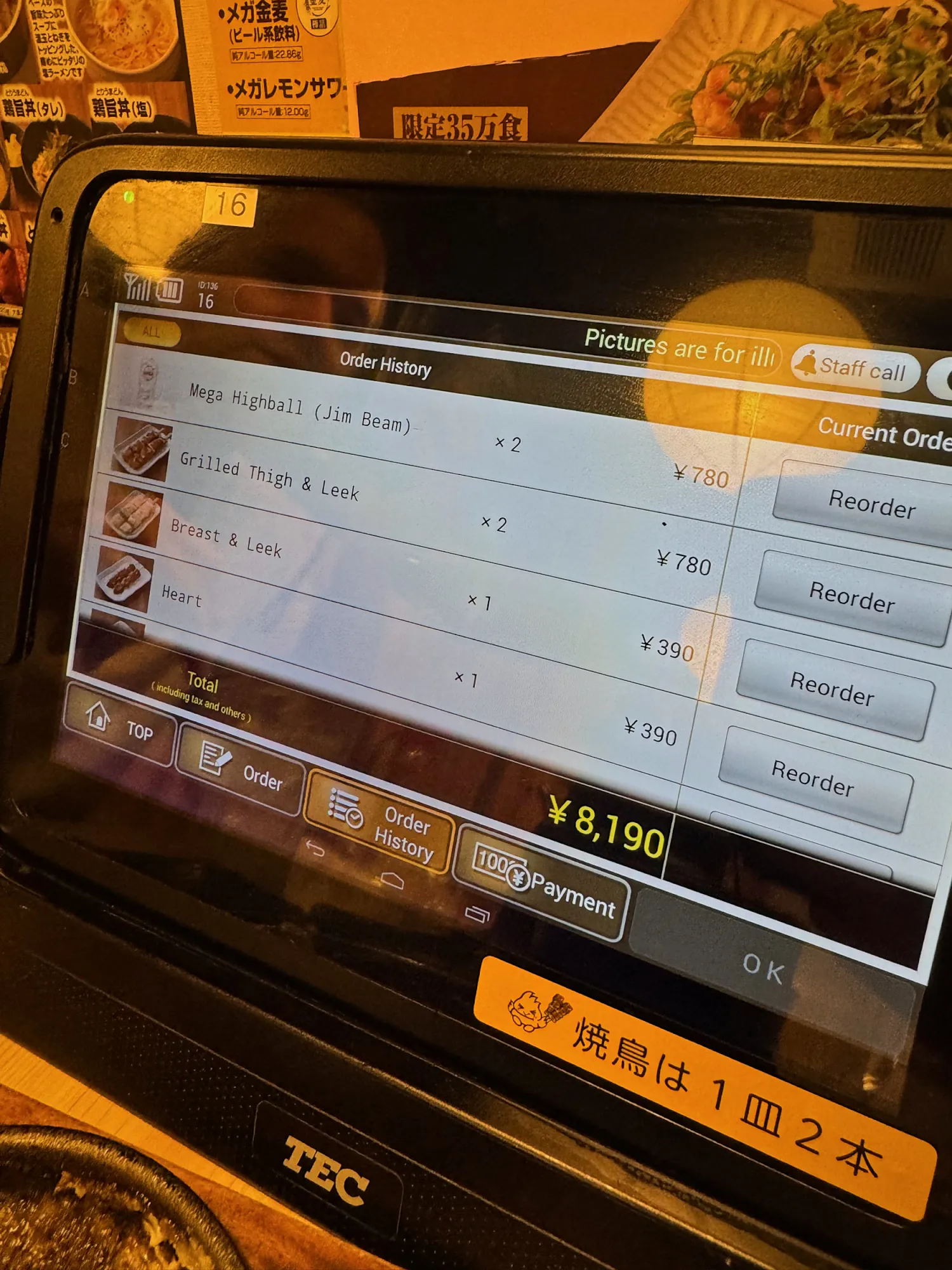
That's the beauty of the tablet: you never have to catch anyone's eye to get another round going. Our Torikizoku review covers what to order.
4. A Call Button // Osakaya
Some sit-down restaurants have no kiosk and no tablet, just a button on the table or the wall. At Osakaya, a teppan (iron griddle) restaurant where we had okonomiyaki and monjayaki, you choose from the menu and press the button when you're ready to order. A server comes over to take your order.
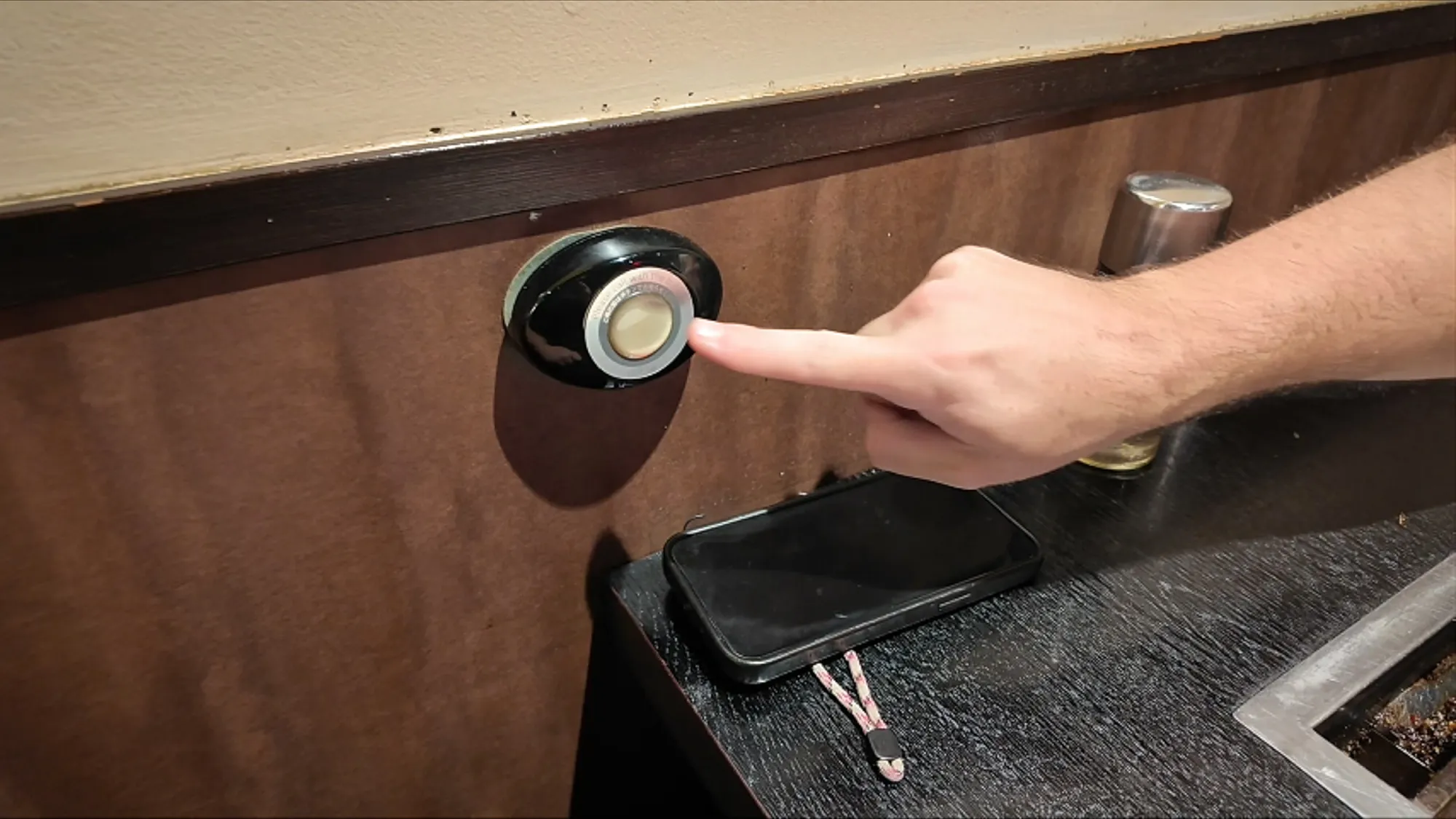
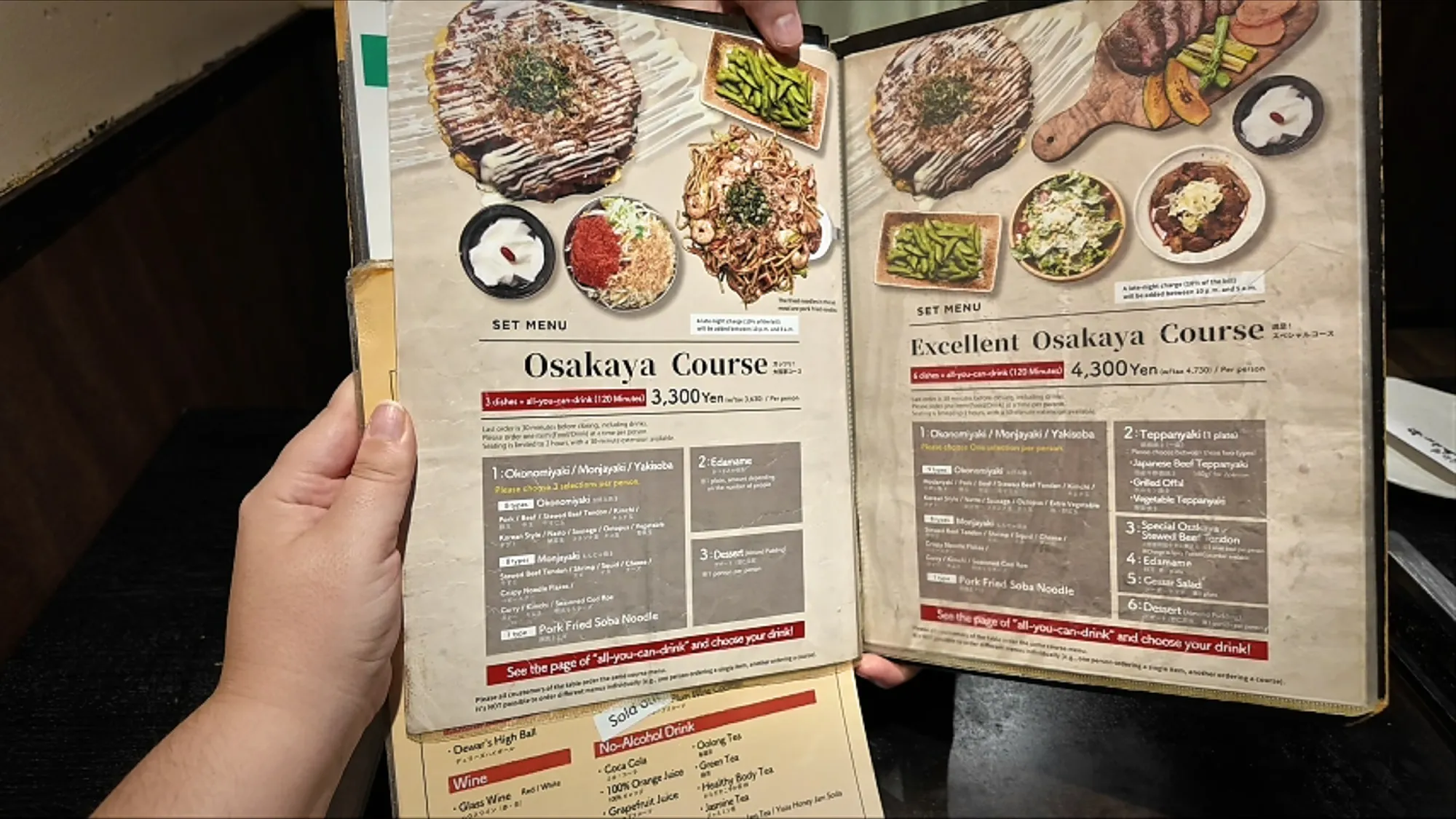
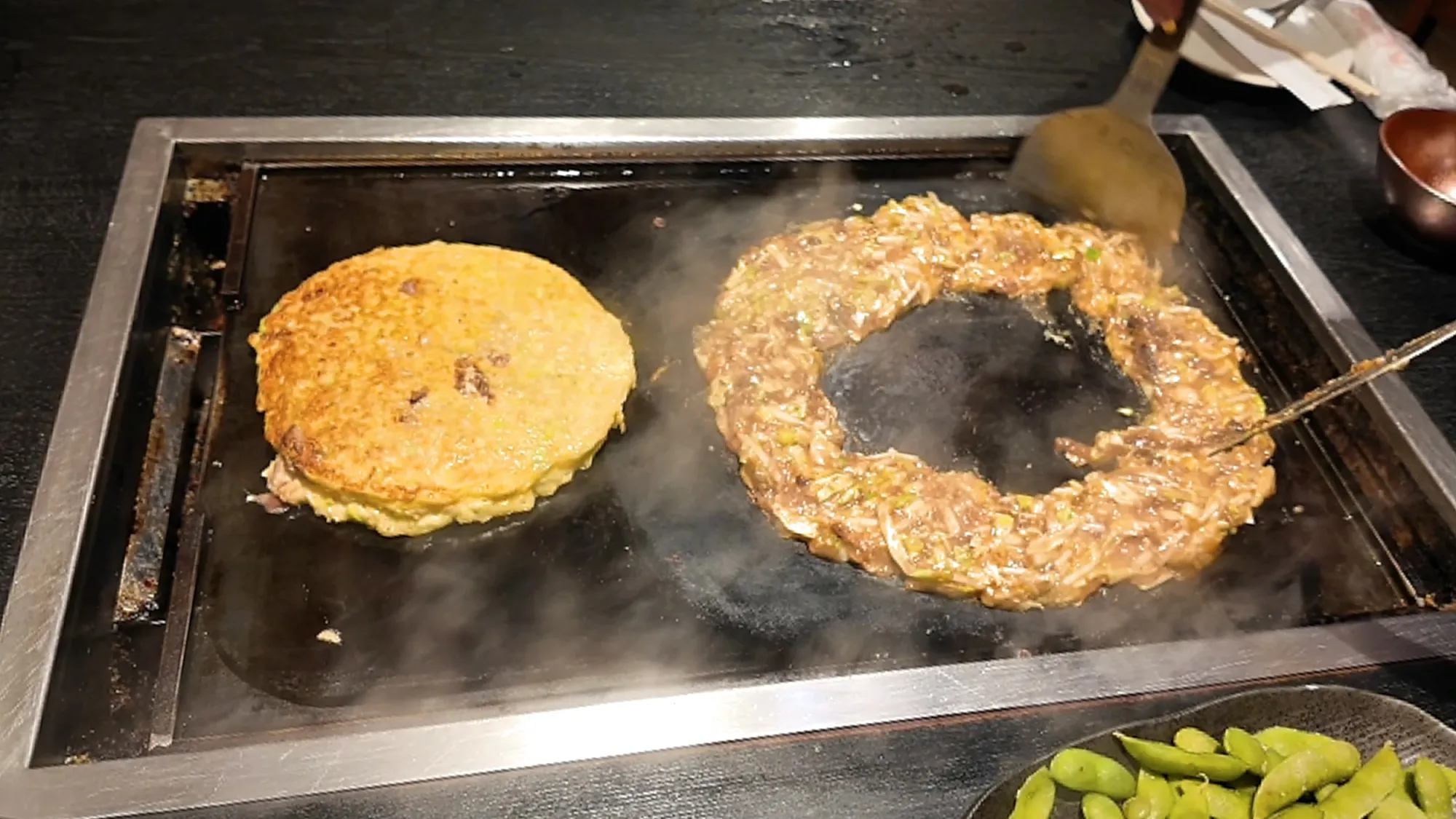
Osakaya's menu had English, so ordering the Osakaya Course with all-you-can-drink took a single press of the button. The part no menu explains is who does the cooking. Our bowls arrived raw, cabbage and batter and all, and neither of us could tell whether the griddle was our job or the staff's. It was theirs: a server oiled it and cooked every dish in front of us, which was a relief, because I doubt I'd have managed. Our Osakaya review has the whole morning.
5. Menu Book // CoCo Ichibanya
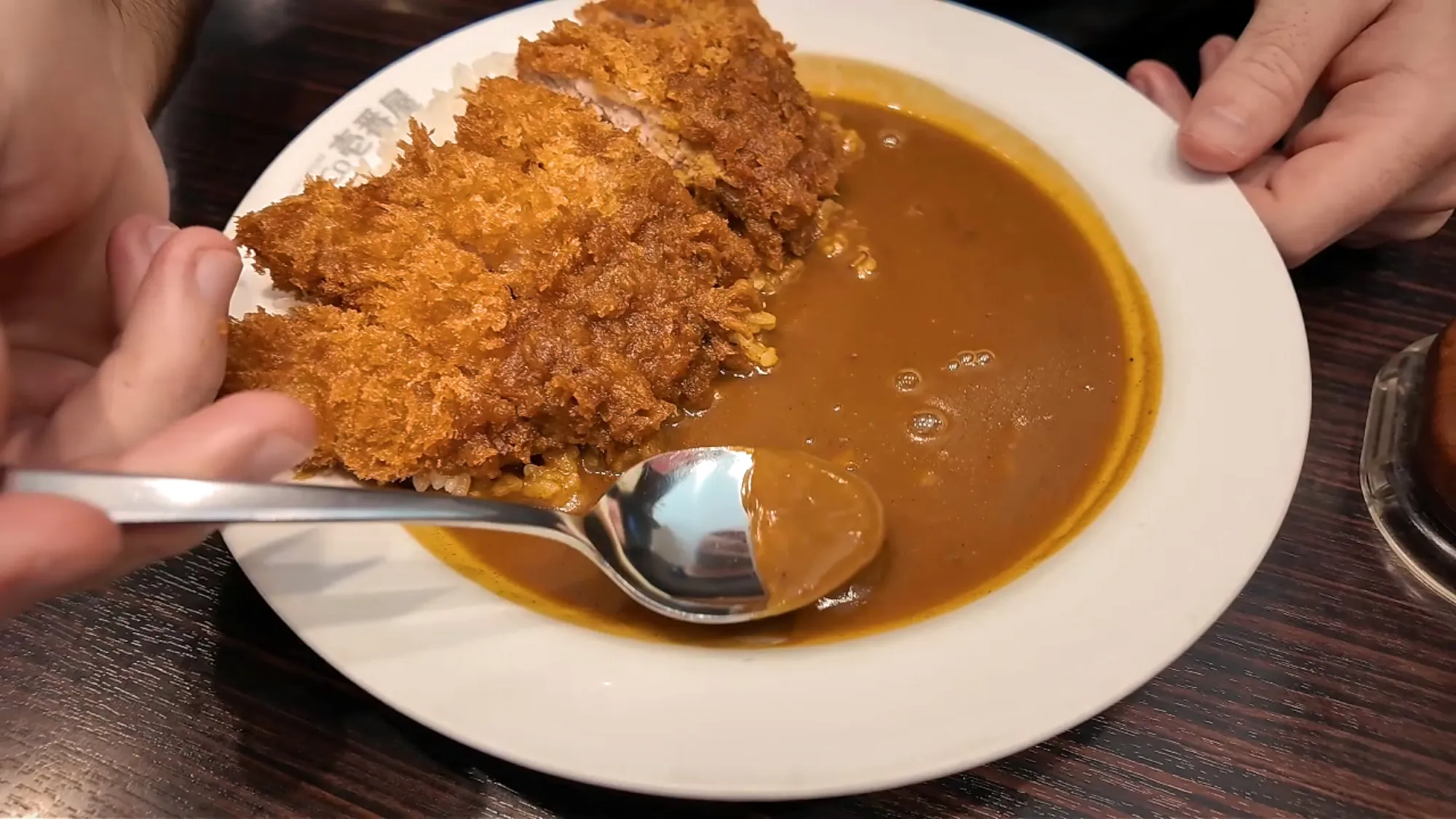
CoCo Ichibanya, the Japanese curry chain, was the most traditional of the bunch. You get a menu book with photos and English, a server takes your order, and you build your curry in layers: the curry and rice are the base, then you pick a protein (ours were pork cutlet and chicken cutlet) and a spice level (we chose standard).
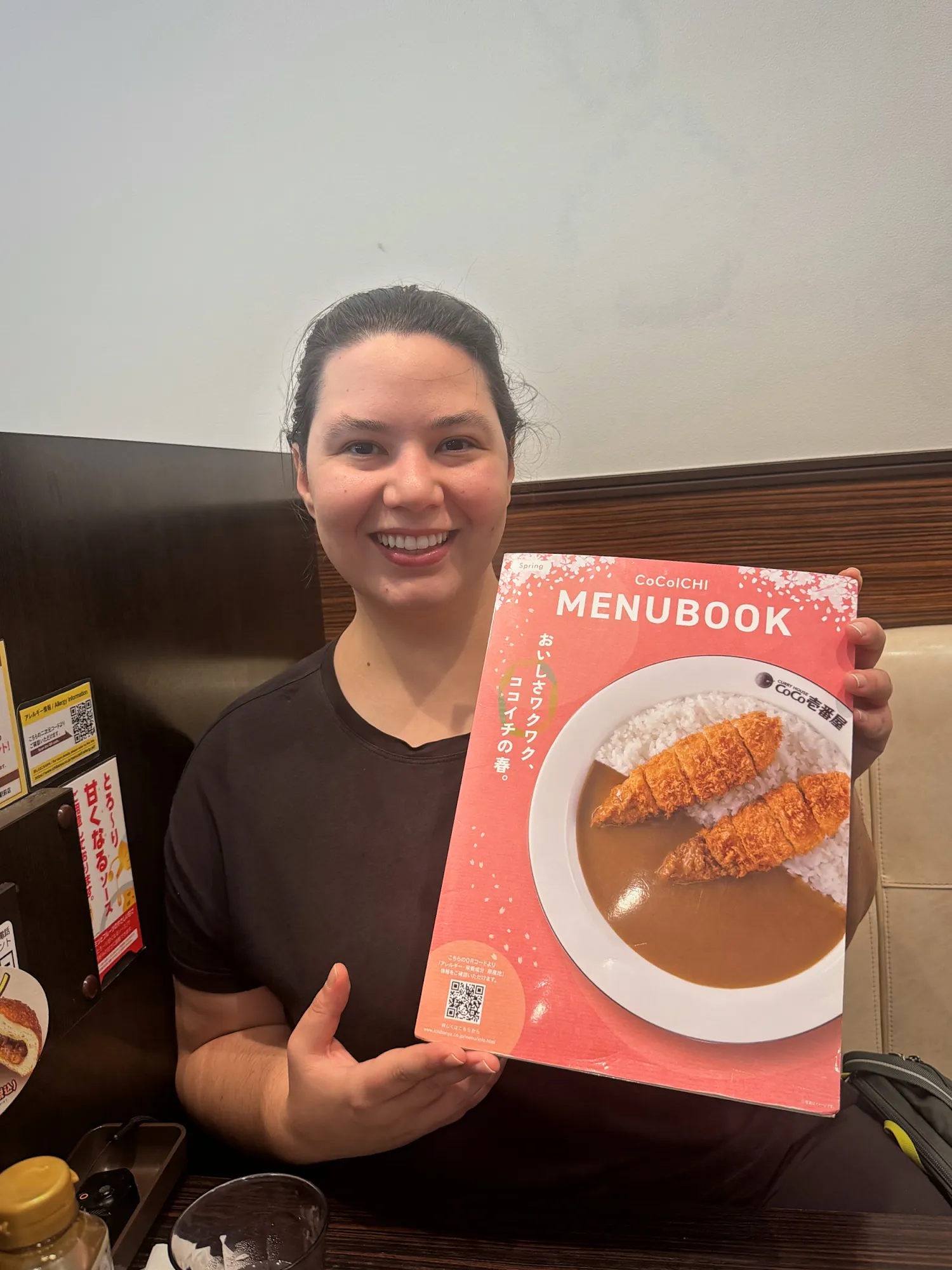
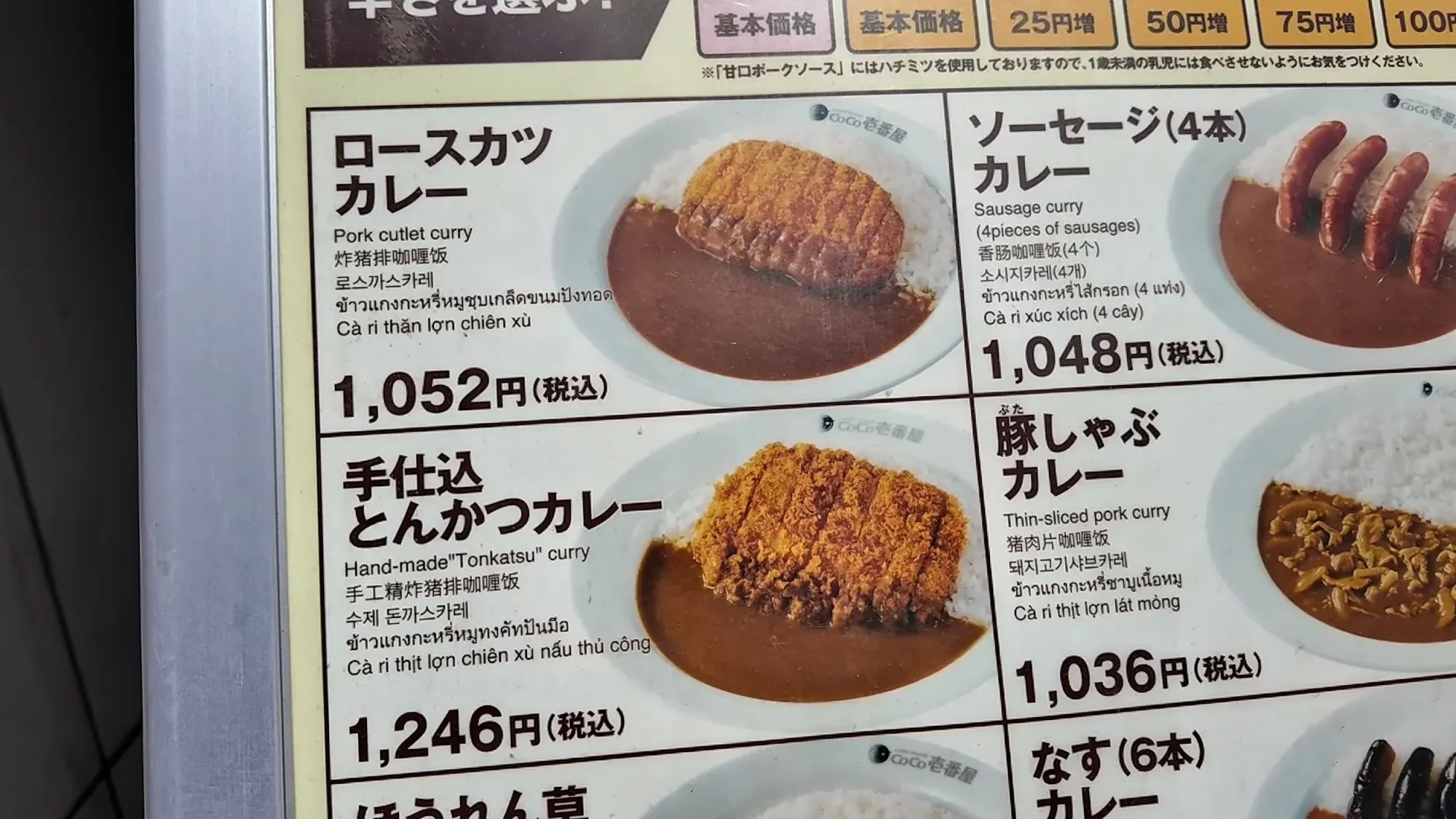
Prices sit right next to each photo; the curries on the page we photographed ran from 1,036 to 1,246 yen. Our CoCo Ichibanya review covers what to build.
How to Pay at Restaurants in Japan
You don't need a wallet full of cash to eat in Japan. Over a month in Tokyo, card or Suica worked everywhere we ate, and the "Japan only takes cash" warning started to sound like an outdated tourist tip. The spots that do want cash tend to be small stalls in touristy areas, and we ran into far more of those in Osaka than in Tokyo.
What we'd tell a friend:
- Put a Suica card on your phone. A few kiosks, like Tenya's, take only cash or a transit card. Ours lived in Apple Wallet and we topped it up as needed.
- Always pay in yen when a card machine offers you a choice of currency.
- Don't tip. Tipping isn't customary at restaurants in Japan,1 and people can find it rude. The price on the kiosk or the bill is the price.
- Keep a few 1,000-yen notes for old-style ticket machines at small shops.
Water, Tea, and Condiments Are Self-Serve
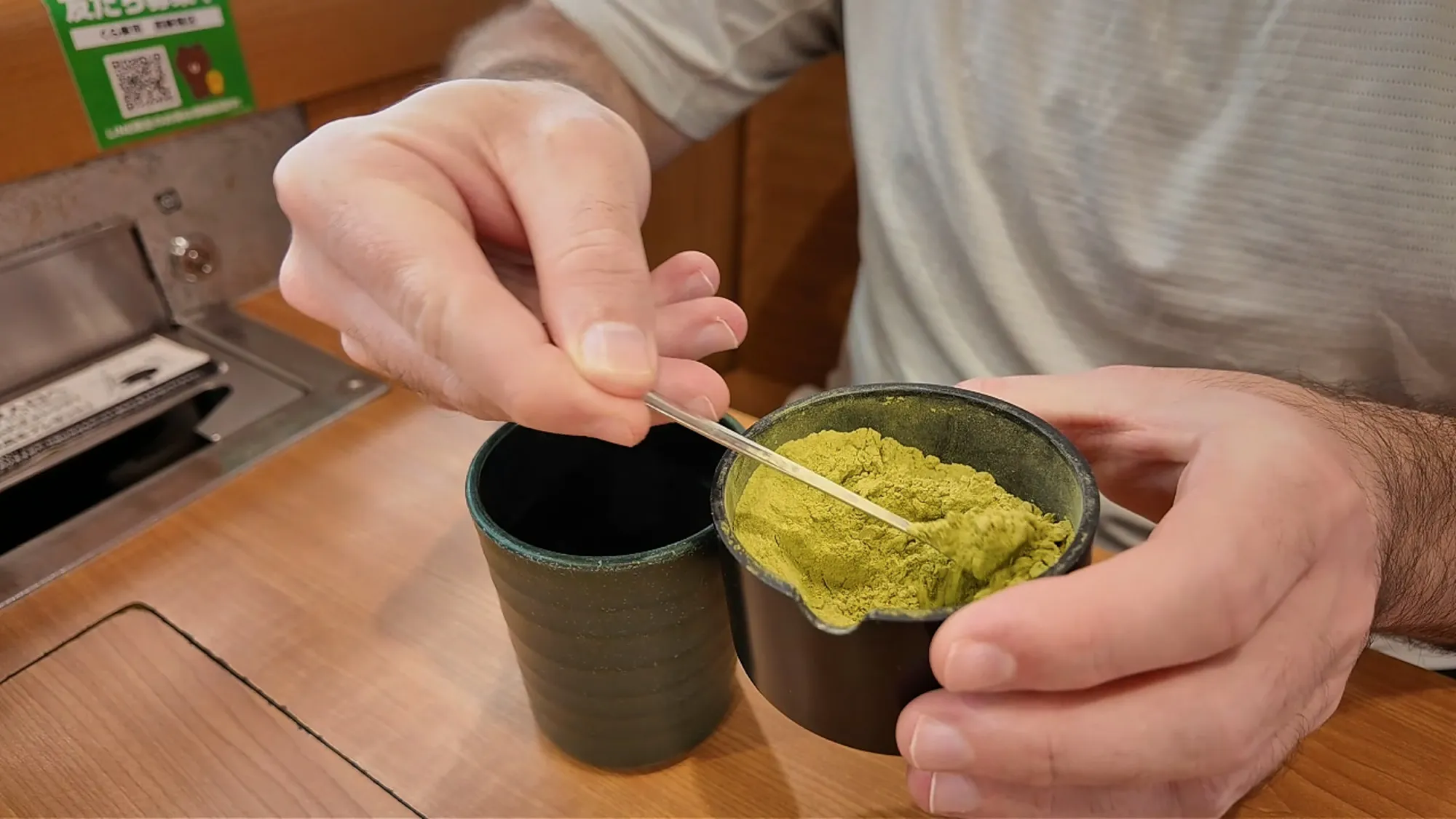
Once you've ordered, most chains leave the rest to you. Tenya and Matsuya have a self-service station with hot or cold water and tea. At Sushiro, there's green tea powder at the table and a hot water tap, so you make your own tea. At Ichiran, the tap is right in your booth.
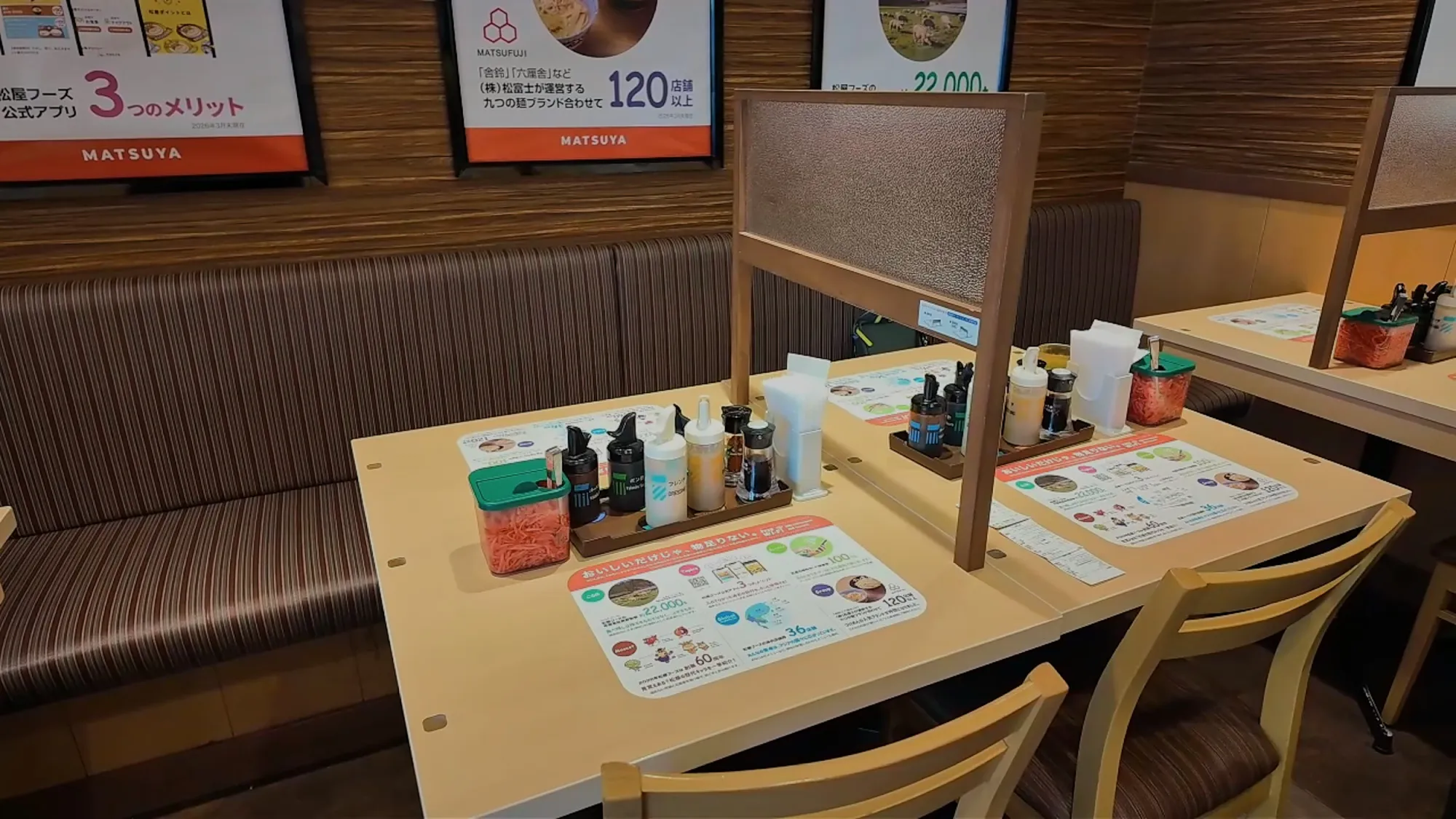
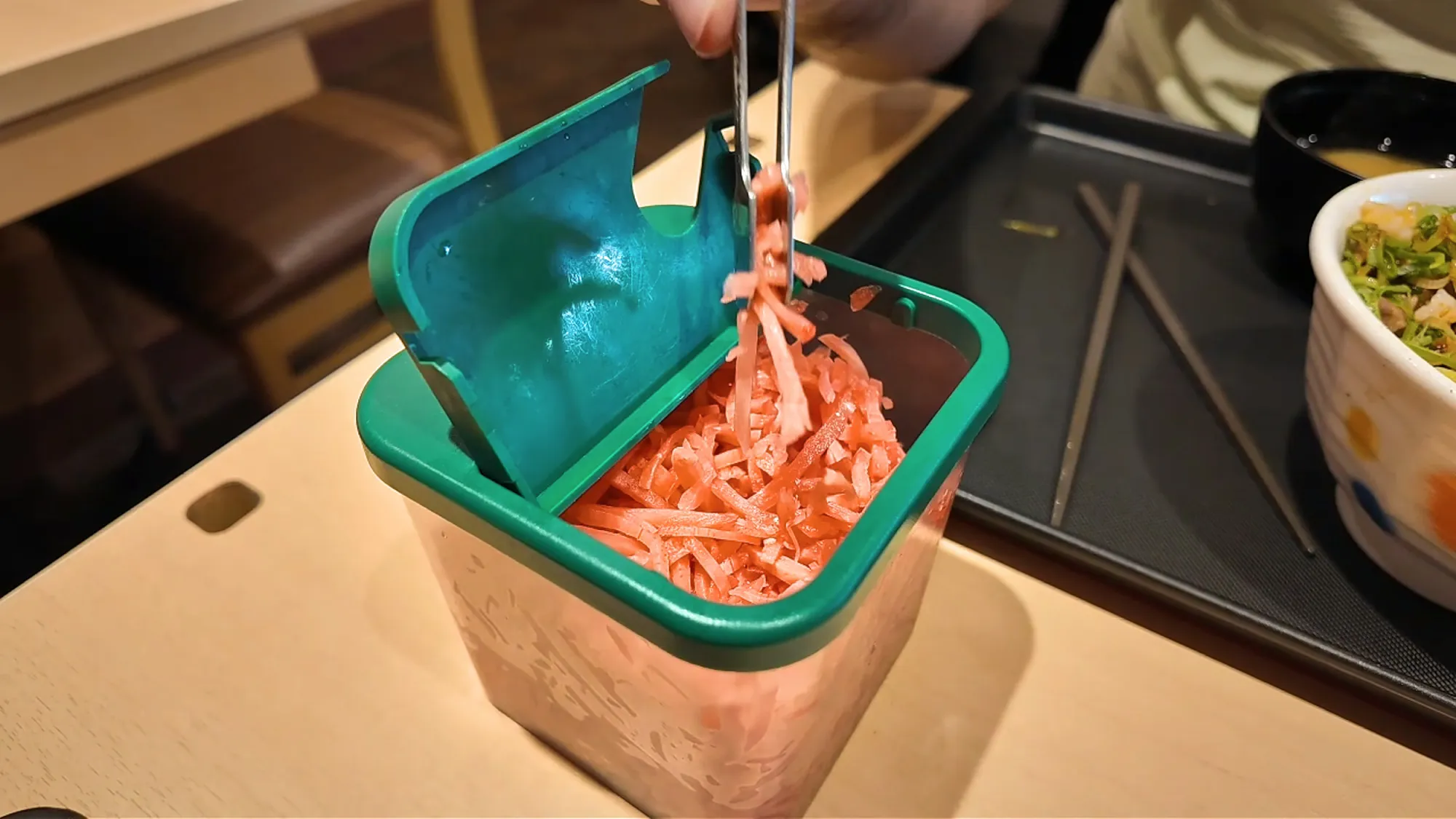
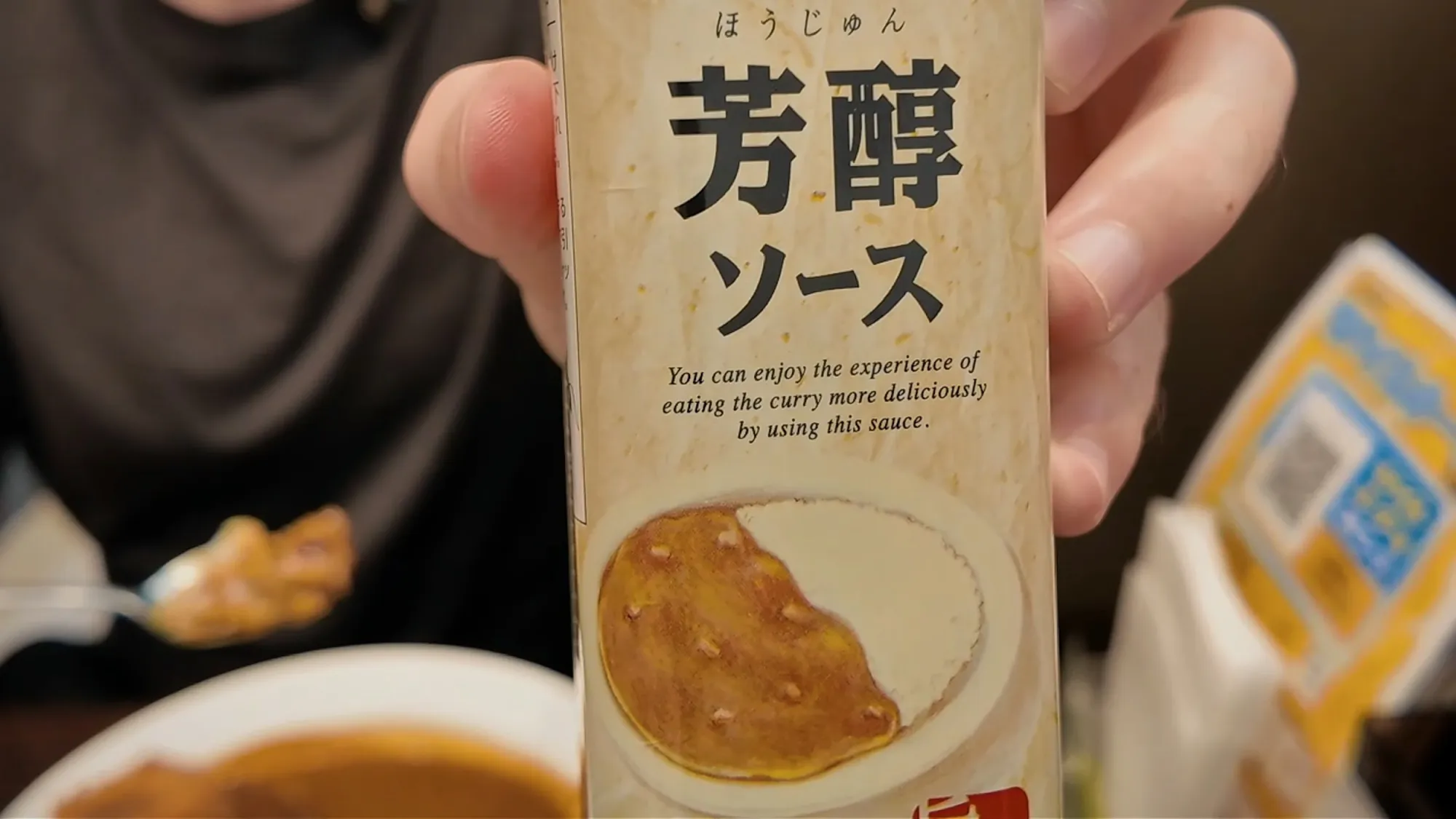
Condiments sit on the table: pickled ginger, seven spice, and sauces at Matsuya, pickles and a sweet-and-sour curry sauce at CoCo Ichibanya, pickled ginger, wasabi, and soy sauce at Sushiro. When you're done at a counter restaurant like Matsuya, look for the window marked for returning dishes.
Tips for Ordering Food in Japan as a Foreigner
- When in doubt, watch the locals. Copying the people around us is how we worked out the number-screen pickup and the self-serve hot drinks.
- Watch us order first. Our Tokyo food playlist shows exactly what we ordered and how each system works.
- Look for the language button first. It's usually on the first screen, at the top, the bottom, or one of the sides. Once you switch it, everything has pictures.
- Keep your ticket until the food comes. Your number on the screen is how you know it's ready.
- Google Translate's camera handles anything that isn't in English, like a paper menu or a machine with only Japanese buttons.
- Sort out mobile data before your flight. Reservation apps, maps, and the translate camera all need it from your first hour, and an Airalo eSIM bought before you land saves you hunting for a SIM at the airport.
- Don't stress about lines at the chains. We ate at Tenya at both lunch and dinner and barely waited. Chains are designed to move people through.
- Book the busy places. Booking Torikizoku for the moment it opened meant zero wait.
- Keep it quiet. Japanese chain restaurants are calm, and many have dividers so you can eat alone in peace. Everyone is there to relax.
Is Ordering Food in Japan Hard?
No. It looks hard from the doorway, and it isn't, as long as you start with the chains. Between the kiosks, the tablets, and English on almost every screen, we ate out every week for a month without needing a word of Japanese. Pick a Matsuya or a Sushiro on your first day, tap English, and the rest of Japan's restaurants will feel a lot less scary.
Next Steps for Your Tokyo Trip
Bernie & Cream@bernieandcream
Follow along on Facebook
Bernie & Cream@bernieandcream
Follow along on Instagram
Bernie & Cream@bernieandcream
Follow along on Threads
Bernie & Cream@bernieandcream
Watch us on TikTok
Bernie & Cream@bernieandcream
Follow along on X
Bernie & Cream@BernieAndCream