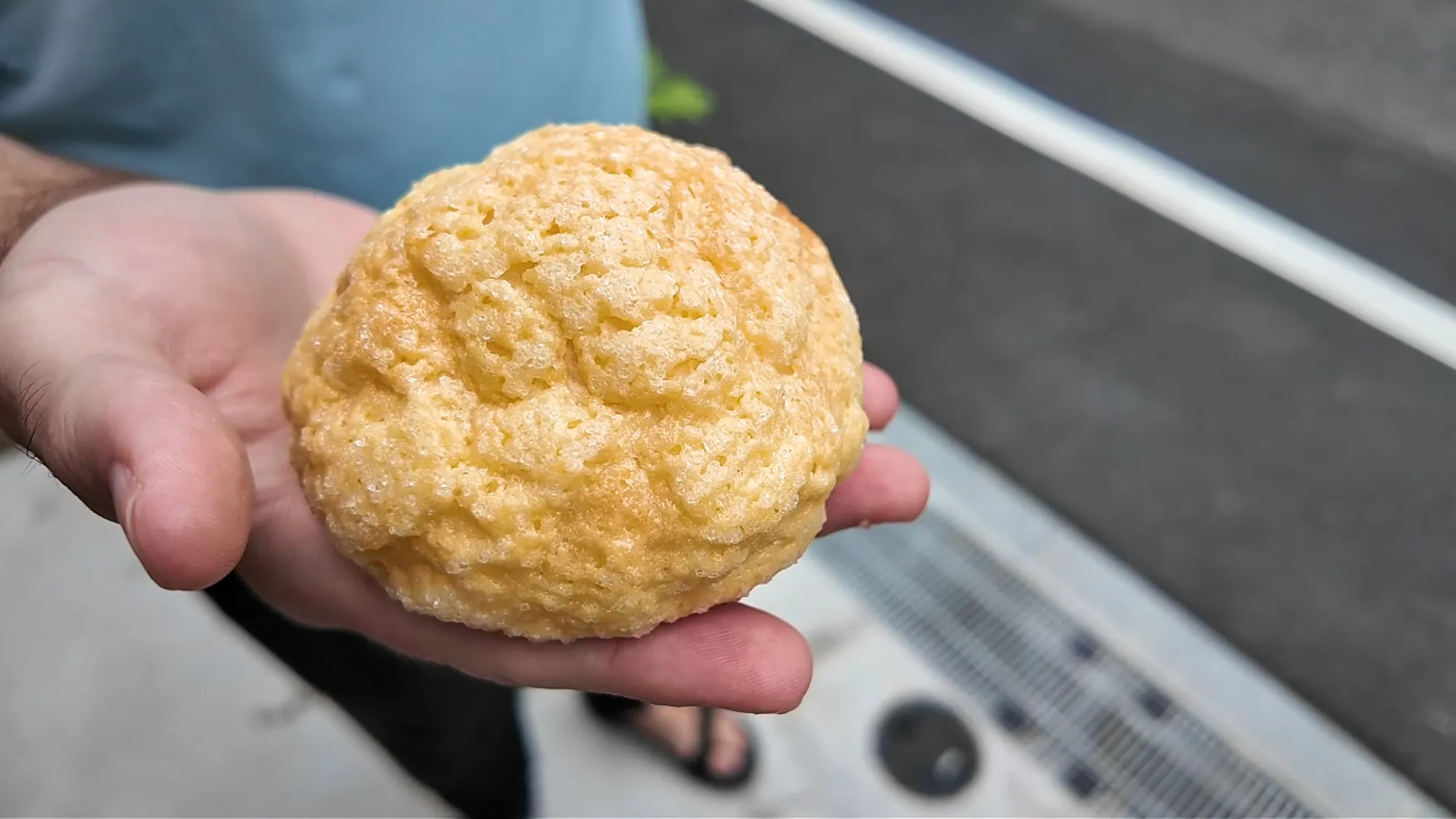
The one bread I came for was the one bread that wasn't there. Cream and I had found Donsuke, a little bakery tucked away near our Airbnb in Shinjuku, on Google Maps. We waited in a line of locals outside (always a good sign), finally reached the shelves, and found exactly zero melon pan.
Heads up: some links in this guide are affiliate links. If you book or buy through them, we may earn a commission at no extra cost to you.
In this guide 7 sections
I was honestly sad about it. A 7-Eleven melon pan would have been easy, but I had my heart set on a bakery one. So we did the next best thing: we filled our tray with whatever the people ahead of us were buying and planned a rematch. Melon pan comes out later in the day, so on our second try we showed up later, joined an even longer line, and this time it was waiting for us.
This is our Donsuke review, and a guide to every Japanese bakery bread we tried across those two visits during our month in Tokyo: what each one is, what we'd buy again, and what to know before you get in line.

What to Get at a Japanese Bakery in Tokyo: Our Quick Answer
At a Japanese bakery in Tokyo, get one sweet bun and one savory bread. For sweet, the melon pan is the classic (a pillowy bun wearing a crackly, sugared cookie shell, and no, it doesn't taste like melon); for savory, get a yakisoba pan, fried noodles packed into a soft roll. If the bakery has sandwiches, grab the tuna or egg salad, because the soft, chewy bread is the best part. And whatever the locals are all reaching for, add one of those too. At Donsuke, that was a black sesame bun. Donsuke itself earns an 8/10 from us: great bread for very little money, as long as you don't mind a short line and paying in cash.
Donsuke Bakery at a Glance
- Where
- Shinjuku 7-chome, near Higashi-Shinjuku Station
- Our wait
- About 10 minutes
- What we paid
- 821 yen (about $5.20) for our first three picks, May 2026
- Payment
- We paid cash
- Order first
- Melon pan, if it's not sold out
- Our score
- 8/10
 Bernie & Cream@bernieandcream
Follow along on Facebook
Bernie & Cream@bernieandcream
Follow along on Instagram
Bernie & Cream@bernieandcream
Follow along on Threads
Bernie & Cream@bernieandcream
Watch us on TikTok
Bernie & Cream@bernieandcream
Follow along on X
Bernie & Cream@BernieAndCream


What Makes a Japanese Bakery Different
Japan has been baking its own kind of bread since the 1870s, when a Tokyo baker named Yasubei Kimura created anpan, a soft roll filled with sweet red bean paste, at his Kimuraya bakery in Ginza.2 That's still the pattern: European-style dough with Japanese fillings and flavors.
Cream summed it up after our second visit: "They've taken European-style pastries, added a Japanese fusion flair." The breads look familiar, then you bite in and find black sesame, fried noodles, or Japanese mayo.
Japanese bakery breads fall roughly into two groups. Kashi pan are the sweet ones, like melon pan and anpan. Sozai pan are the savory ones, like yakisoba pan and curry bread.4 (Pan is the Japanese word for bread, borrowed from Portuguese.1)
The other thing that surprised us is how good the sandwiches are. Neither of us expected sandwiches to be such a big deal in Japan, but they really are. Egg salad sandwiches are everywhere, from bakeries to sandwich shops to every 7-Eleven in Japan.
The 6 Japanese Bakery Breads We Tried
1. Melon Pan // The One We Came Back For
Melon pan is a sweet bun covered in a thin layer of cookie dough that bakes into a crisp crust, often scored in a crisscross pattern.1 It's probably the best-known Japanese bakery bread, and it's the one we came to Donsuke for.
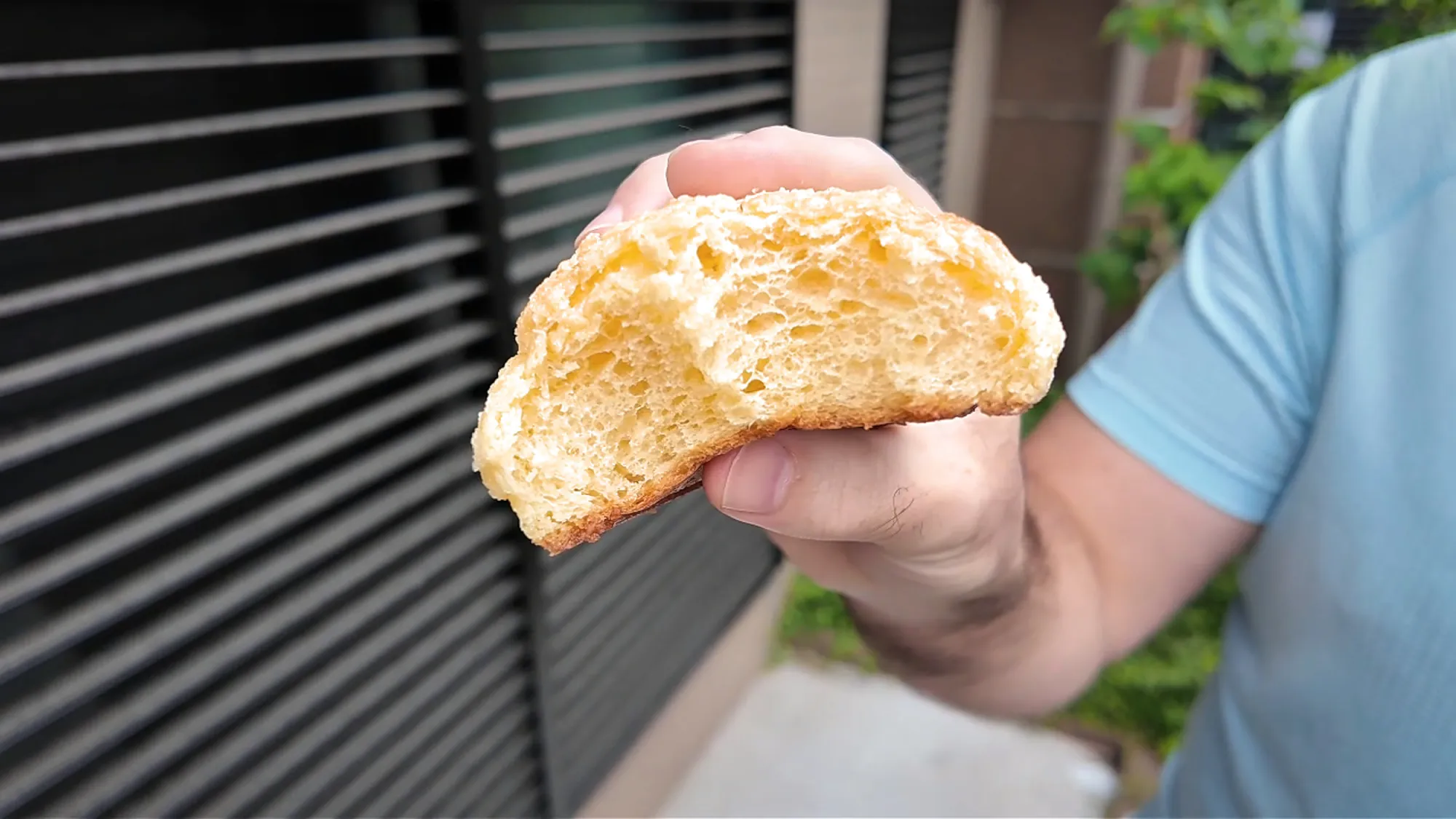
So, what is melon pan like? Lighter than it looks. Cream expected something dense, but it's light, airy, and a little yeasty inside, with a slightly hard outside covered in crystals of sugar. It reminded him of a European pastry. It wasn't what he'd pictured, but he liked it: simple, probably great with a coffee, and something he'd buy again.
The name confused us. It doesn't taste like melon, and to us it doesn't really look like one either. The most common explanation is that the crosshatched crust looks like a melon's rind; nobody agrees on where it was invented.1 Some bakeries now sell melon-flavored versions, but a classic one isn't.
Our tip: don't count on melon pan being there in the morning. Come later in the day, the way we finally did.
2. Yakisoba Pan // Noodles in a Bun
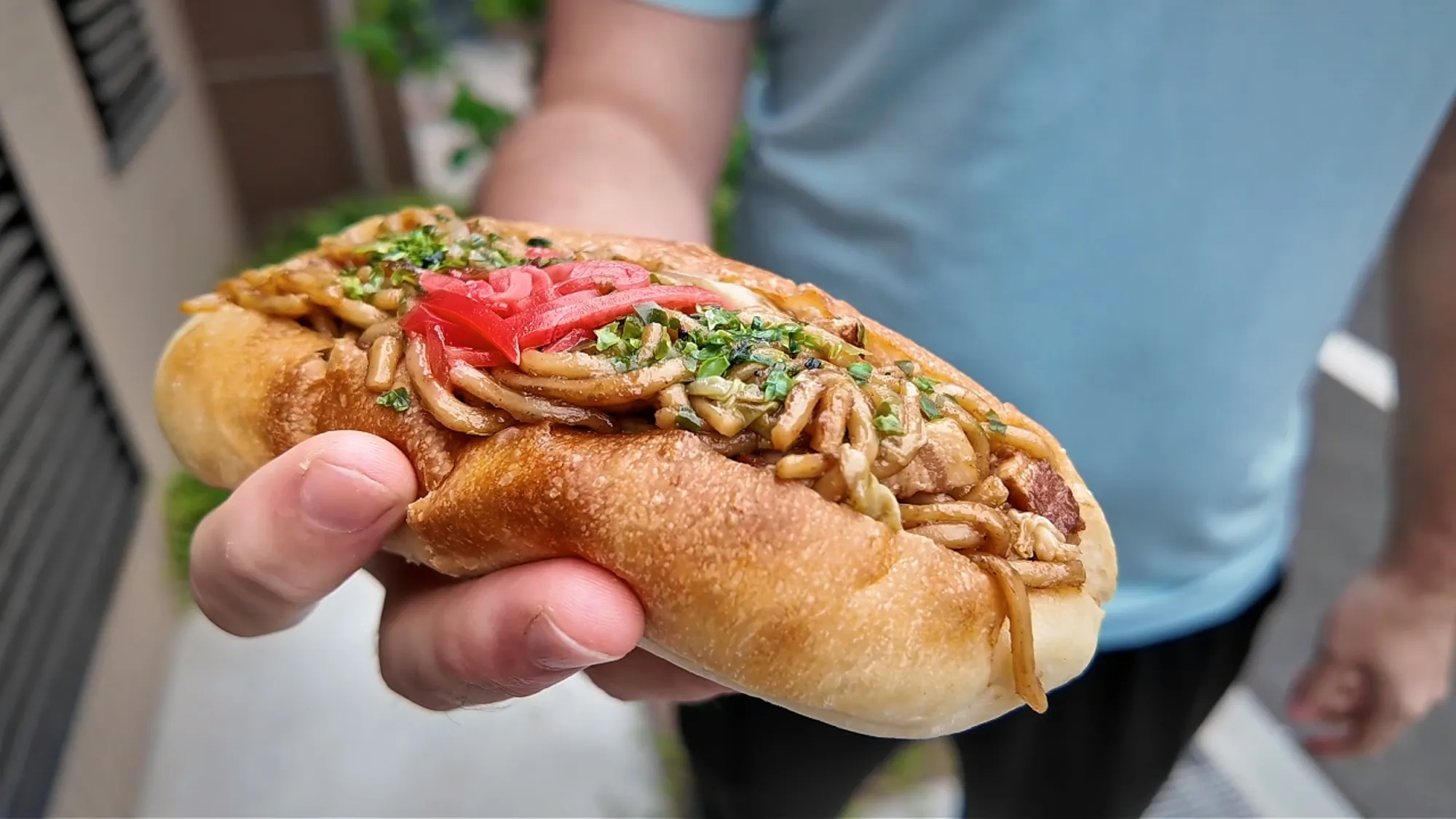
Yakisoba pan is a soft, hot-dog-style roll stuffed with yakisoba, Japanese stir-fried noodles in a savory sauce, usually with red pickled ginger on top.3 It became popular in Japan in the 1950s and is sold at bakeries and convenience stores all over the country, including 7-Eleven.3
We got the last one at Donsuke, and you know they're popular when they're sold out. Ours had pork, pickled ginger, bean sprouts, and a light sauce that soaks into the bread. The roll is closer to a dinner roll than a hot dog bun, so you get soft noodles against a chewy bite.
It sounds like carbs on carbs, and it is, but this was one of my two favorites. Cream got it straight away: "I grew up putting spaghetti on garlic bread. So, this is a Japanese version."
3. Black Sesame Bun // The One Every Local Grabbed
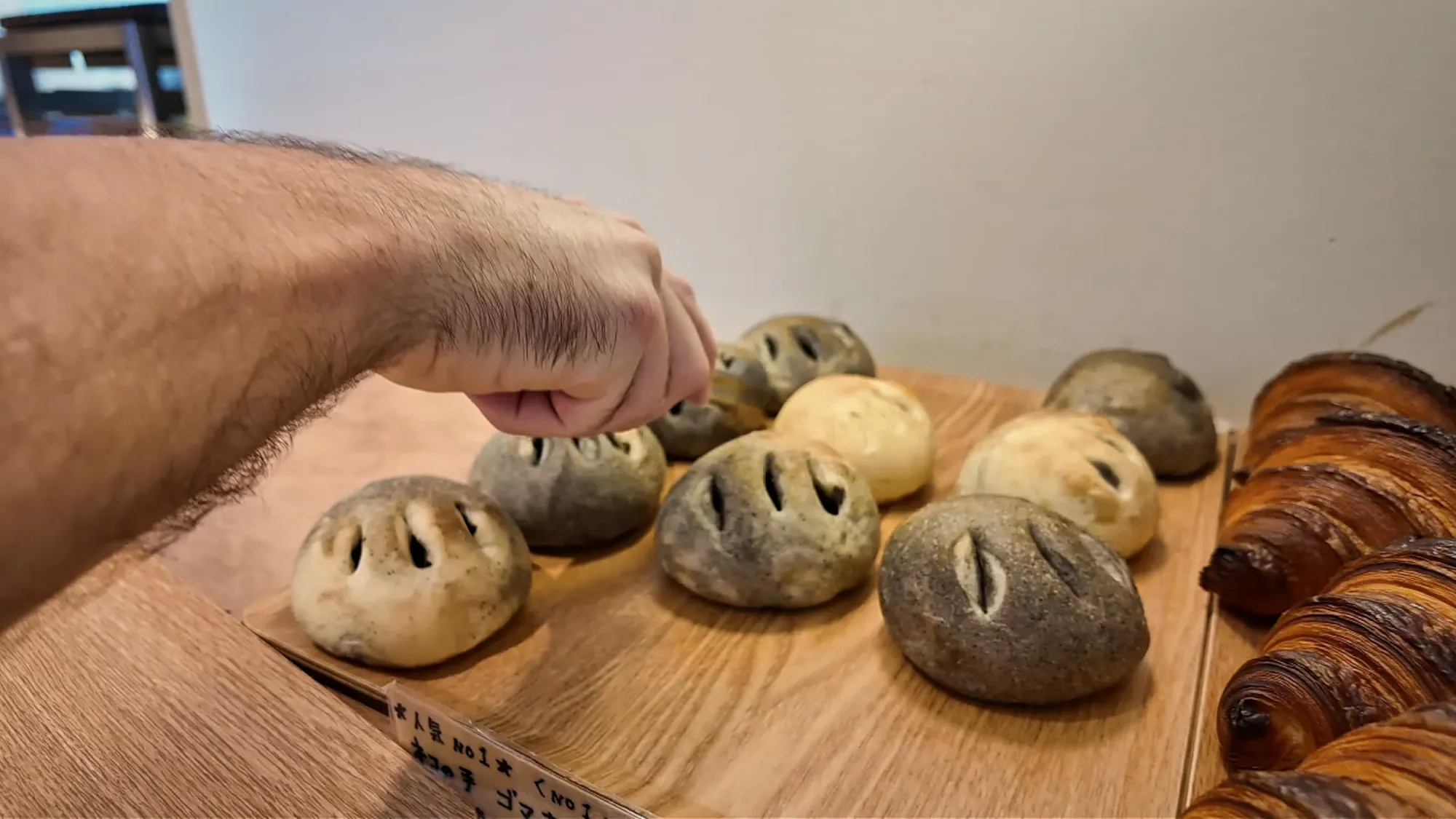
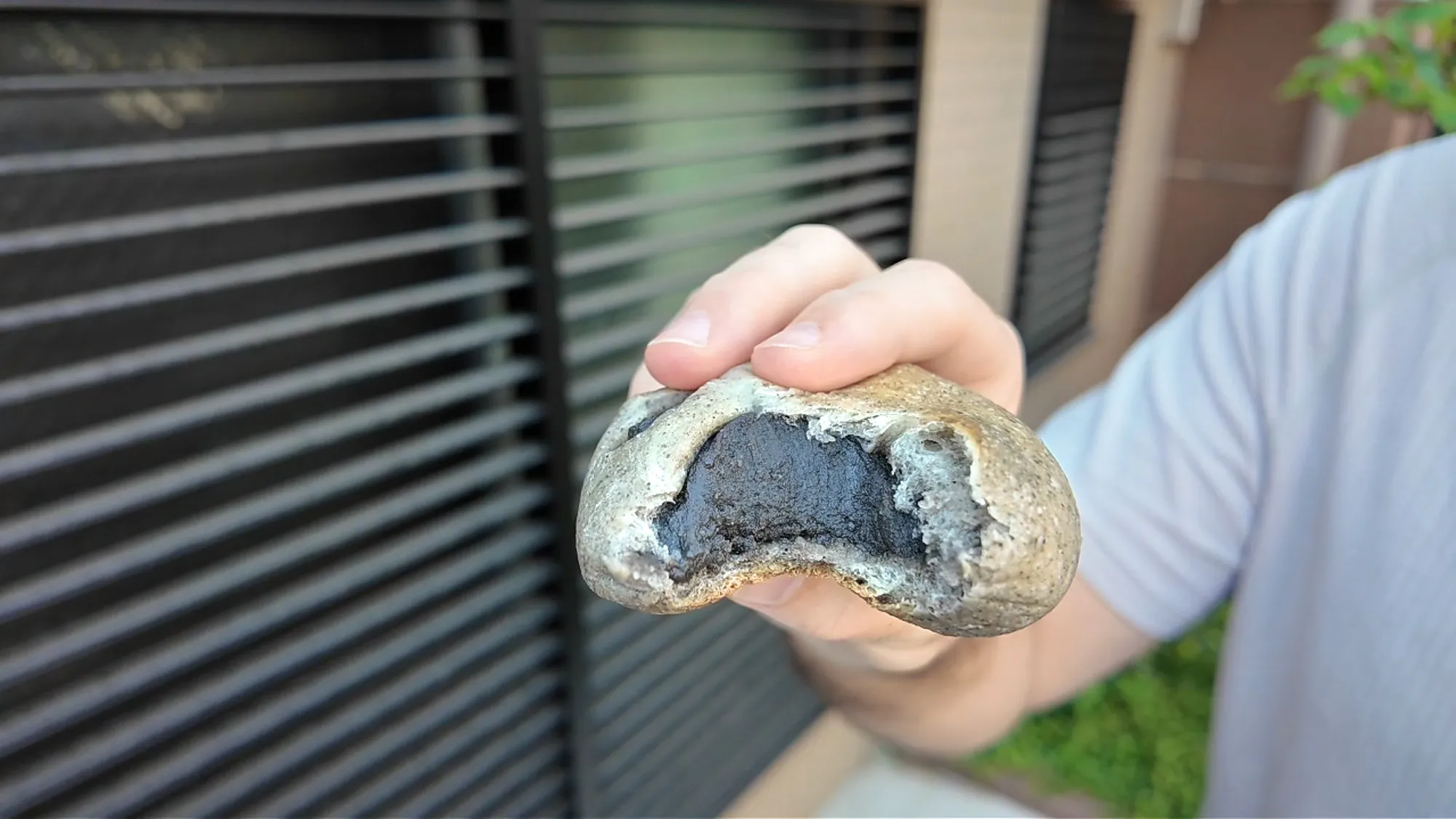
This was our first pick, because every local in the shop seemed to be grabbing one. It's a sweet bean bun with a black sesame paste filling, and ours was still warm.
The dough has a greenish-gray color, and the filling is almost charcoal black. The bun is thin, light, and a little chewy, not very bready. The sesame isn't strong, and it's only a little sweet, nowhere near the sugar level of a Western pastry. Together, it reminded Cream of sweet potato.
It's the most Japanese thing we tried, and it was my favorite of the whole haul. Cream called it really unique and put it on his buy-again list too.
4. Tuna and Egg Salad Sandwiches // Tuna Wins
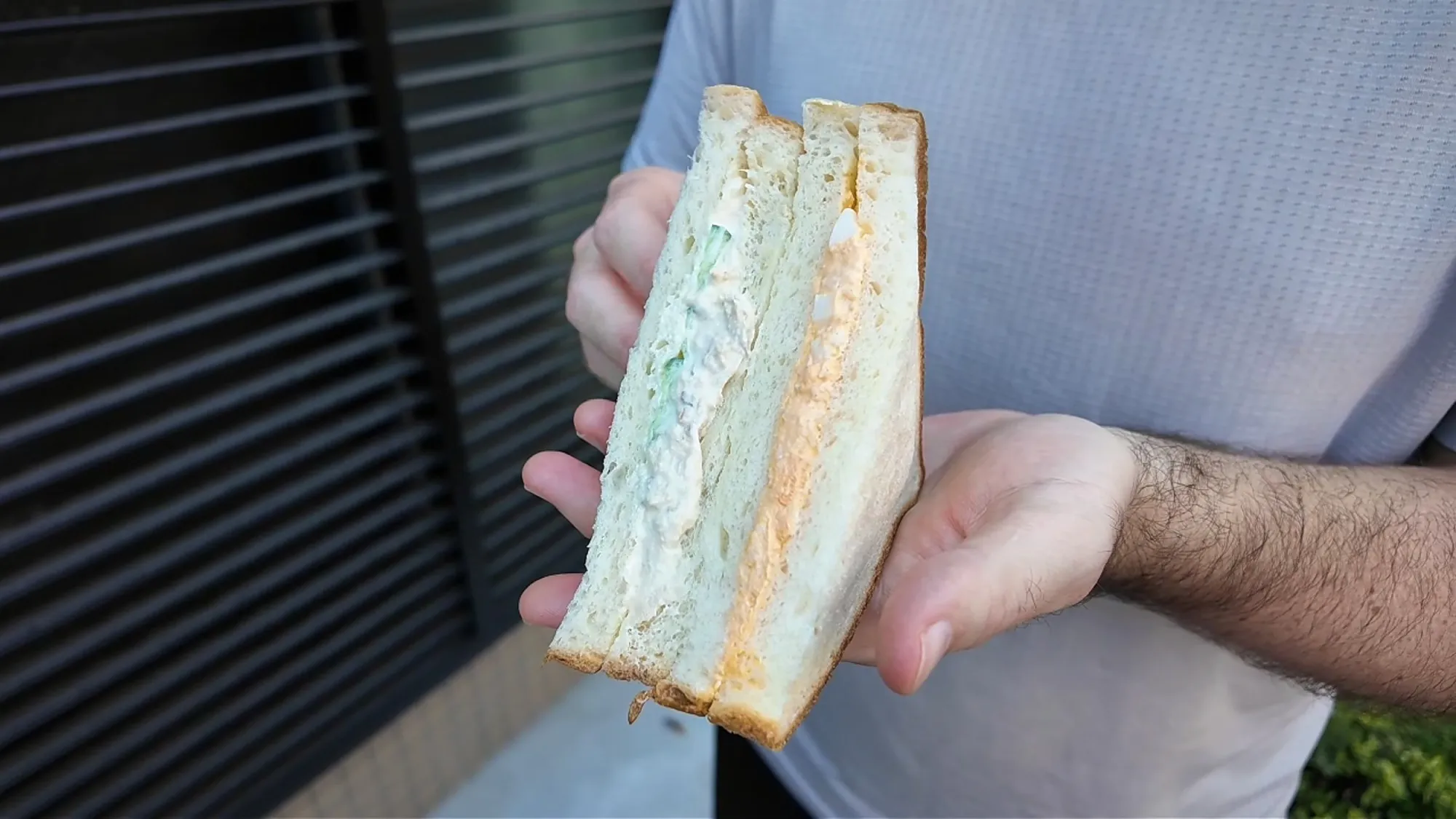
The Japanese egg sandwich is a classic: soft white bread and a creamy egg salad. Ours was a little salty, but that worked with the bread, which was the star. It's soft, a little chewy, and has a nice bite.
The tuna sandwich uses the same bread, with fresh cucumber for crunch and a soft, mild tuna salad made with Japanese mayo. Of the two, tuna won for us. If you only get one sandwich, get that.
5. Walnut Cinnamon Roll // The Japanese Take on an American Classic
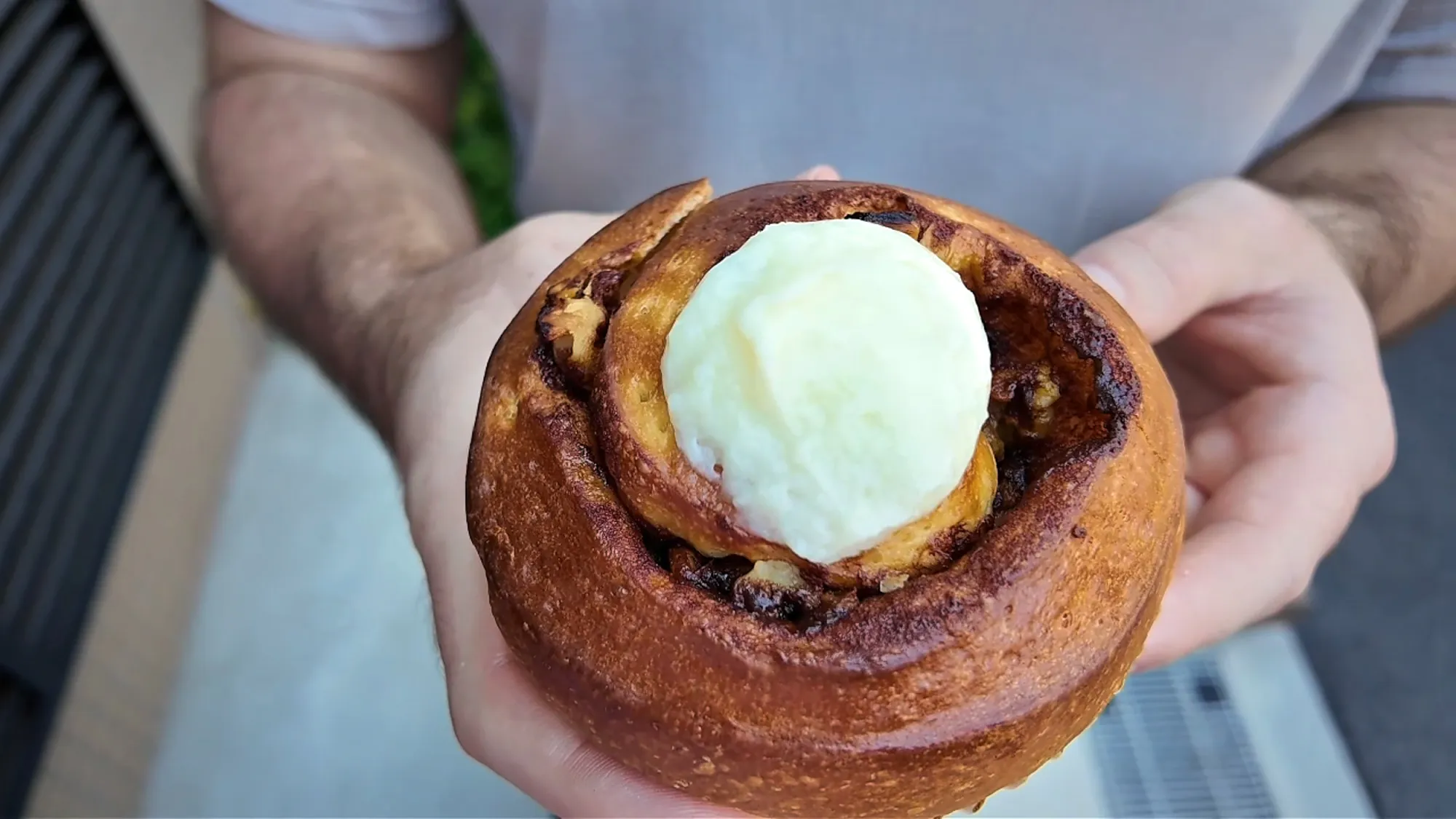
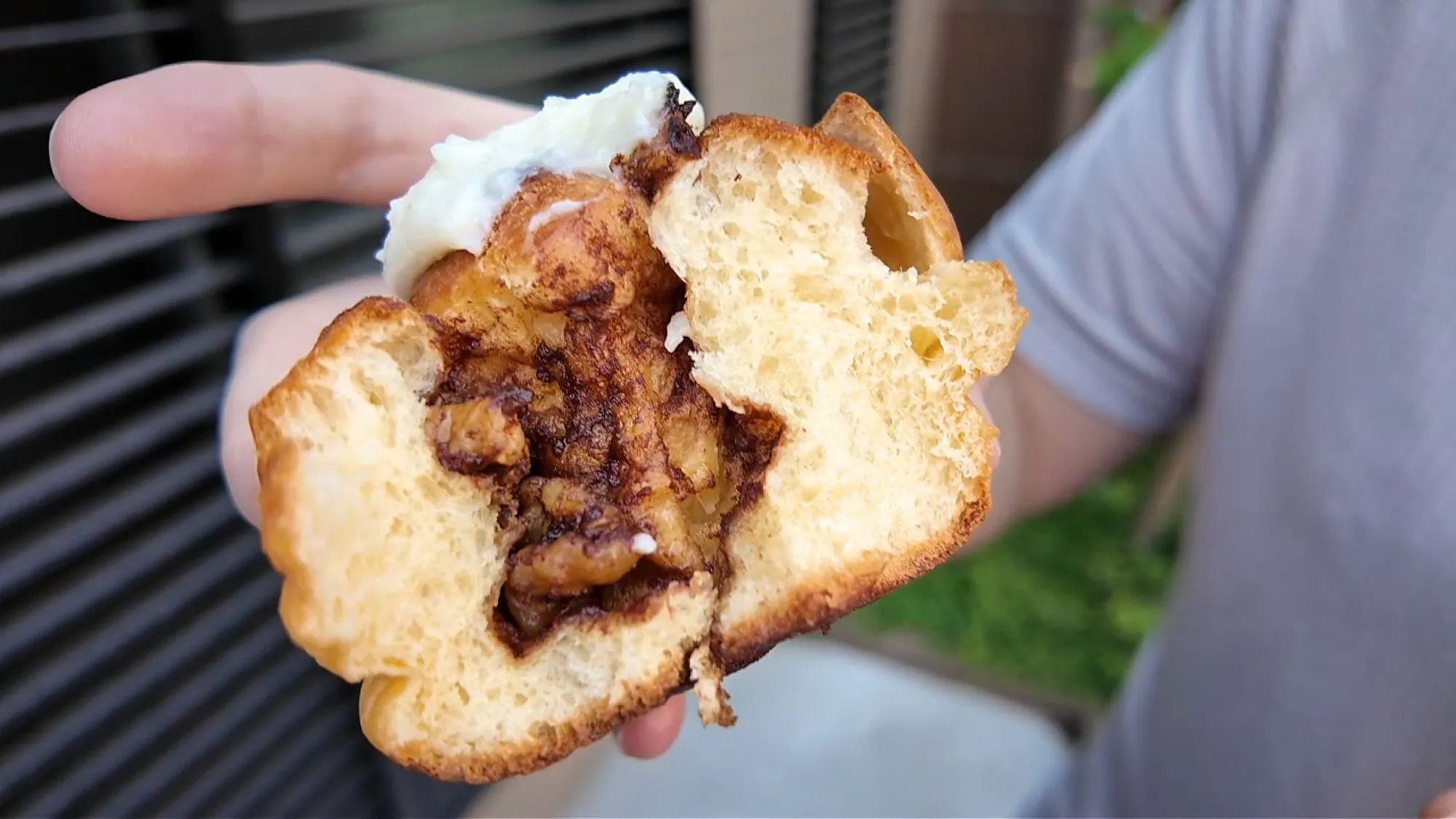
Cinnamon rolls are an American classic, so we were curious how a Japanese bakery would do one. This one had walnuts inside and a dollop of icing on top, and it's soft at the bottom, like a muffin.
Cream's first bite was just bread. "The inside is where the magic happens." It's basically two layers, and it tastes more of cinnamon than sugar. The dough is soft, bouncy, and not too sweet. If you want more sweetness, dip it in the icing, which isn't a cream cheese icing but balances the cinnamon well.
Our first three picks (the black sesame bun, the sandwiches, and this cinnamon roll) came to 821 yen (about $5.20). For that quality in central Tokyo, that's a great deal.
6. Sausage and Cheese Bun // A Pizza Pig in a Blanket
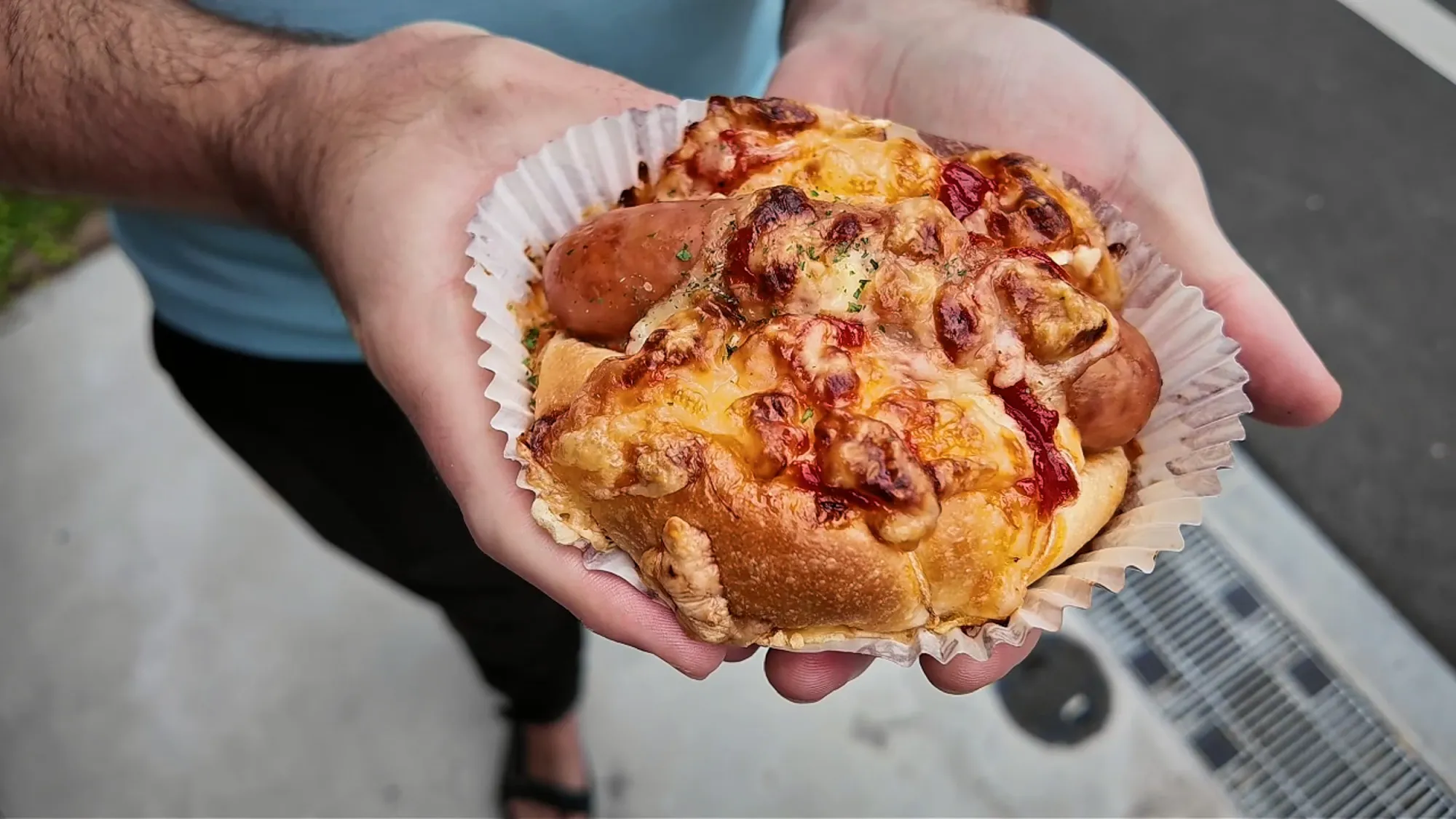
The staff put these out fresh while we were picking up our melon pan. It looked like a pizza pig in a blanket, so we had to get one.
It tastes exactly how it looks: bread, sausage, cheese, and a sauce we guessed was marinara. The bread is a little dense but not heavy, with a chewy bite, and the cheese is baked onto the top like an Asiago bagel. The sausage was very fresh. It's the bread to get if you want lunch, not a snack.
How to Buy Bread at a Japanese Bakery
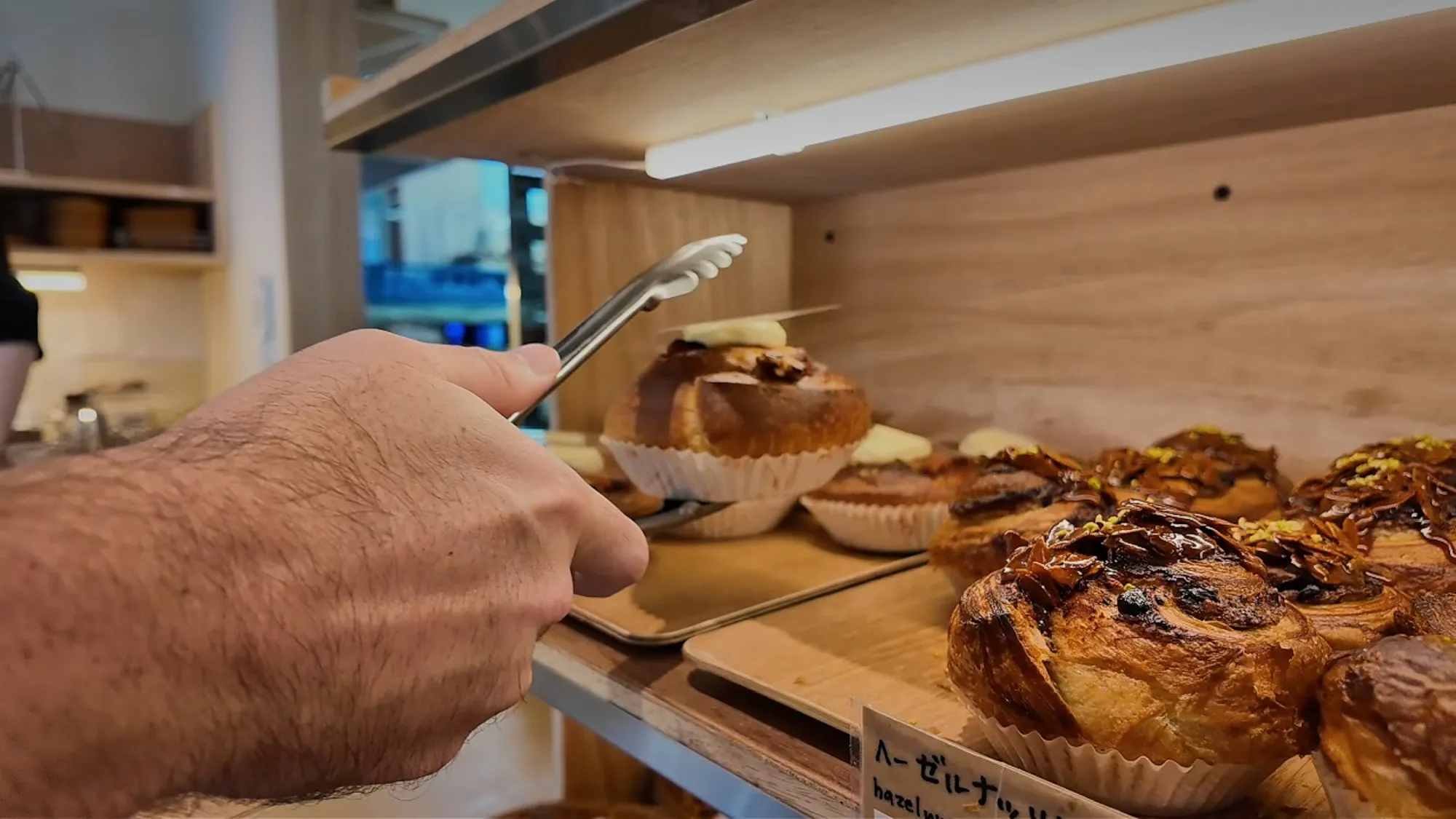
Most Japanese bakeries are self-service. Pick up a tray and tongs near the door, choose your breads off the shelves with the tongs, and take the tray to the counter. The staff wrap or bag each bread and you pay there.4 Pre-packed sandwiches can go straight on the tray.
A few things we learned at Donsuke:
- Timing matters. Not everything is out at once. Our later-in-the-day trip is the one that got us melon pan, plus the last yakisoba pan.
- Lines move fast. Both times there was a line outside, and on the second day it wrapped around the building. Our wait was about 10 minutes.
- Watch for fresh batches. The staff bring out new trays while you shop. That's how we got the sausage bun still warm.
- Bring cash. Cards and Suica covered nearly all our spending in Tokyo, but Donsuke was one of only two places in our whole month where we paid cash.
- Eat it now. Everything we tried was best warm, the same day. We walked back and ate ours outside our Airbnb.
💡 Finding the Bakery:
Small neighborhood bakeries like Donsuke are easy to miss, so you'll want maps working the moment you land. The simplest way is to get an Airalo eSIM before you land in Japan, so your phone has data at the airport.
Where to Find Donsuke Bakery in Shinjuku
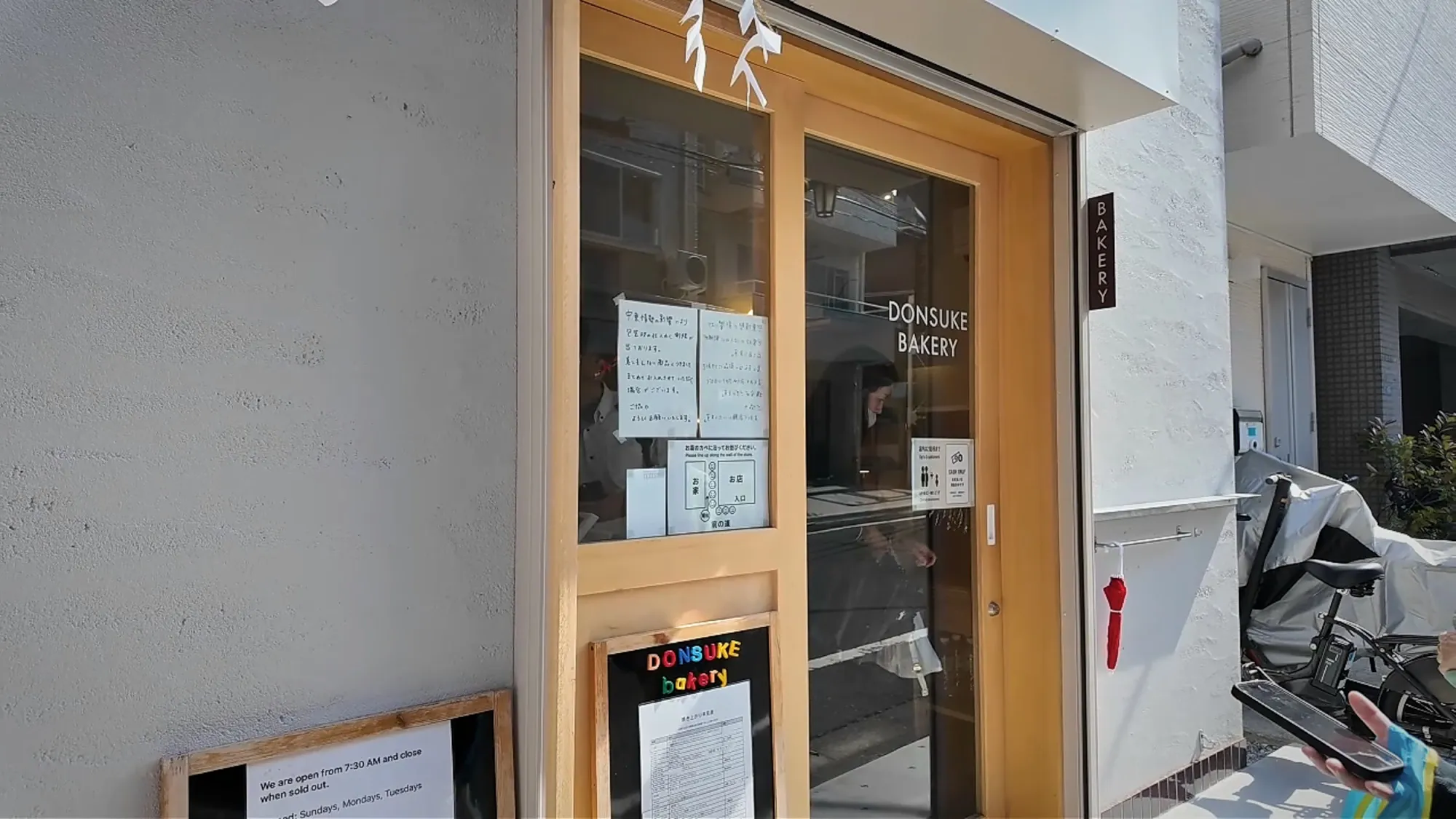
Donsuke Bakery (its sign reads DONSUKE BAKERY; older listings call it Panya no Donsuke) is at 7-13-3 Shinjuku, in a quiet residential part of Shinjuku away from the station crowds.5 It was a walk from where we were staying in Shinjuku, and I found it on Google Maps while exploring the area.
The nearest station is Higashi-Shinjuku, on the Toei Oedo and Tokyo Metro Fukutoshin lines, a short walk away.6
Opening days vary by listing (some say closed Sundays and Mondays, others add Tuesdays), so check Google Maps before you go.
What We Didn't Love
- No melon pan the first time. If you only have one visit, you might miss the bread you came for.
- The lines. Ten minutes isn't long, but it's a line for a bakery, outside, both times.
- Cash. In a city where we barely used cash, it caught us off guard.
None of that would stop us going back. We gave Donsuke an 8 out of 10, and it was fun to try.
Our Verdict on Japanese Bakeries in Tokyo
Donsuke gets an 8/10 from us, and it convinced us that a Japanese bakery is one of the cheapest, easiest good meals in Tokyo, a different side of Japanese food from ramen and sushi. Start with a melon pan and a tuna sandwich, then let the locals in line pick the third one for you. If they pick the black sesame bun, you're in luck: that and the yakisoba pan were my favorites. Cream's last words in the video: "We need to come back to Japan just to do a deep dive on Japanese pastries."
Next Steps for Your Tokyo Trip
- The Starbucks Reserve Roastery in Nakameguro
- Age.3 in Ginza, the famous fried sandwiches
- Monjayaki, Tokyo's griddle dish, cooked at your table
- Where to stay: every neighborhood has its own bakery, which is a real argument for staying somewhere residential. Compare Tokyo areas
Bernie & Cream@bernieandcream
Follow along on Facebook
Bernie & Cream@bernieandcream
Follow along on Instagram
Bernie & Cream@bernieandcream
Follow along on Threads
Bernie & Cream@bernieandcream
Watch us on TikTok
Bernie & Cream@bernieandcream
Follow along on X
Bernie & Cream@BernieAndCream