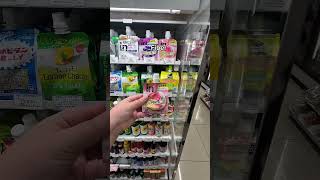
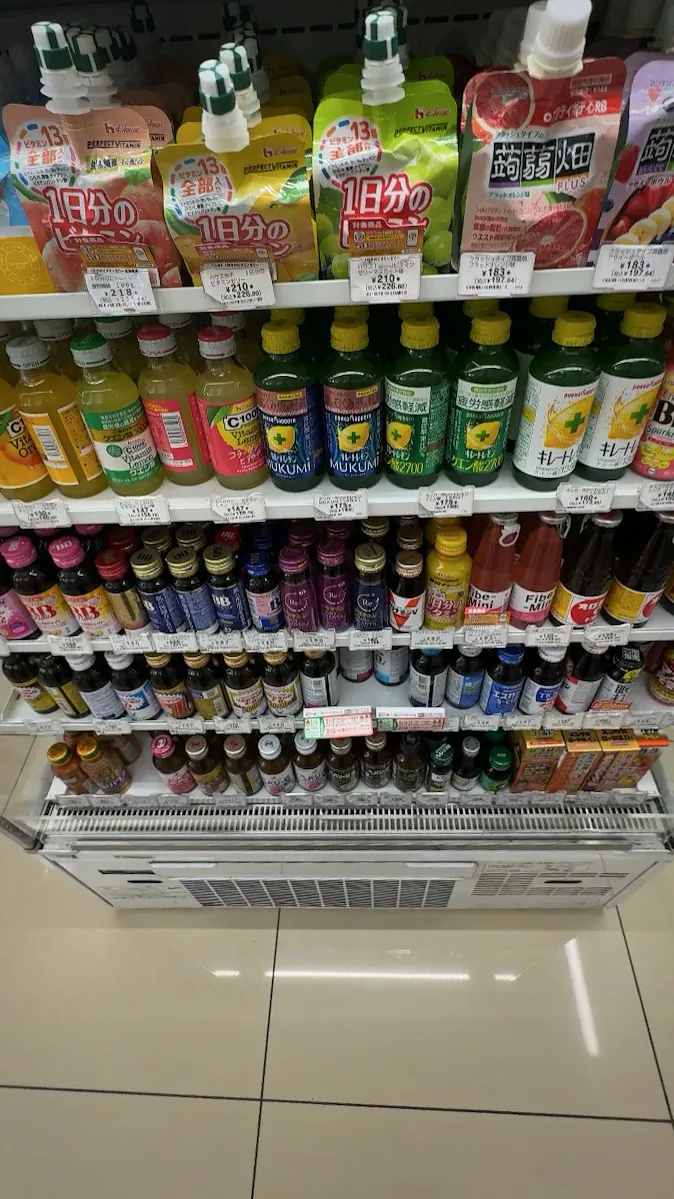
Watch any video on social media and everyone tells you to try these miracle hangover cures or constipation fiber hacks from the 7-Eleven vitamin aisle. Tiny bottles. Squeezy jelly pouches. Labels you can't read.
Heads up: some links in this guide are affiliate links. If you book or buy through them, we may earn a commission at no extra cost to you.
In this guide 5 sections
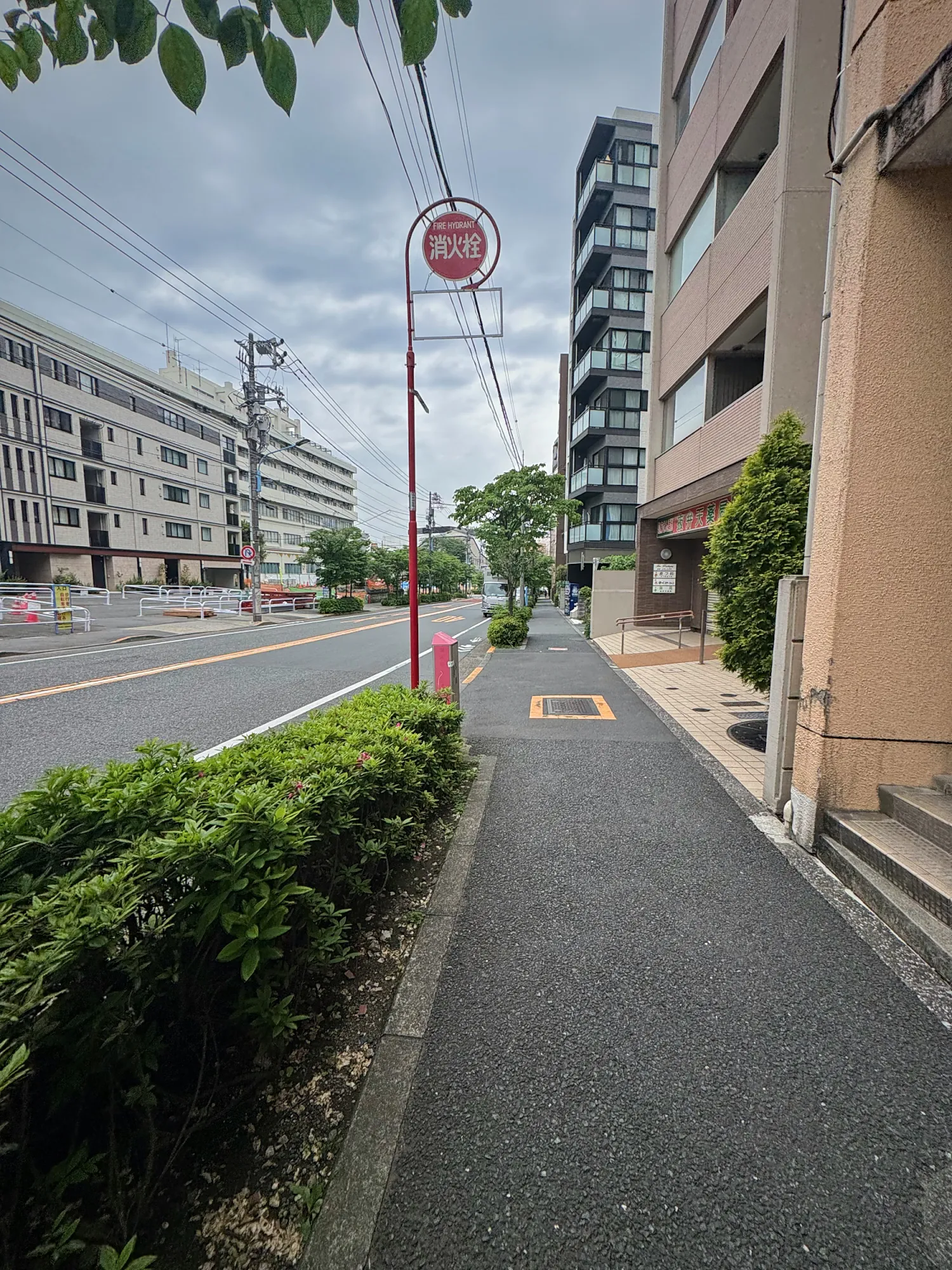
We tried every one of them. We lived in Tokyo for a month, ate one meal a day from 7-Eleven, and walked all day. Our 7-Eleven was on the walk home to our apartment in Shinjuku. A bottle in the morning and a pouch in the afternoon became our routine.
They all tasted good, and I felt like they helped. But are they miracles? I went back and checked every label for this guide, and found a few things even we got wrong in our video. Here's what each one really does, when to have it, and who should skip it.
Which Japan Convenience Store Vitamin Drinks to Buy: Our Quick Answer
- Morning: Kireto Lemon, a small green bottle with 1,350 mg of vitamin C. Our favorite.
- Afternoon, for fiber: Morinaga in Jelly Fruit Texture Peach. Our other favorite.
- Afternoon, for vitamins: in Jelly Multivitamin, with 12 vitamins in one pouch.
- Afternoon, for iron and calcium: in Jelly Multimineral. It isn't an electrolyte drink.
- Bedtime: Alinamin Night Recover, a caffeine-free drink for tiredness. It isn't a sleeping pill.
- Price: the in Jelly pouches were 210 yen before tax (about $1.45 with tax) at our 7-Eleven in May 2026.
Pick one pouch a day, not all three. More on why in the safety section.
We did our 7-Eleven runs from Shinjuku, and it's where we'd tell you to stay. Convenience stores are everywhere there, so your morning vitamin C is never more than a short walk away.
Quick picks
Where to Stay in Shinjuku, Our Tokyo Base

The 5 Vitamin Drinks We Bought at 7-Eleven
1. Kireto Lemon // Our Morning Vitamin C Shot
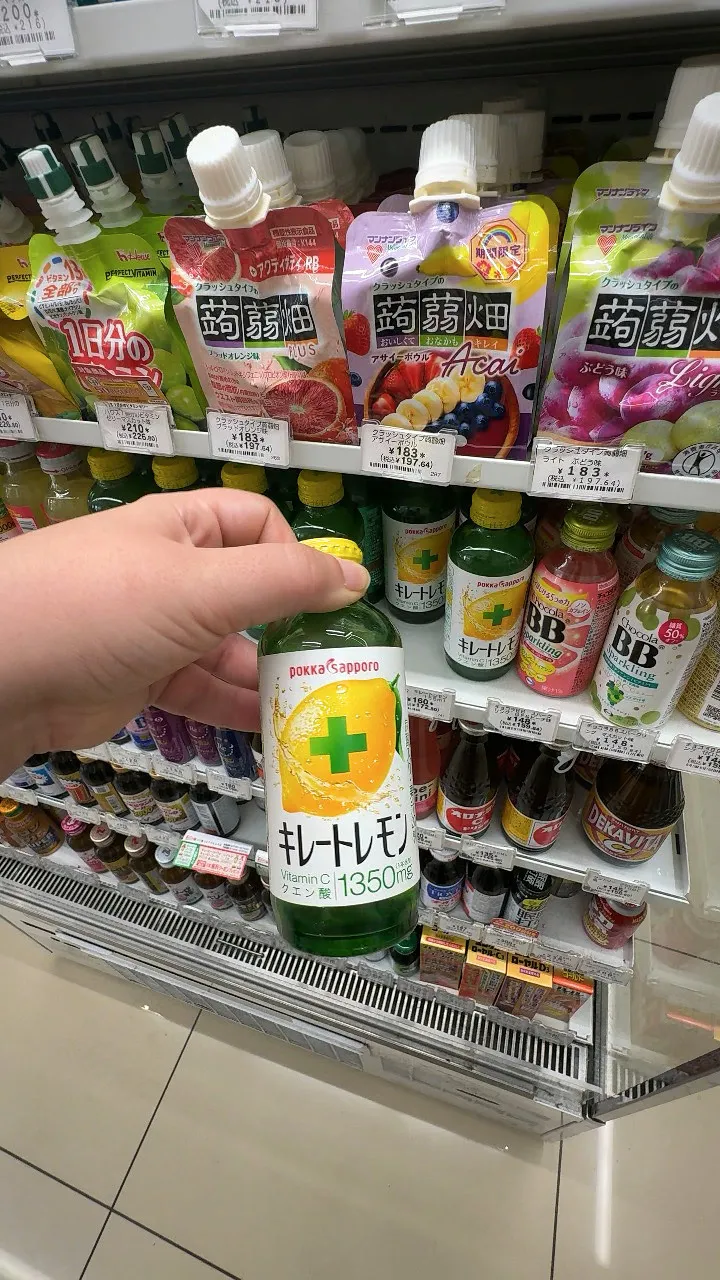
This was how we started every day. Kireto Lemon is a small sparkling lemon drink in a green glass bottle, made by Pokka Sapporo.
- What's in it: the juice of about one lemon, 1,350 mg of vitamin C, and 1,350 mg of citric acid in a 155 ml bottle. About 105 calories.1
- When to drink it: in the morning, to start the day.
- Good for: anyone who wants a big vitamin C hit and likes sour things.
- Skip it if: you're stacking it with other vitamin C drinks, or you want zero sugar.
- Our take: sour, fizzy, and lemony. It was one of our two favorites.
You'll see a lookalike on the same shelf called Kireto Lemon Citric Acid 2700. It has double the citric acid and fewer calories. It's sold as a Food with Function Claims, a Japanese label that means the maker has filed evidence that citric acid eases everyday tiredness.7 Ours was the regular one.
 Bernie & Cream@bernieandcream
Follow along on Facebook
Bernie & Cream@bernieandcream
Follow along on Instagram
Bernie & Cream@bernieandcream
Follow along on Threads
Bernie & Cream@bernieandcream
Watch us on TikTok
Bernie & Cream@bernieandcream
Follow along on X
Bernie & Cream@BernieAndCream


2. in Jelly Fruit Texture Peach // The Fiber One
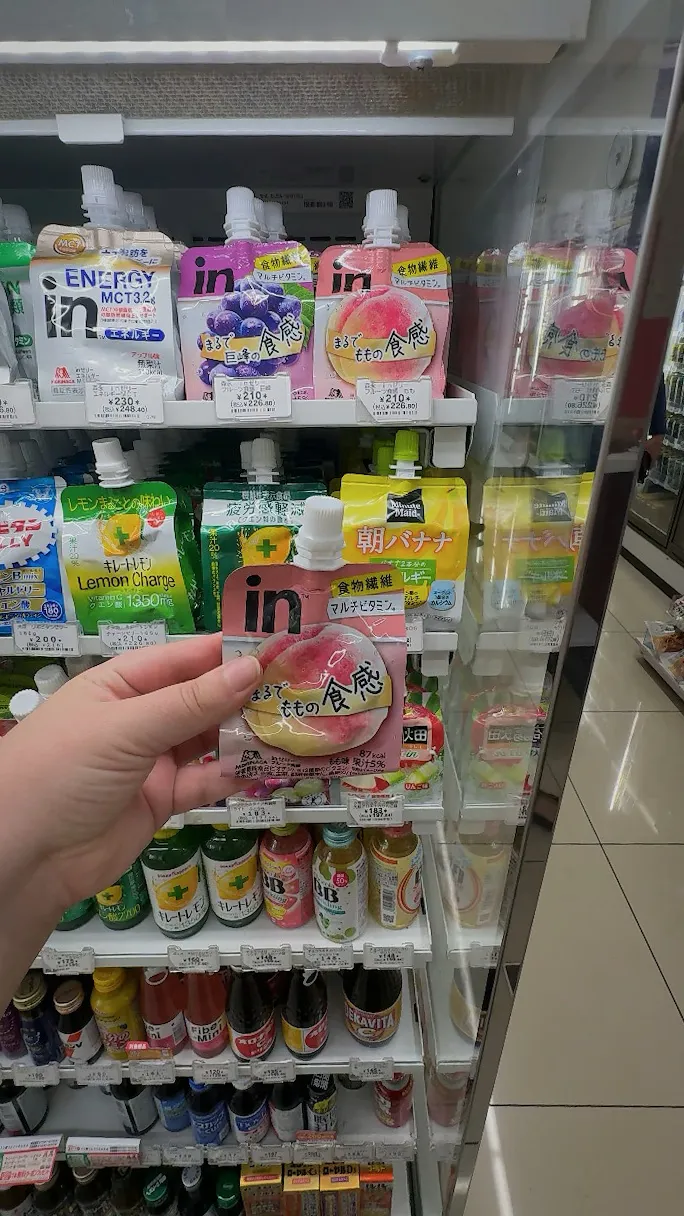
Morinaga's in Jelly pouches are drinkable jelly. You twist off the cap and squeeze. Morinaga makes this peach one to feel like biting into real fruit, and it was our other favorite.
- What's in it: 5.6 g of fiber (Morinaga says that's as much as 1.8 peaches), one meal's worth of 12 vitamins, and 87 calories in a 150 g pouch.2
- When to drink it: in the afternoon, as a snack between meals.
- Good for: days of rice balls, sandwiches, and fried chicken, when you haven't eaten a vegetable in a while. Fiber helps keep you regular.
- Skip it if: you have a dairy allergy. It contains fermented milk.
- Our take: yummy, and the pouch we went back to most. We'd buy it even without the fiber.
3. in Jelly Multivitamin // A Day's Vitamins in a Pouch
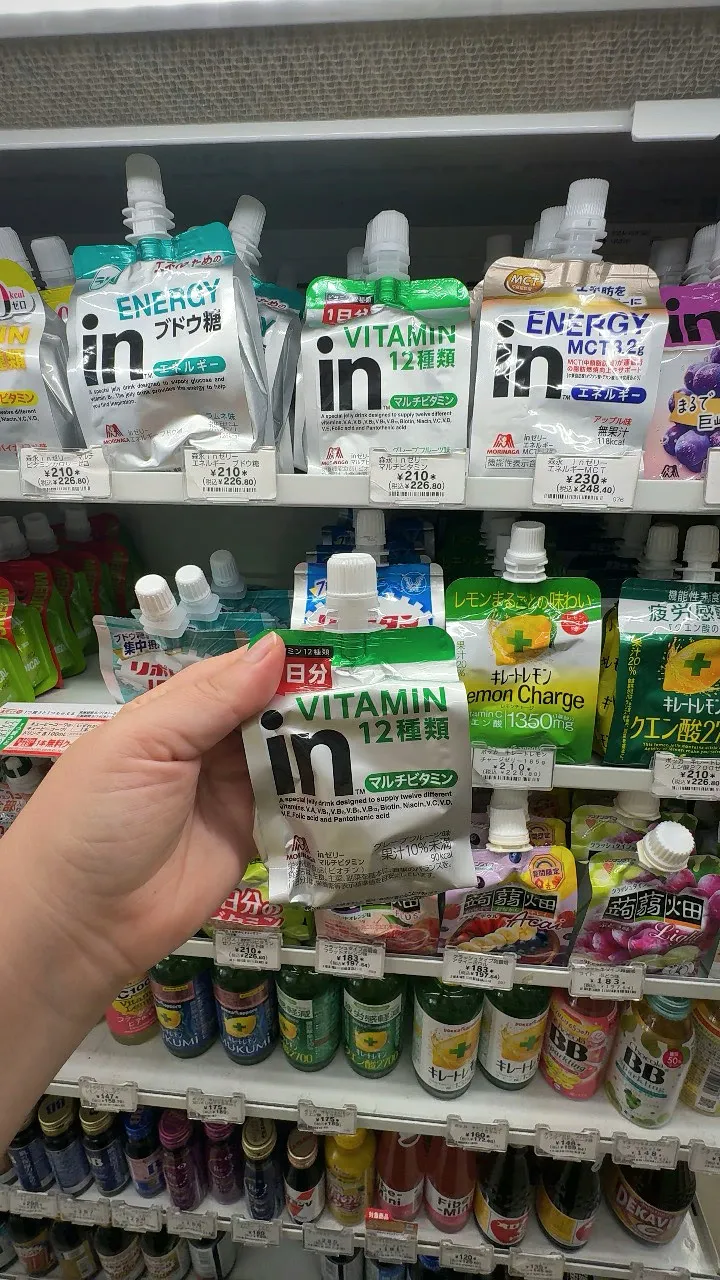
This is the green-label pouch, and I loved it too. It's grapefruit flavored.
- What's in it: a full day's worth of 12 vitamins, using Japan's daily reference values. That covers vitamins A, B1, B2, B6, B12, C, D, and E, plus biotin, niacin, folic acid, and pantothenic acid. 90 calories in a 180 g pouch.3
- When to drink it: whenever your meals have been mostly beige.
- Good for: long travel days and anyone eating a lot of convenience store food.
- Skip it if: you're pregnant or trying to be. The label warns about too much vitamin A in the first three months.3 Morinaga also says children shouldn't have it.
- Our take: our pick for the days we ate mostly rice balls and fried chicken.
4. in Jelly Multimineral // Iron and Calcium, Not Electrolytes
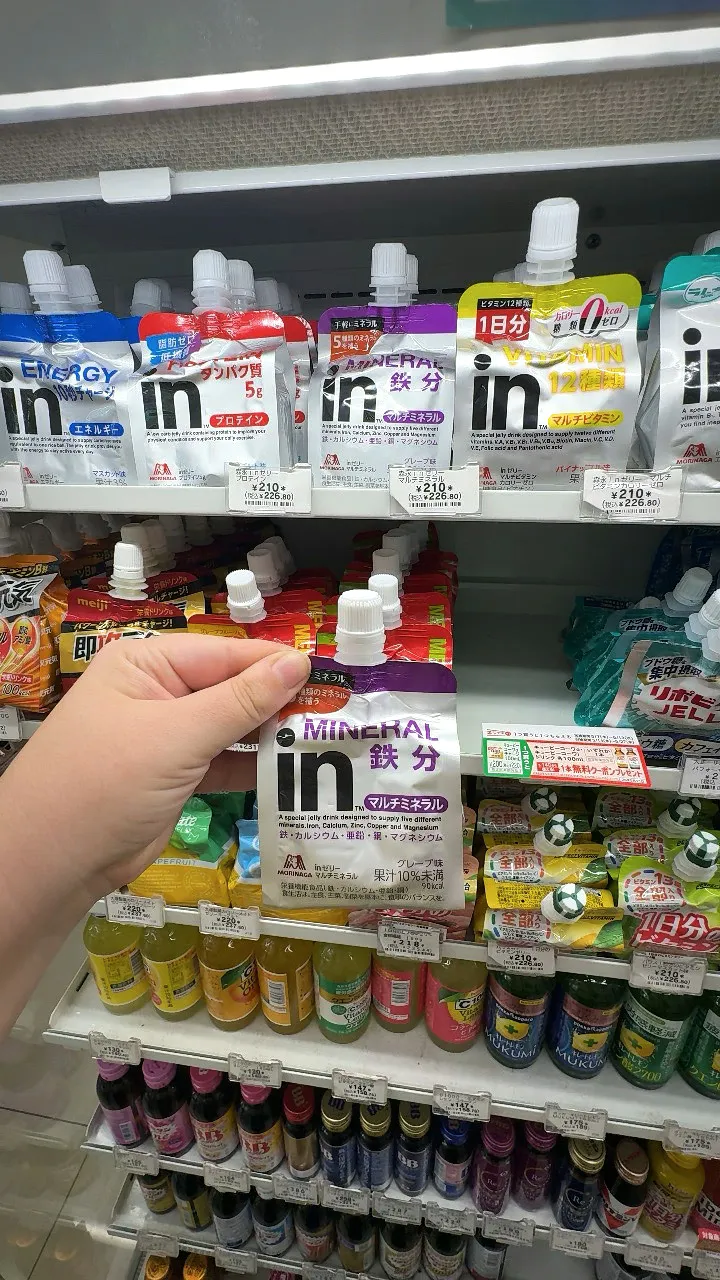
In our video, we called this one "like electrolytes plus more."
- What's in it: iron, calcium, zinc, copper, and magnesium. One pouch gives about a third of a day's iron, calcium, zinc, and copper. Grape flavored, 90 calories.4
- What's not in it: much salt. It has only 0.018 g, so it won't replace what you sweat out.4
- When to drink it: any time, as a snack. It's best if you don't eat much red meat, leafy greens, or tofu.
- Good for: topping up iron and calcium. Morinaga says it's popular with female athletes and runners.
- Skip it if: you're already taking an iron or zinc supplement. The label warns that too much zinc can block copper.4 It isn't for young children.
- Our take: a tasty grape jelly and an easy way to get iron. On a hot day of walking, though, a sports drink like Pocari Sweat is the one with electrolytes.
5. Alinamin Night Recover // The Bedtime Bottle
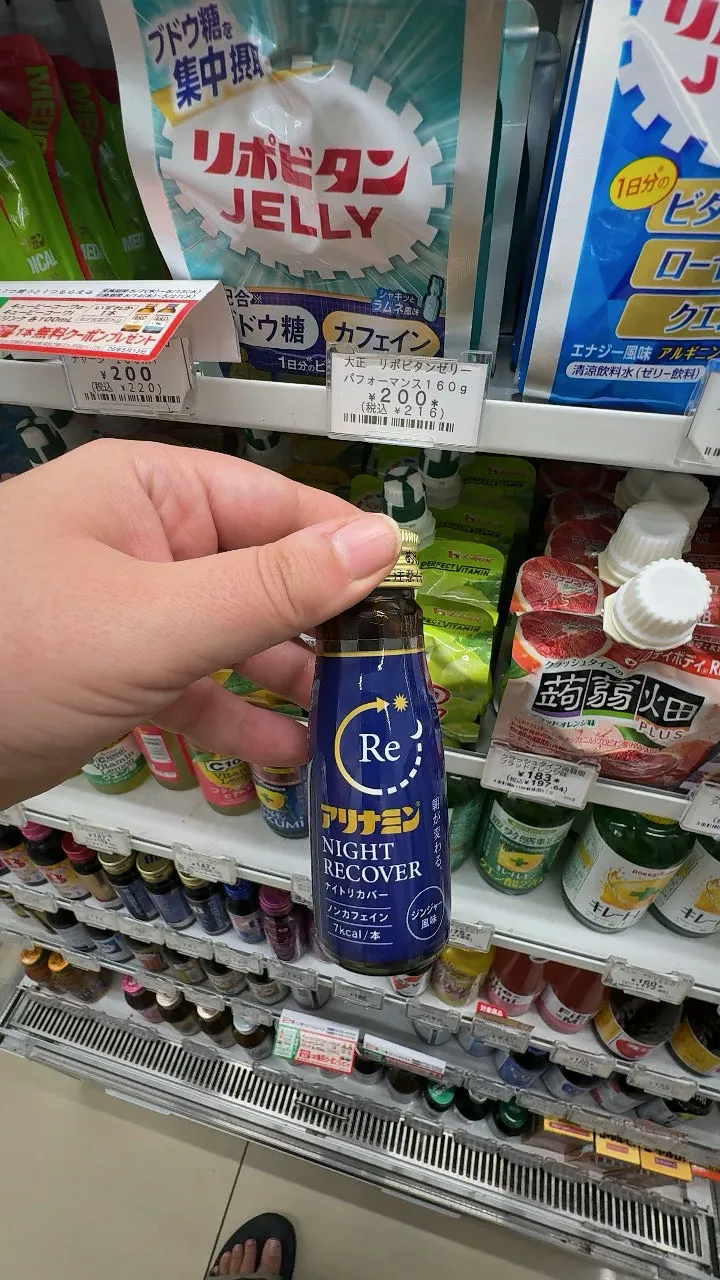
In the video, we said this one would help you "sleep like a baby." That oversells it. Night Recover isn't a sleeping pill.
It's a nutrition drink you take before bed, so it helps you recover while you sleep. In Japan it's sold as a designated quasi-drug. That's a category between food and medicine, with an approved list of what the product can claim.
- What's in it: taurine (1,500 mg), fursultiamine (a form of vitamin B1 your body absorbs easily), vitamins B2 and B6, niacinamide, carnitine, and glycine. No caffeine, 7 calories, and a light ginger flavor in a 50 ml bottle.5
- What it's for: tiredness, and poor sleep that comes from poor nutrition. That means trouble falling asleep, light sleep, and waking up groggy. The maker also lists low appetite and sluggishness from a hangover.5
- When to drink it: right before bed. One bottle a day, ages 15 and up.
- Skip it if: you take prescription medicine. Ask a pharmacist first, as the maker suggests.
- Our take: a nice end to a long walking day, and we felt like it helped. Just don't expect it to knock you out.
How to Read the Vitamin Wall at a Japanese Convenience Store
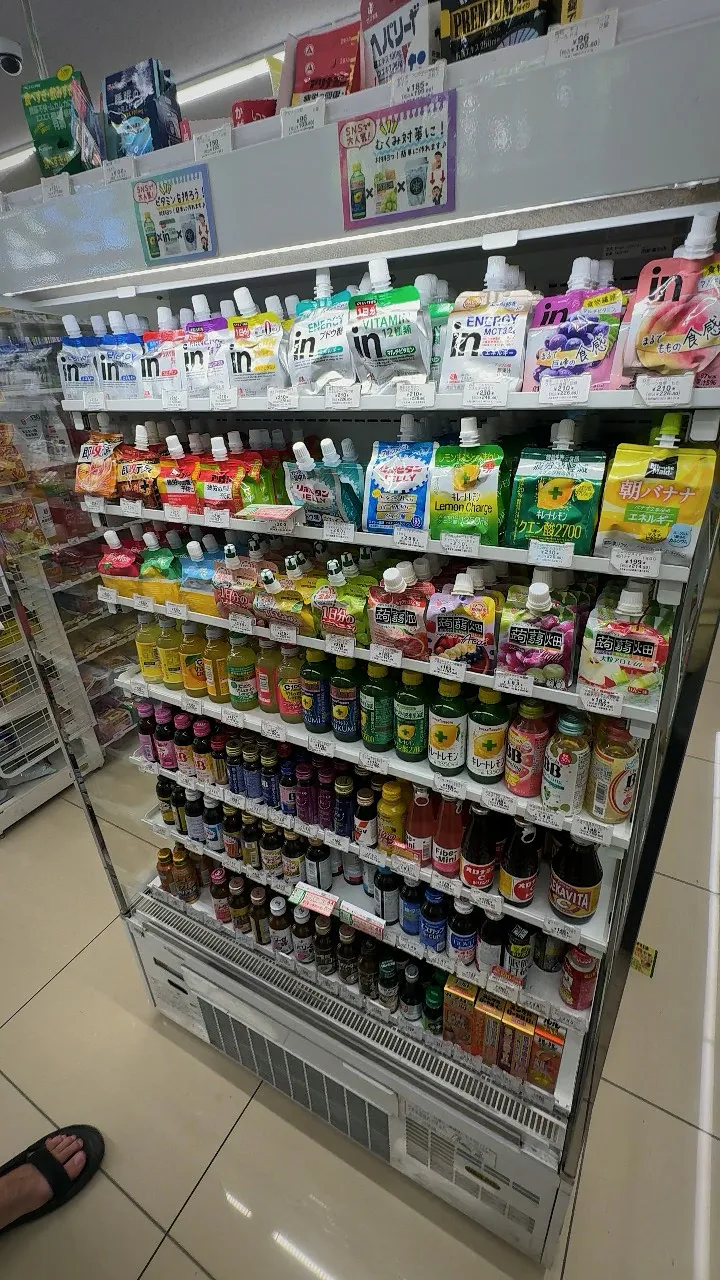
Pouches usually sit on the top shelves. The tiny brown and blue bottles go on the lower shelves. Most of them are energy and nutrition drinks, and some have caffeine.
These Japanese words will tell you what you're holding:
💡 Label Cheat Sheet:
- ビタミン (bitamin) = vitamin
- 食物繊維 (shokumotsu sen'i) = dietary fiber
- 鉄分 (tetsubun) = iron
- 1日分 (ichinichi-bun) = one day's worth
- ノンカフェイン (non-kafein) = caffeine-free
- 疲労回復 (hirō kaifuku) = fatigue recovery
- 指定医薬部外品 = designated quasi-drug, one step below medicine
Can't read the rest? Point the Google Translate camera at the label. That only works with data in the store, so set up an Airalo eSIM at home and your phone works from the airport onward.
Other Bottles You'll See on the Shelf
We didn't buy these, but they sit right next to the ones above. Here's what they are:
- C1000 Vitamin Lemon: a fizzy lemon drink with 1,000 mg of vitamin C. The closest swap for Kireto Lemon.
- Fibe-Mini: a small fizzy fiber drink from Otsuka with 6 g of fiber. It has Japan's FOSHU health label.
- Lipovitan D: the classic Japanese energy tonic. It has taurine and 50 mg of caffeine, so don't drink it at night.
- Oronamin C: a fizzy vitamin drink in a brown bottle. It also has caffeine.
Is It Safe to Drink These Every Day?
For most adults, yes, within the labels. Every product here says one a day. These are snacks and supplements, not medicine, and none of them replaces a real meal.
The thing to watch is vitamin C. A Kireto Lemon has 1,350 mg. The vitamin and peach pouches add up to 248 mg and 300 mg more.3 All three in one day could come close to the 2,000 mg daily upper limit for adults. Going over that can bring stomach cramps, nausea, or diarrhea.6 That's why we say one pouch a day, not three.
A few more cautions from the labels:
- The in Jelly vitamin, mineral, and peach pouches say children should skip them.
- The vitamin pouches carry a vitamin A warning for early pregnancy.
- Night Recover is for ages 15 and up, one bottle a day. Check with a pharmacist if you take other medicine.
If you have a health condition, ask your doctor before adding supplements, at home or in Japan.
Our Verdict on 7-Eleven's Vitamin Drinks
If you only buy two, make them Kireto Lemon and the peach in Jelly. Add the multivitamin pouch on days when you've lived on rice balls. Save Night Recover for the long, tiring days. Just don't expect it to put you to sleep.
They're cheap, they taste good, and they made a month of convenience store dinners feel a bit less guilty. Drink the pouch in the store or right outside it; Japan has etiquette about eating while walking. Those dinners were a big reason our cost of living in Tokyo stayed reasonable.
Next Steps for Your Tokyo Trip
- Healthy 7-Eleven food in Japan: the green smoothie machine and the protein we paired with these drinks.
- 7-Eleven Japan food: what to buy: the egg sando, onigiri, and hot dog hack we'd buy again.
- Cost of living in Tokyo: what a month of 7-Eleven dinners and meals out cost us.
- Dos and Don'ts in Japan: the etiquette for snacking, trash, and trains.
- Is Tokyo good for digital nomads?: our month living and working there.
- Staying in Shinjuku: the neighborhood where we did our 7-Eleven runs.
Bernie & Cream@bernieandcream
Follow along on Facebook
Bernie & Cream@bernieandcream
Follow along on Instagram
Bernie & Cream@bernieandcream
Follow along on Threads
Bernie & Cream@bernieandcream
Watch us on TikTok
Bernie & Cream@bernieandcream
Follow along on X
Bernie & Cream@BernieAndCream