You've booked Kuala Lumpur, and then you notice your dates land right on Chinese New Year. Suddenly you're wondering if the whole city shuts down, if your hotel just doubled in price, and if you'll spend the week looking at closed shutters.
Heads up: some links in this guide are affiliate links. If you book or buy through them, we may earn a commission at no extra cost to you.
In this guide 10 sections
That was us. Cream and I arrived in Kuala Lumpur (KL) in early February with three months ahead of us, and we knew it was Lunar New Year season, but that was about all we knew. I fully expected half the city to be closed.
It turned out to be a fun, unique time to be there. We were based in Bukit Bintang for the entire celebration, and here's everything we saw, what actually closed, what got busier, and how to enjoy it as a visitor.
Is Chinese New Year a Good Time to Visit Kuala Lumpur? Our Quick Answer
Yes. Chinese New Year in Kuala Lumpur is a fun and unique time to visit: every mall is decorated, lion dances turn up everywhere, and the Petronas Twin Towers glow red and gold at night. We expected closures, but the malls stayed open and daily life carried on. Just book your stay early, because hotels and short-term rentals fill up with holiday visitors.
What Is Chinese New Year?
Chinese New Year, also called Lunar New Year or the Spring Festival, marks the start of the year on the traditional lunar calendar. It's the biggest celebration of the year for Chinese families, and Malaysia has a large Chinese community, so the whole country joins in.
Each year belongs to one of the 12 animals of the Chinese zodiac. Ours was the Year of the Horse, which is why horses showed up in decorations all over the city.
The festival lasts 15 days. It starts with a reunion dinner on New Year's Eve and ends with Chap Goh Mei, the 15th night, sometimes called the Lantern Festival. In between, families visit each other, give red packets of money, and eat a lot of symbolic food.
💡 Chinese New Year Words You'll Hear in KL:
- Gong Xi Fa Cai = the Mandarin greeting, wishing you prosperity (Gong Hei Fat Choy in Cantonese)
- Ang pow (or ang pao) = a red packet with money inside
- Yee sang = a raw fish salad tossed high for luck, also called lo hei
- Chap Goh Mei = the 15th and final night of the celebrations
- Open house = a home or event open to friends, neighbors, and colleagues

 Bernie & Cream@bernieandcream
Follow along on Facebook
Bernie & Cream@bernieandcream
Follow along on Threads
Bernie & Cream@bernieandcream
Watch us on TikTok
Bernie & Cream@bernieandcream
Follow along on X
Bernie & Cream@BernieAndCream


When Is Chinese New Year in Kuala Lumpur?
Chinese New Year follows the lunar calendar, so the date moves every year, landing somewhere between late January and mid-February. Malaysia gives the first two days as national public holidays.
In 2026, New Year's Day was Tuesday 17 February, with public holidays on the 17th and 18th, and Chap Goh Mei fell on 3 March.1 Decorations went up well before that, and the malls were already red and gold when we arrived in early February.
One thing we didn't see coming: in 2026, Ramadan started in Malaysia on 19 February, two days after Chinese New Year.2 The city went straight from lion dances to evening Ramadan food bazaars. Our guide to the best time to visit Kuala Lumpur covers how Ramadan changes daytime opening hours.
What We Saw in KL During Chinese New Year
The Malls Go All Out
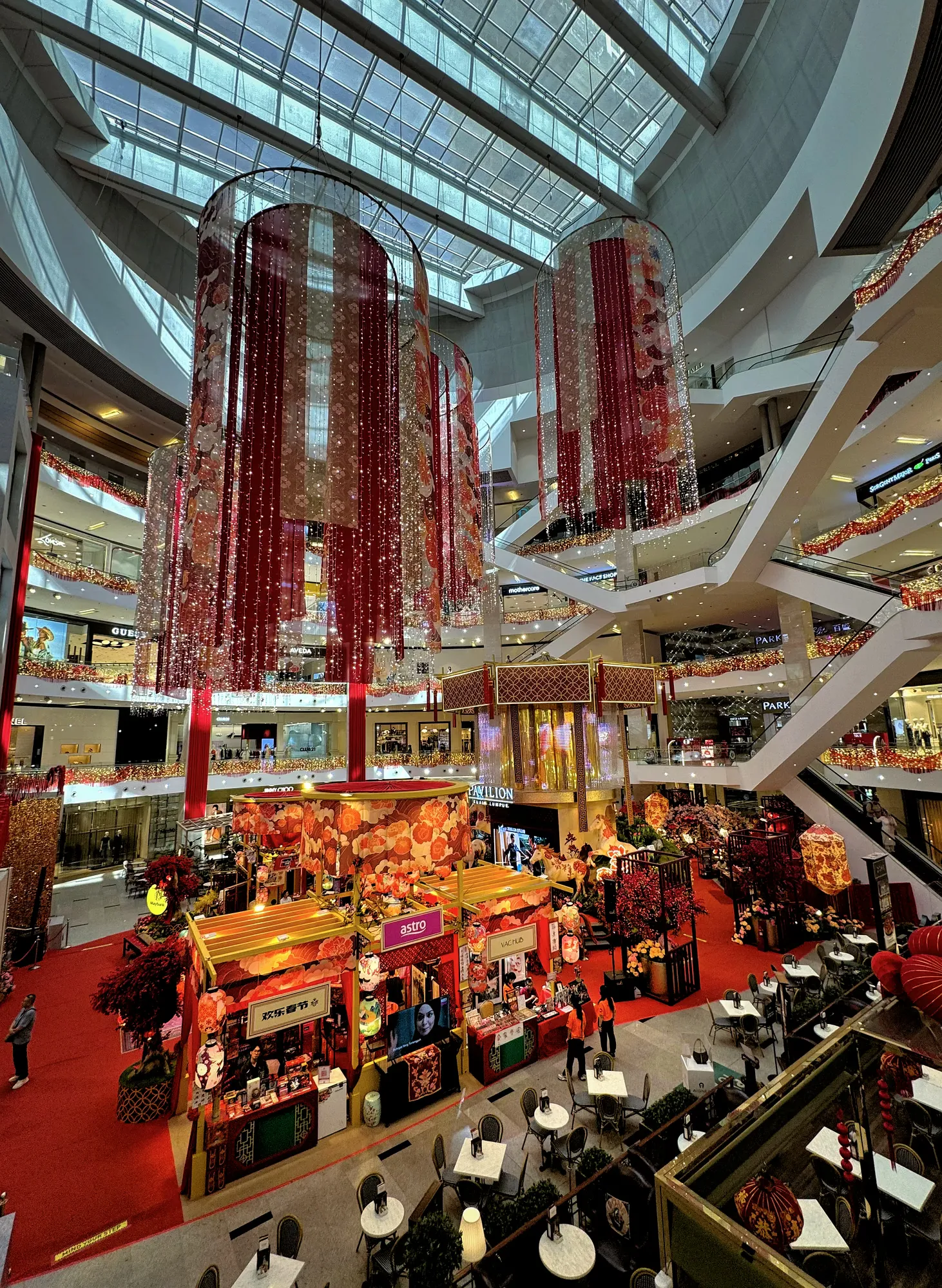
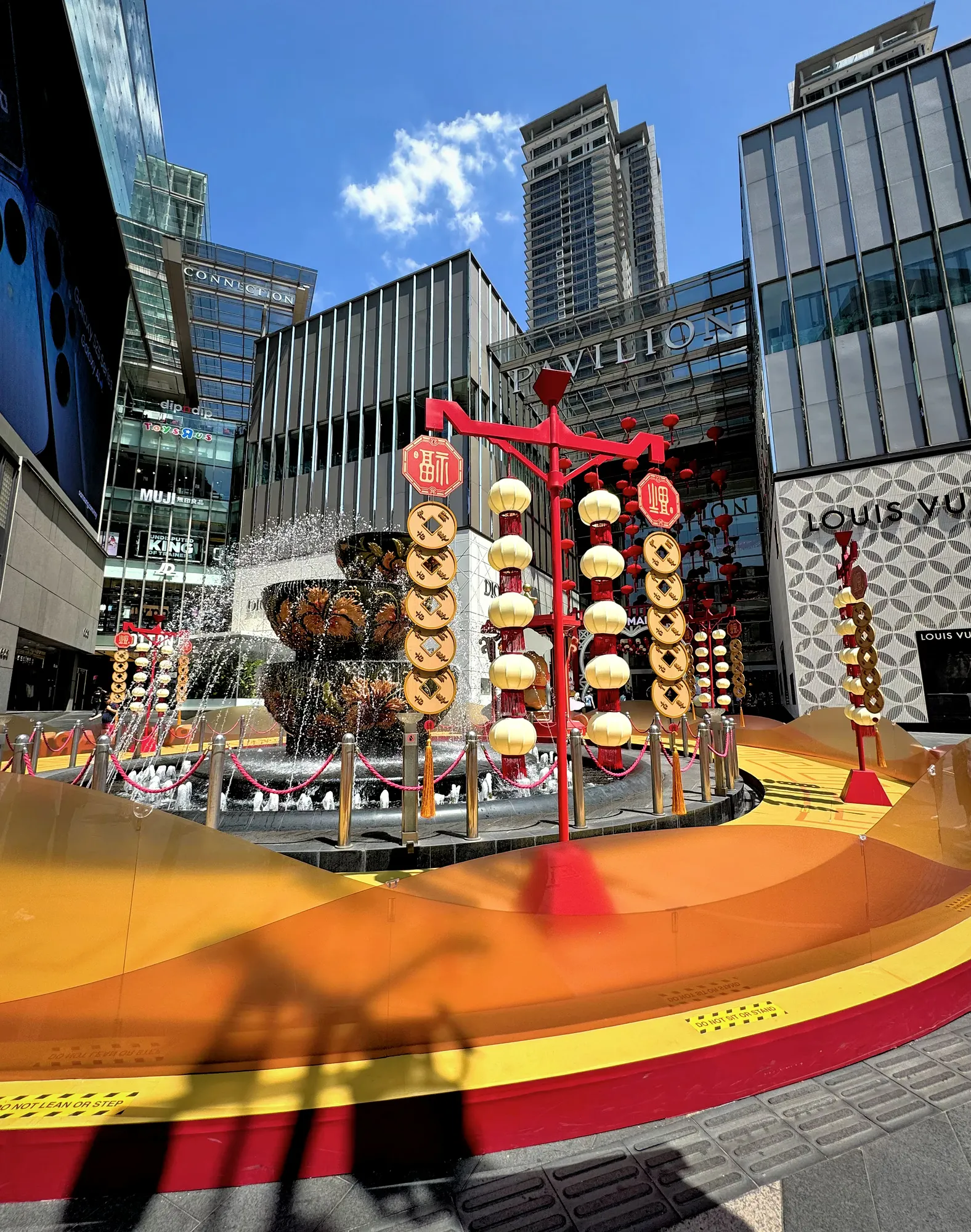
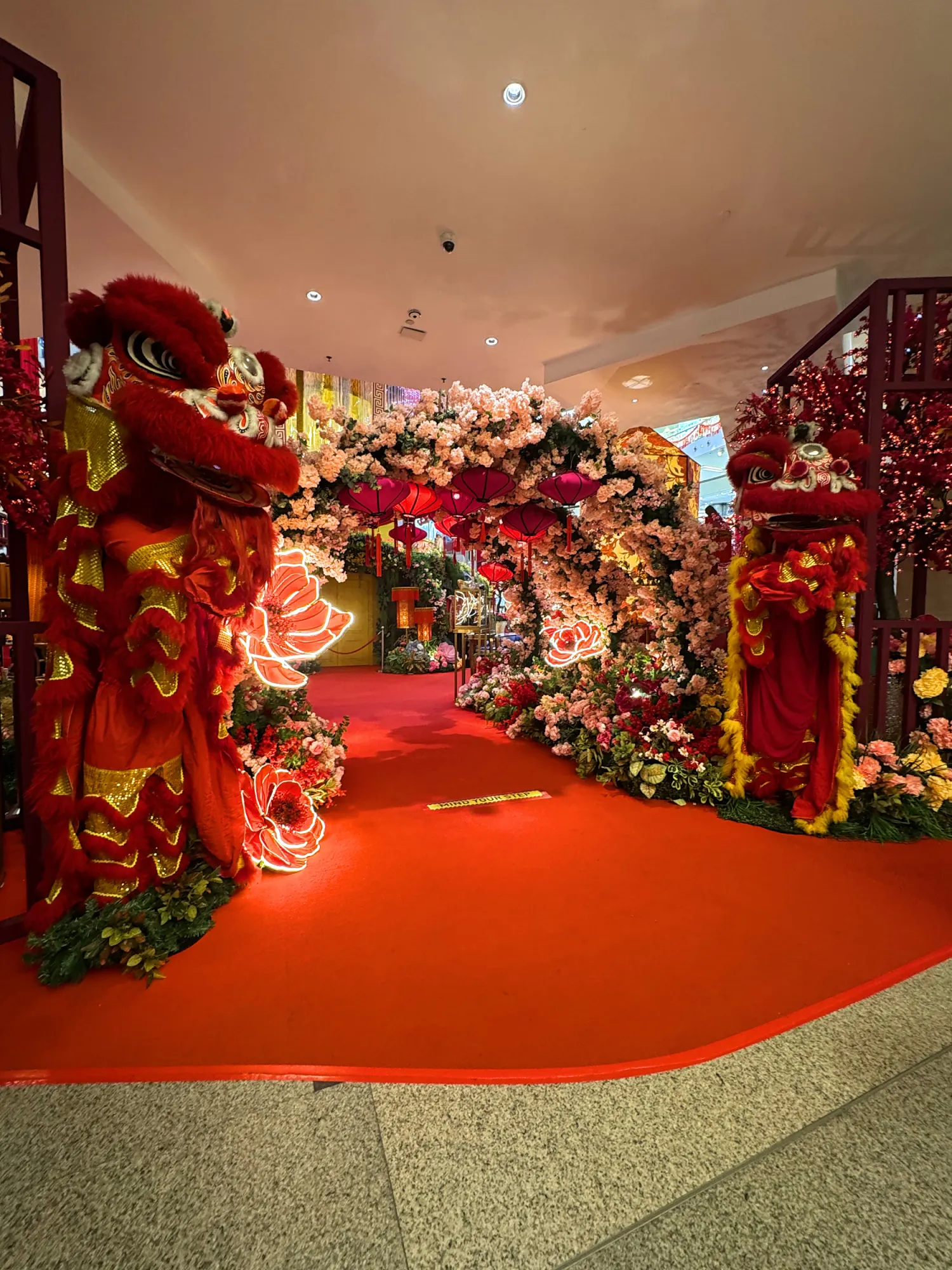
Every mall we walked into was decorated, both outside and in the main atrium. Pavilion Kuala Lumpur was the standout, with huge red and gold lanterns hanging from the skylight and horse sculptures set among pink flowers.
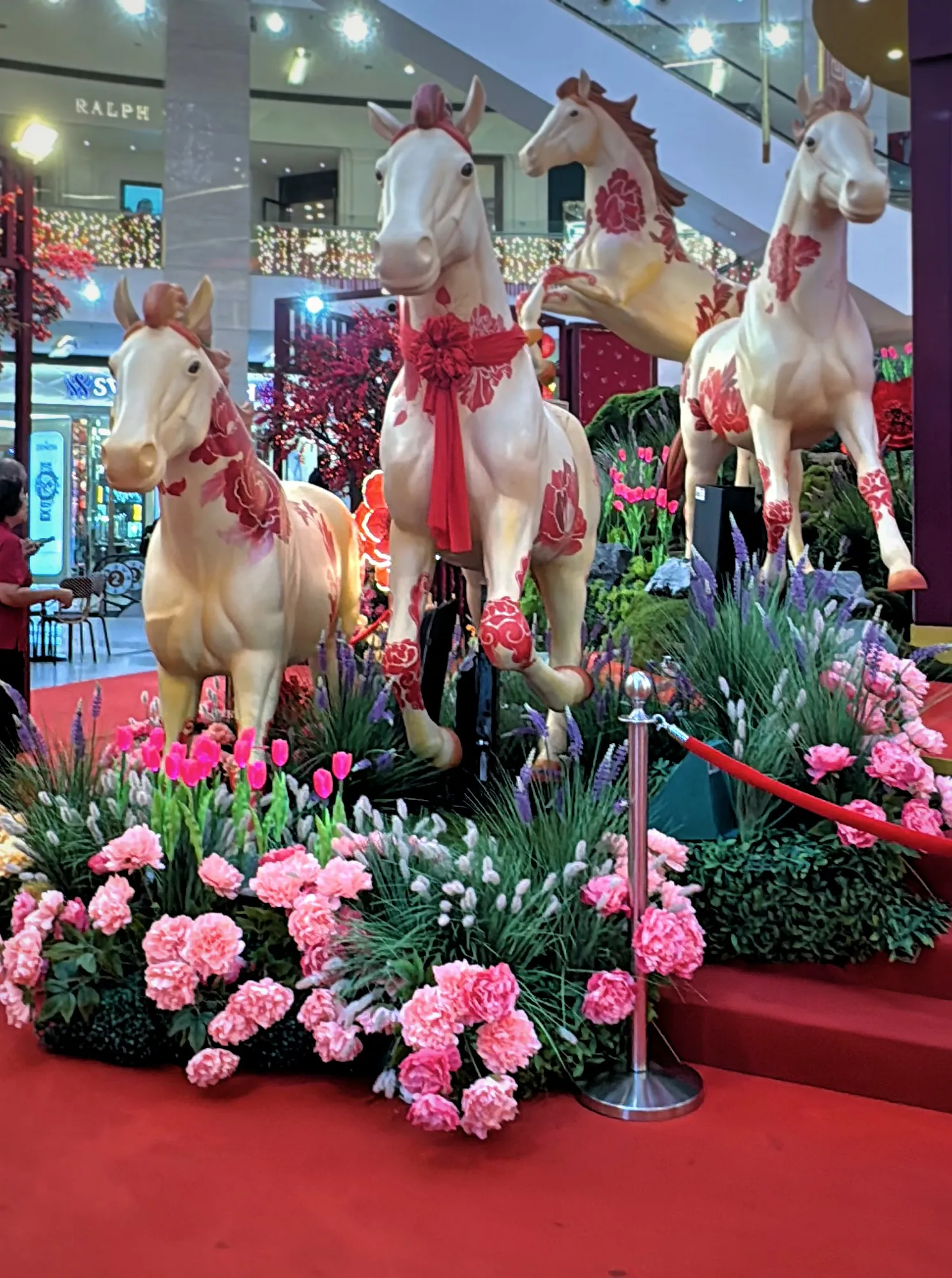
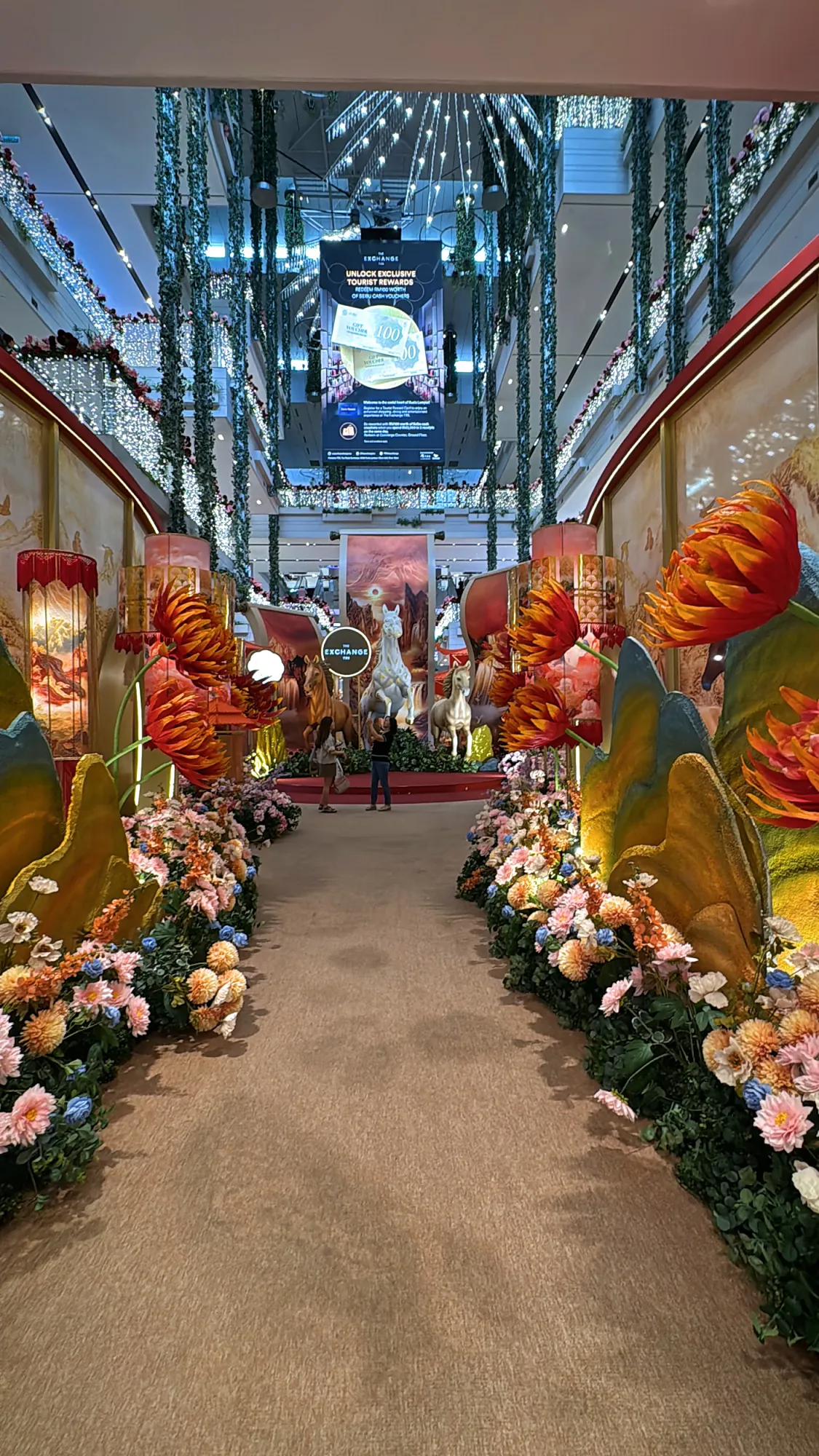
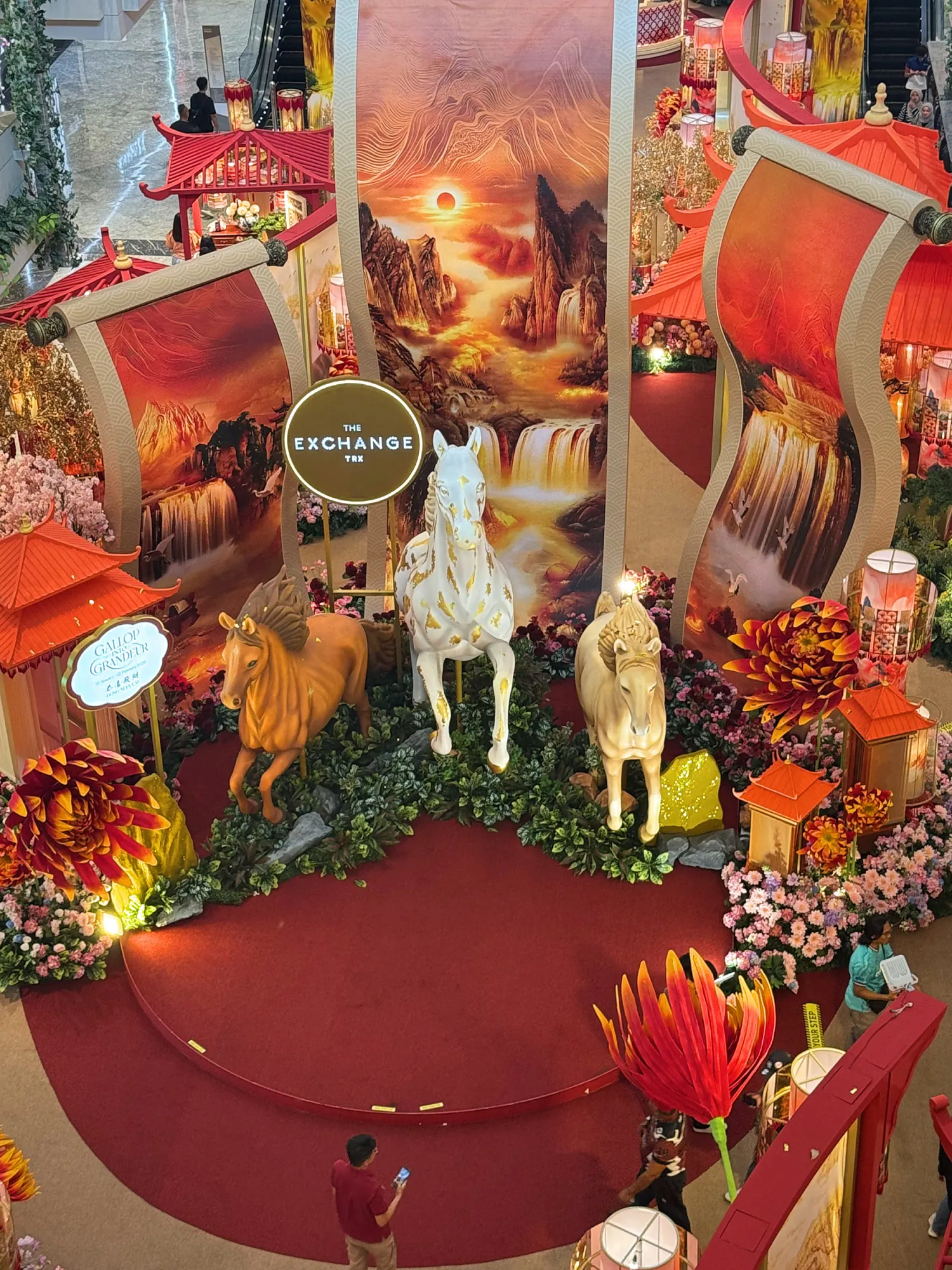
The Exchange TRX, our favorite mall in KL, had its own Year of the Horse display: a walkway lined with giant flowers leading to three horse statues on a red stage, set against huge painted scrolls.
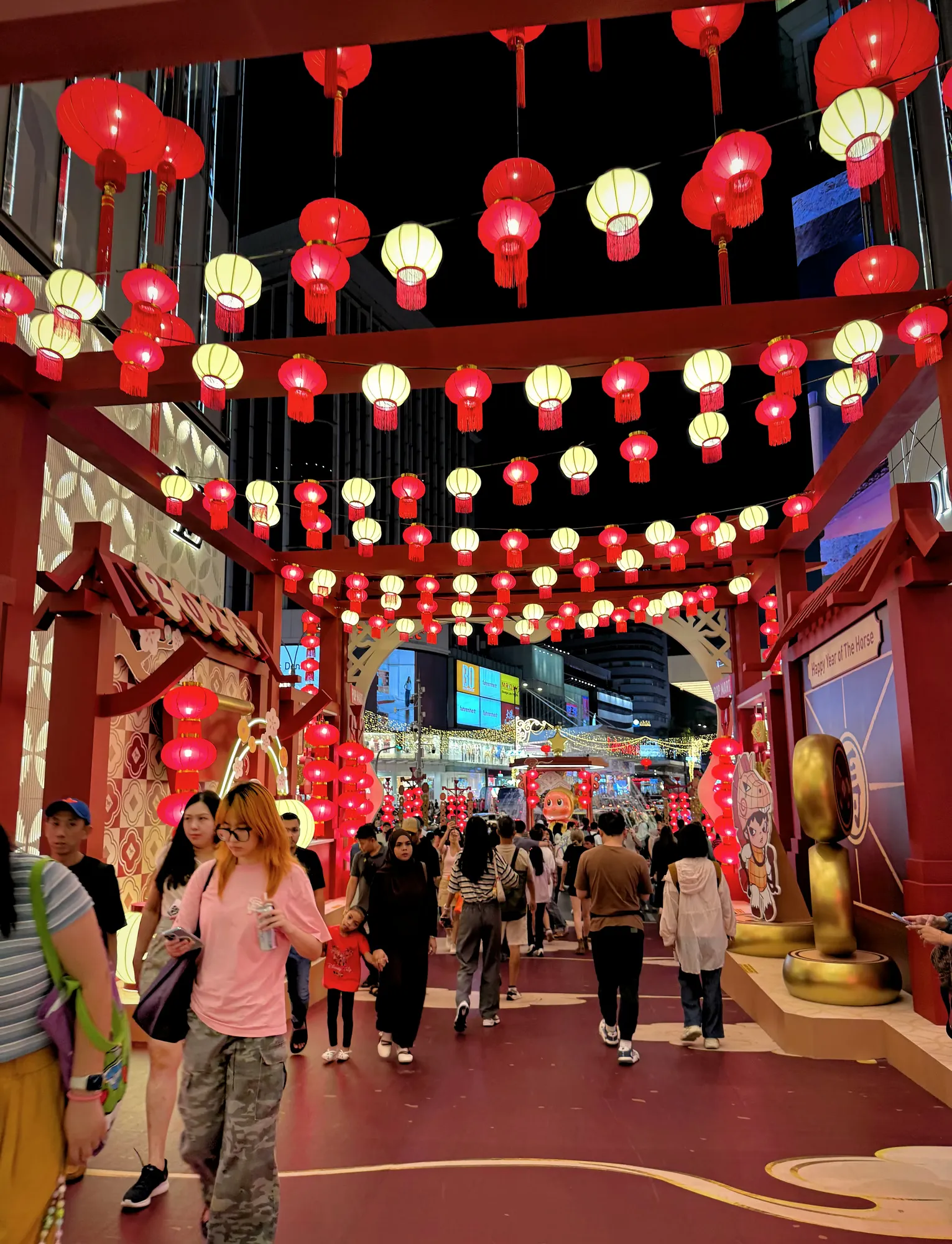
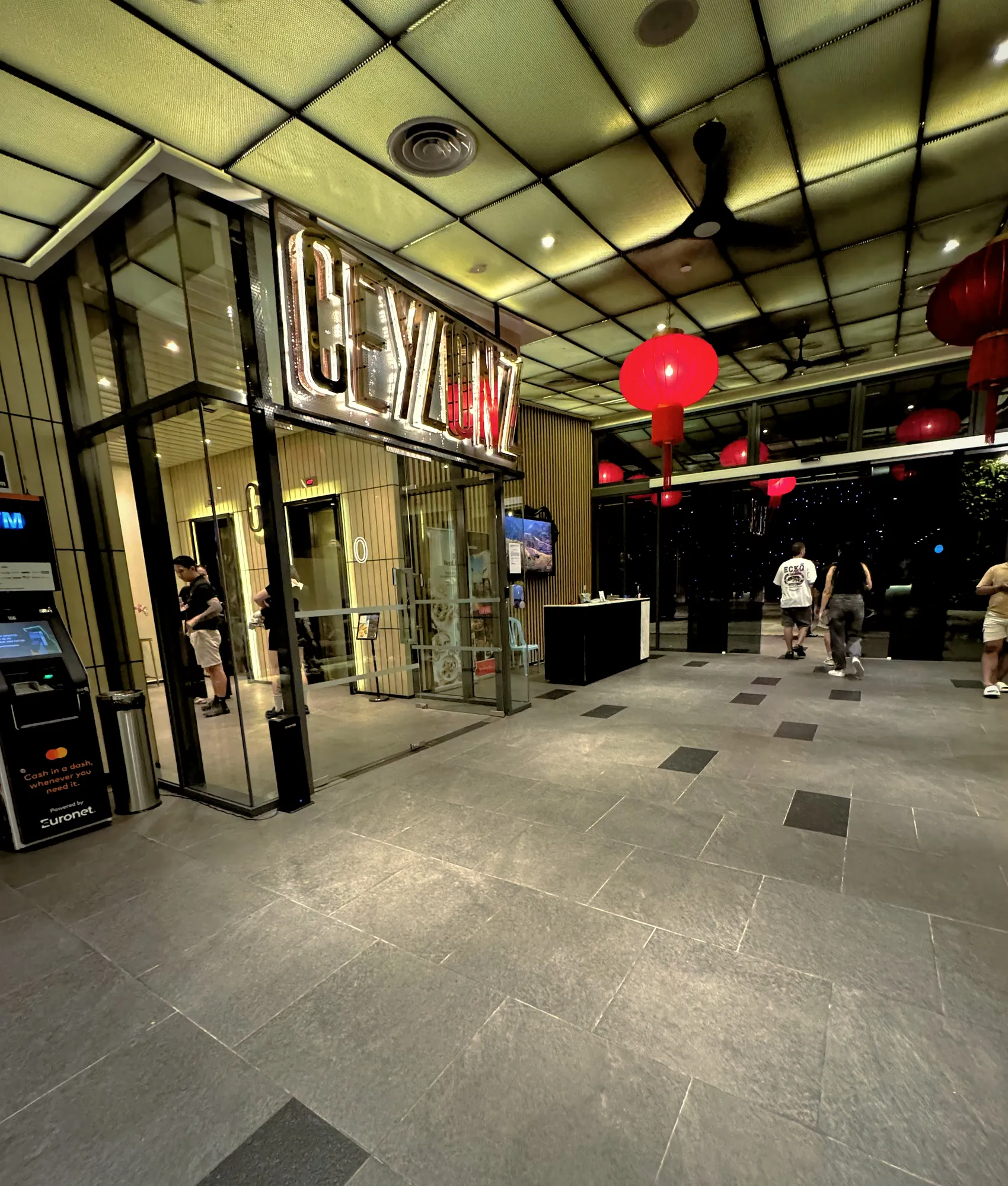
Back in Bukit Bintang, the crystal fountain outside Pavilion was framed in giant gold coins, and the walkways around it were strung with glowing lanterns. Even the lobby of our building had red lanterns up.
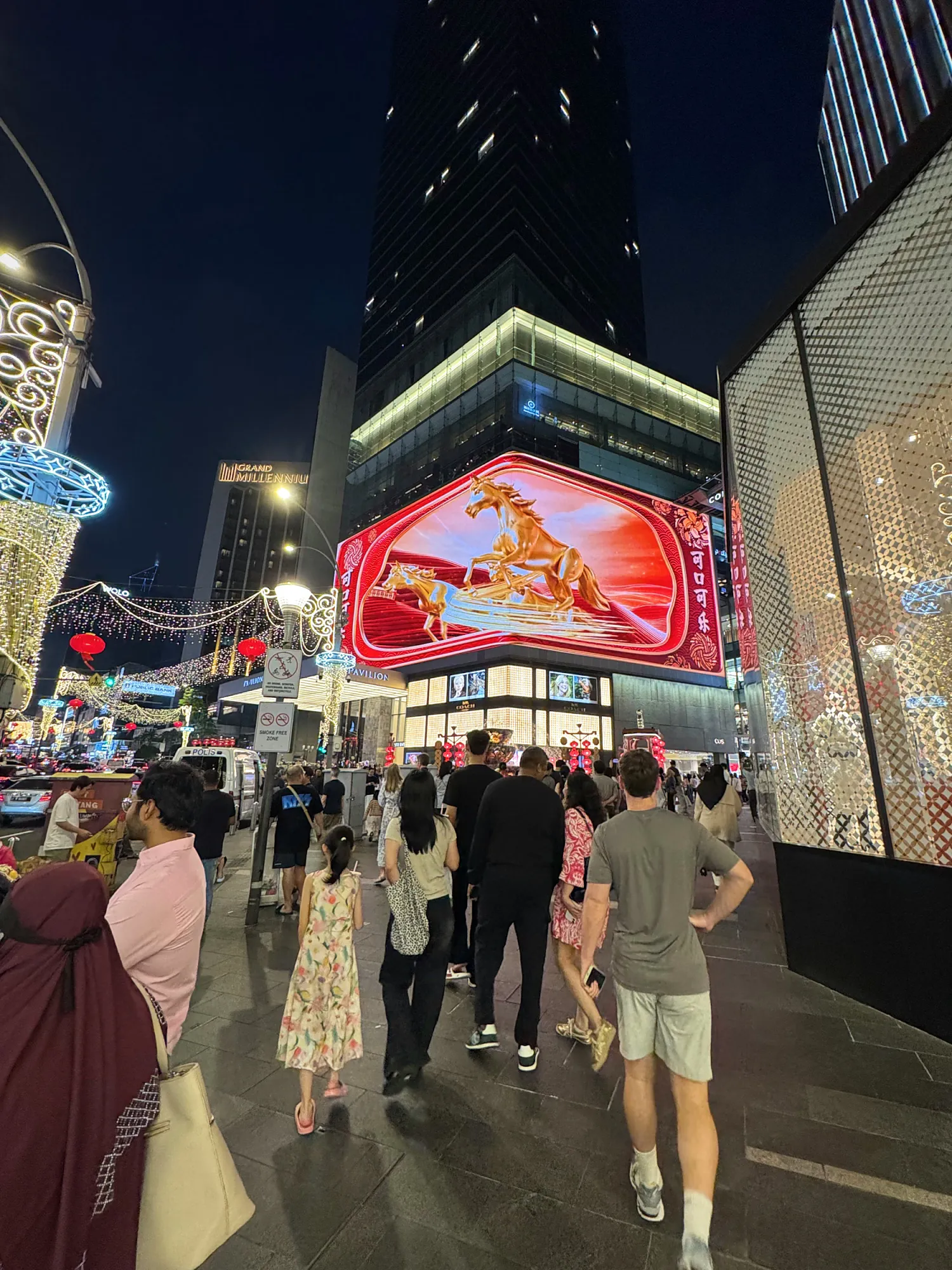
The giant digital billboards along Bukit Bintang got in on it too, switching to Year of the Horse ads for the holiday.
Lion Dances Everywhere
During the actual holiday days, we saw lion dances, and we saw fireworks too. They were everywhere, and they were really cool to see.
A lion dance is two performers inside one lion costume, dancing to drums, cymbals, and gongs to bring good luck and scare off bad spirits.3 Often the lion "eats" lettuce hung up with a red packet and spits the leaves back out. The Cantonese word for the greens sounds like the word for getting rich, so the lion is blessing the place with prosperity.
The one thing I didn't love was the noise. In some malls the drums were so loud it was hard to be near them, and the loudest we heard was at Suria KLCC, the mall under the Petronas Twin Towers. If you're sensitive to noise or traveling with small kids, watch from a level or two above the atrium.
The Twin Towers and KL Tower Turn Red and Gold
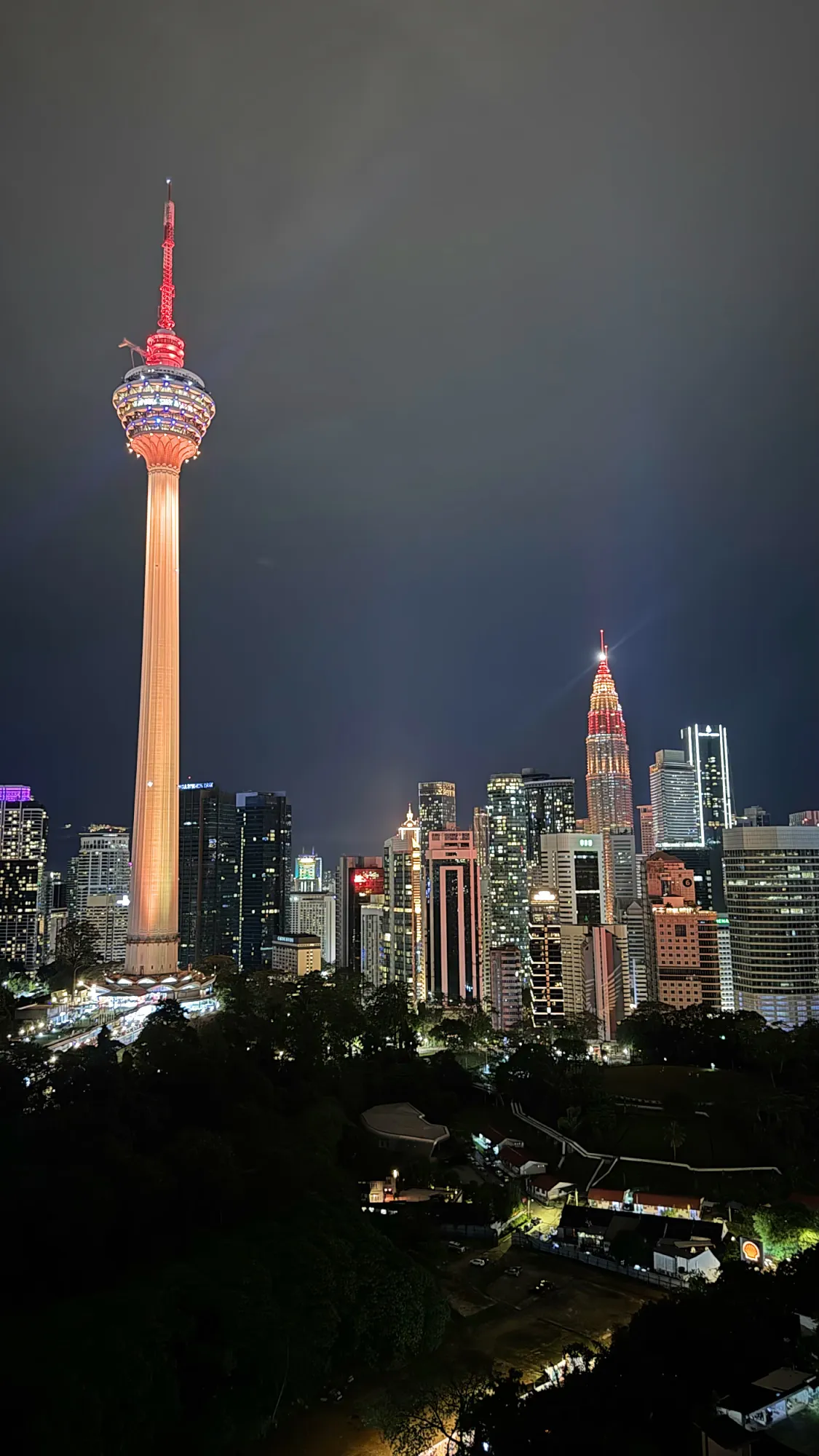
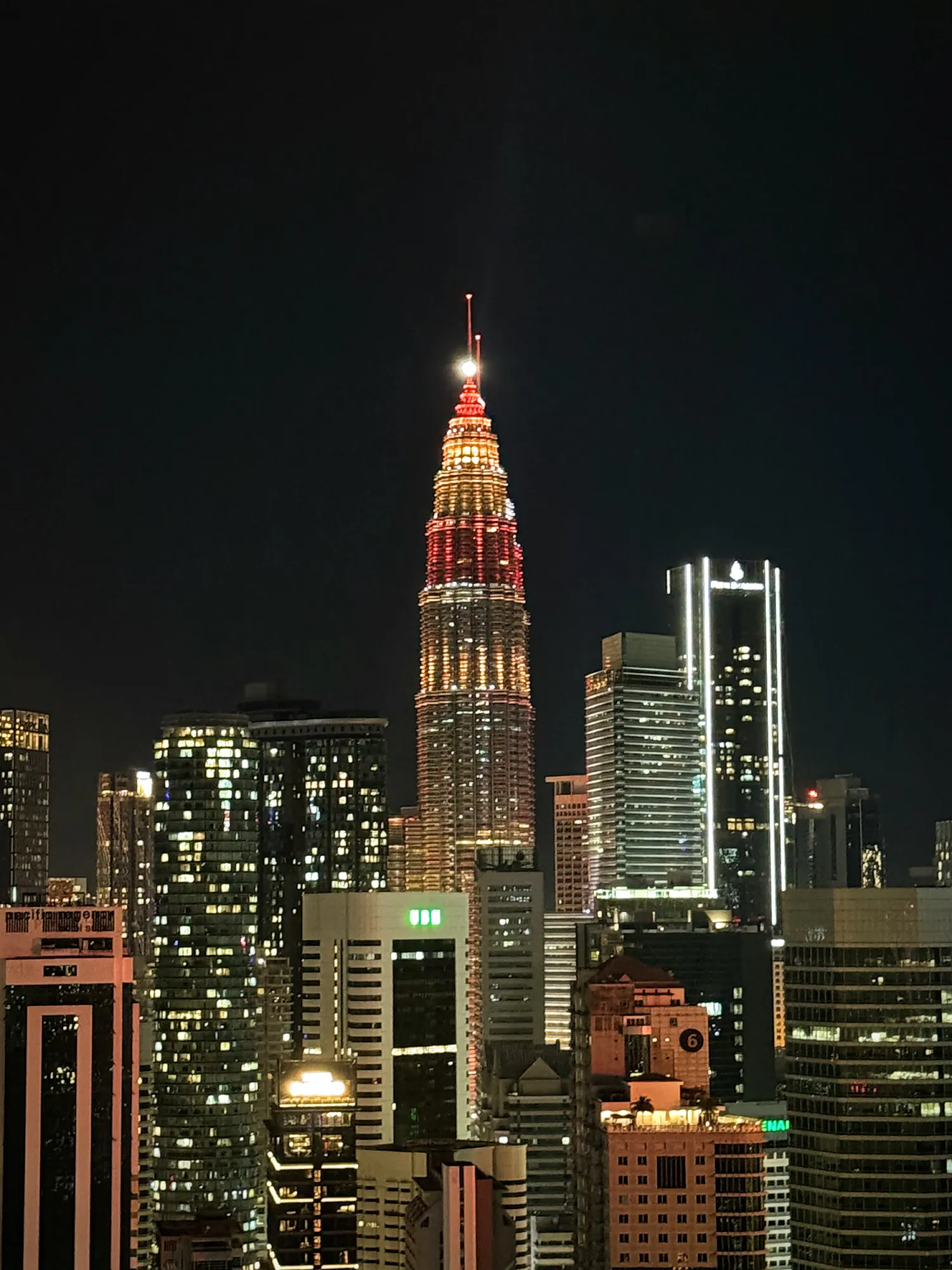
The city lights changed for the holiday. The Petronas Twin Towers in KLCC turned red and gold at night, and so did the KL Tower. It was so pretty to see.
Mandarin Oranges in Every Grocery Store
At the grocery store, there were stacks of gift baskets full of mandarin oranges. In Cantonese, giving mandarin oranges sounds like "giving gold", so families give them in pairs when they visit each other's homes over the holiday.4
The McDonald's Prosperity Burger
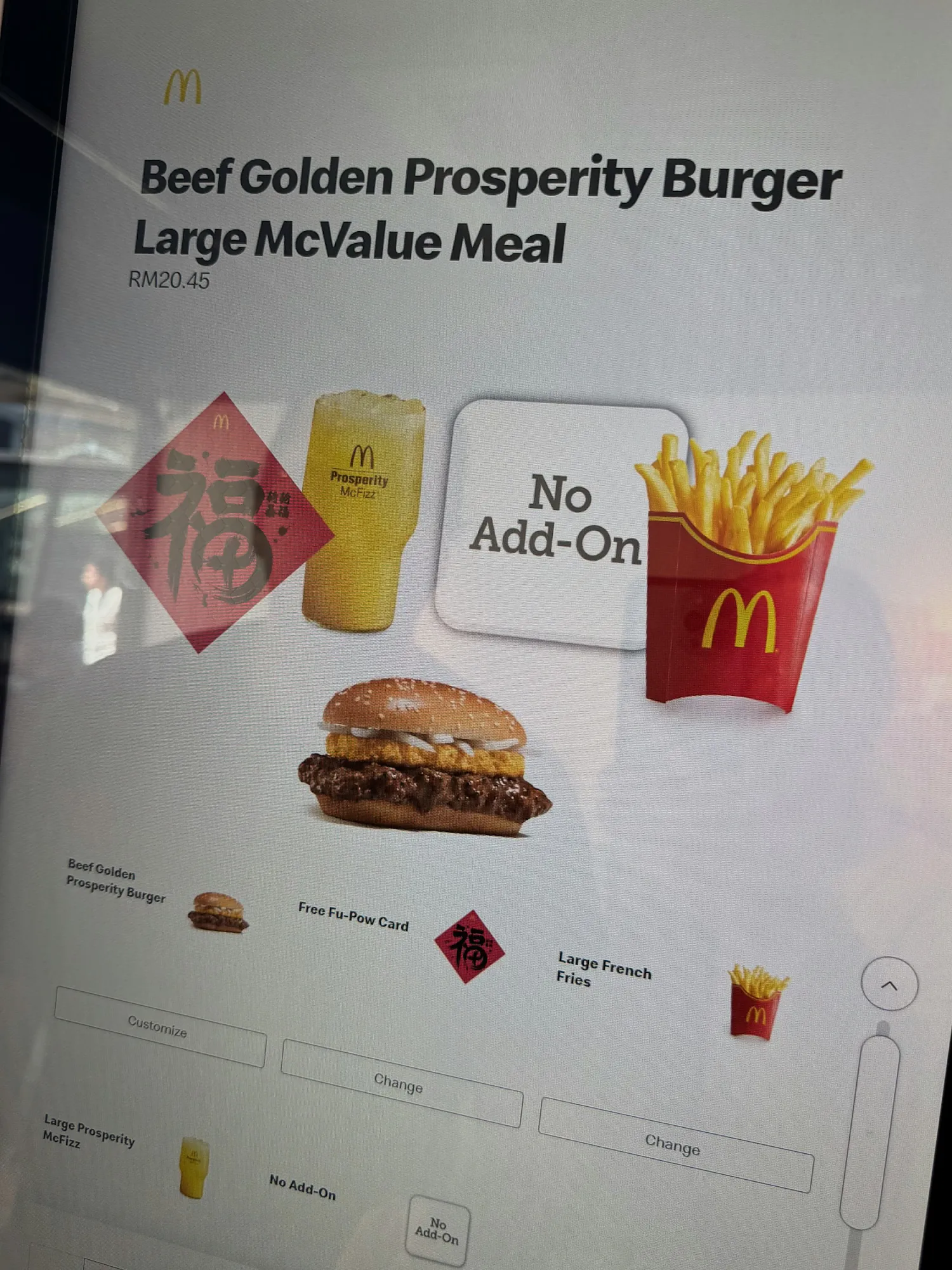
Malaysia's McDonald's has its own Chinese New Year special, the Prosperity Burger (sold as the Golden Prosperity Burger in 2026), and it was so good.
It's a chicken or beef patty in black pepper sauce with onions on a sesame bun. McDonald's Malaysia has been bringing it back every year since 1994.5 The seasonal menu also had curly fries and a Prosperity McFizz, which is orange juice mixed with Sprite. We only tried the burger, but if you're in Malaysia when it's on, order it. Our guide to McDonald's in Malaysia covers the rest of the menu.
What's Closed in Kuala Lumpur During Chinese New Year?
Barely anything, at least for visitors. I was expecting a lot to be closed, and it just wasn't. The malls were open, and we carried on with our normal routine through the public holidays.
Grab was a little busier than normal, with slightly longer waits, but it wasn't bad. You'll want mobile data the moment you land to book rides, so it's worth getting an Airalo eSIM before you land in Malaysia.
The places that can close are small, family-run Chinese businesses, such as some coffee shops and hawker stalls, which often shut for the first few days while the owners visit family. If a specific stall is on your list of must-eat foods in Kuala Lumpur, check before you go.
It Gets Busy: Book Your Stay Early
The one real downside was where we stayed. We were renting an apartment at Ceylonz Suites in Bukit Bintang, and over the holiday the building was packed. Large groups came in for just a few days, and every small issue in the building got bigger: more noise, longer waits for the lifts, more people everywhere. It calmed down once the holiday was over.
So if you're coming for Chinese New Year, book your hotel or apartment early (compare places to stay in Bukit Bintang for your dates, or see where to stay in Kuala Lumpur), and expect busier lifts, pools, and breakfast rooms than usual. Hotels in Kuala Lumpur charge peak prices over the major holiday weeks, including Chinese New Year.
Where to See Chinese New Year Celebrations in KL
The mall decorations, lion dances, and city lights were what we saw ourselves. We didn't make it to the places below, but they're where Kuala Lumpur celebrates the traditional side of the holiday, so they're worth adding if you're here for it.
1. Petaling Street // KL's Chinatown
Petaling Street is the heart of Kuala Lumpur's Chinatown. Over the New Year season it's strung with red lanterns, with stalls selling decorations and festive snacks, and lion dance troupes often perform in the area.
2. Kwai Chai Hong // A Lantern-Filled Lane
Kwai Chai Hong is a small restored lane at Lorong Panggung, right by Petaling Street, that puts up a new installation every Chinese New Year. In 2026, its zodiac lanterns and a 7-foot horse stayed up until 8 March, open from 9 AM to midnight.6
3. Guan Di Temple // One of the Oldest Temples in Malaysia
Guan Di Temple on Jalan Tun H.S. Lee, at the edge of Chinatown, was founded in the 1880s and is dedicated to Guan Yu, a figure of loyalty and courage.7 Expect incense, red decorations, and plenty of people praying for luck in the new year.
4. Thean Hou Temple // Hundreds of Red Lanterns
Thean Hou Temple is a six-tiered temple to the sea goddess Mazu, on a hill at Robson Heights just south of the city center.8 It's the most famous Chinese New Year photo spot in KL. In 2026 its celebrations ran from 7 February to 3 March, with lanterns, lion dances, and fireworks.
How to Celebrate Chinese New Year as a Visitor
You don't need an invitation to join in. Here's how to be part of it:
- Say the greeting. "Gong Xi Fa Cai" or a simple "Happy Chinese New Year" goes a long way with shopkeepers and Grab drivers.
- Wear red. It's the color of luck for the festival, and you'll match the city.
- Watch a lion dance. Malls and hotels host them during the holidays. Follow the drums.
- Try the festive food. Yee sang (the tossed raw fish salad) is on Chinese restaurant set menus for the season, and you'll see bak kwa (sweet barbecued pork jerky) and pineapple tarts everywhere. The word for pineapple sounds like "prosperity comes" in several Chinese dialects.4 We didn't try these ourselves, so tell us if you do.
- See the city at night. Find a spot with a view of the Petronas Twin Towers and KL Tower once they're lit red and gold.
- Don't worry about ang pows. Red packets go from married adults to children and unmarried relatives, so visitors aren't expected to give them.
Our Verdict on Chinese New Year in Kuala Lumpur
I'd tell anyone to come. Seeing the decorations and the lion dances and just being part of it was unique and really cool, and since nothing closed, we still got to enjoy our time in KL like normal. Book your stay early, bring earplugs for the drums, and order the Prosperity Burger.
If you're still deciding on the trip itself, here's our honest take on whether Kuala Lumpur is worth visiting.
Next Steps for Your Kuala Lumpur Trip
Bernie & Cream@bernieandcream
Follow along on Facebook
Bernie & Cream@bernieandcream
Follow along on Threads
Bernie & Cream@bernieandcream
Watch us on TikTok
Bernie & Cream@bernieandcream
Follow along on X
Bernie & Cream@BernieAndCream