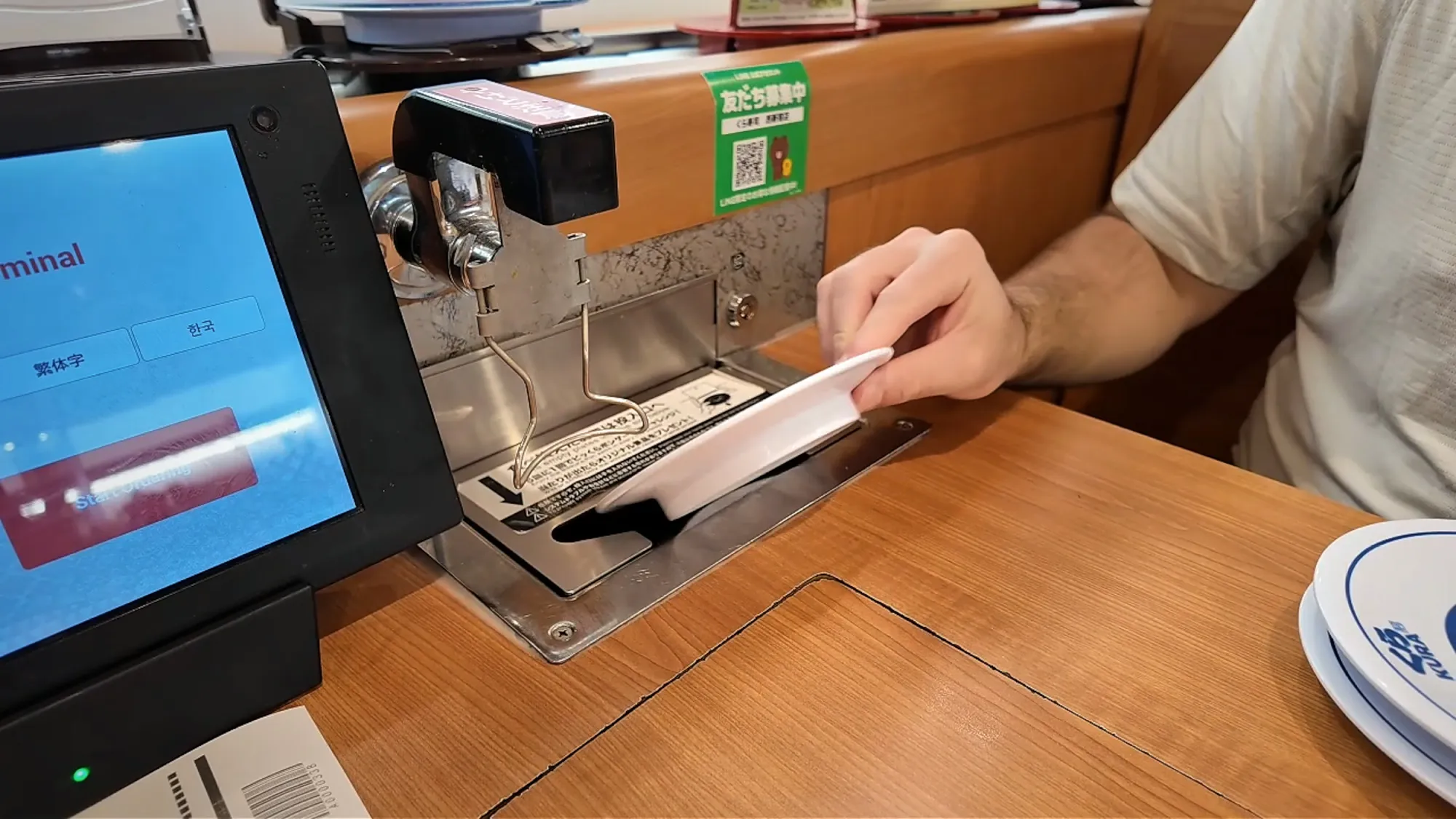
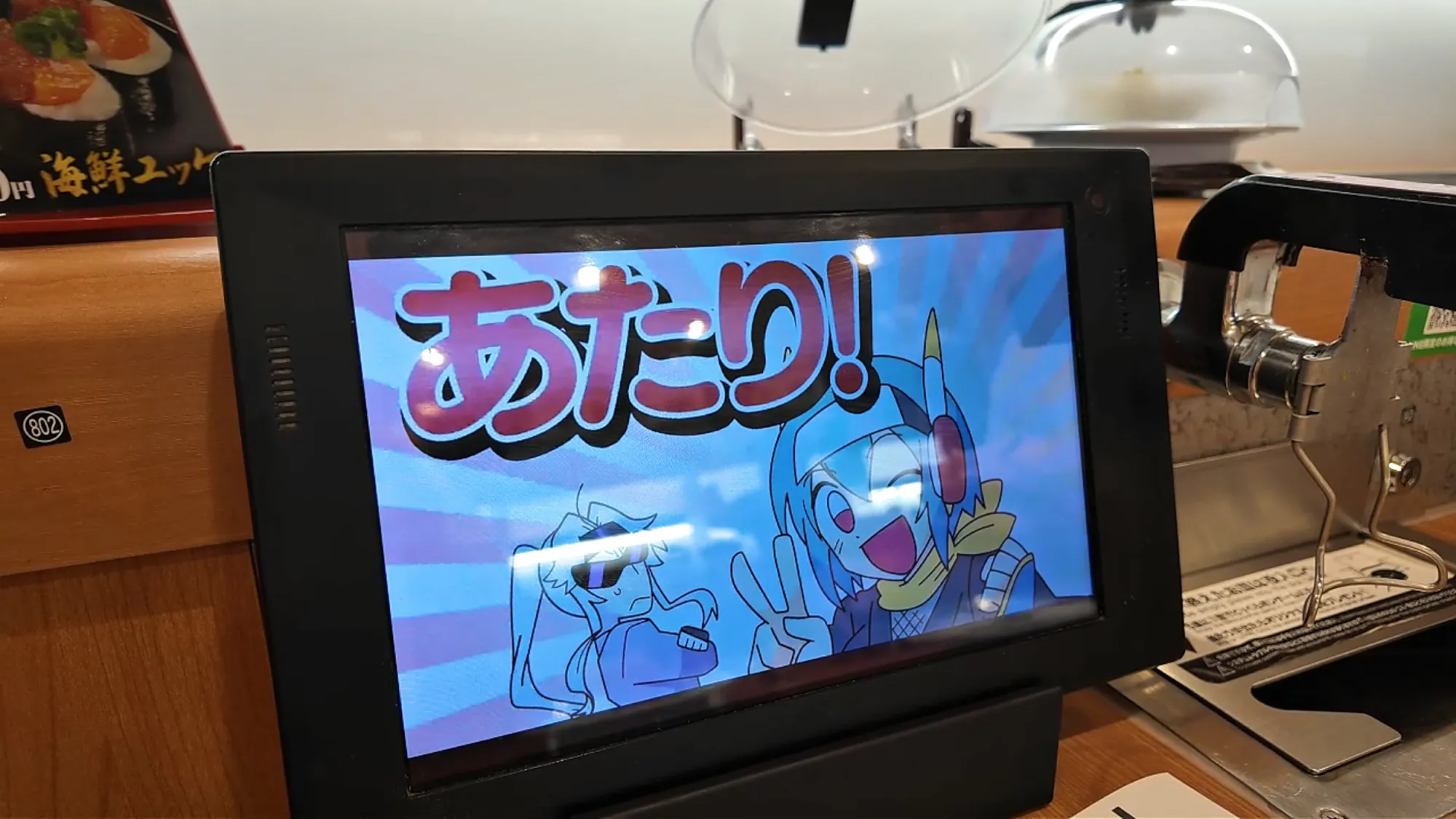
At Kura Sushi, you don't stack your empty plates. You feed them into a slot in the table, and every five plates kicks off a little prize game on the tablet. Cream and I slid in plate after plate, watched game after game end on the miss screen, and then one finally hit. A capsule dropped from the machine above our booth, and inside was a small keychain.
Heads up: some links in this guide are affiliate links. If you book or buy through them, we may earn a commission at no extra cost to you.
In this guide 11 sections
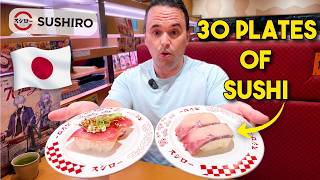
It was a fun night, and it still didn't change our minds. Sushiro is our spot. It's the only restaurant we ever took a cab to: rain started before one booking, and I ordered an Uber rather than give up the table. We ate sushi about once a week during our month in Shinjuku, almost always there, and we tried Kura a few days after our first Sushiro meal to see how the two stacked up. Sushiro got a 10 from us and Kura a 9.
On paper they sound identical: sushi on a conveyor belt, a tablet in English, plates for about a dollar. In person they're not. Here's where they actually differ, category by category.

Sushiro vs Kura Sushi: My Quick Answer
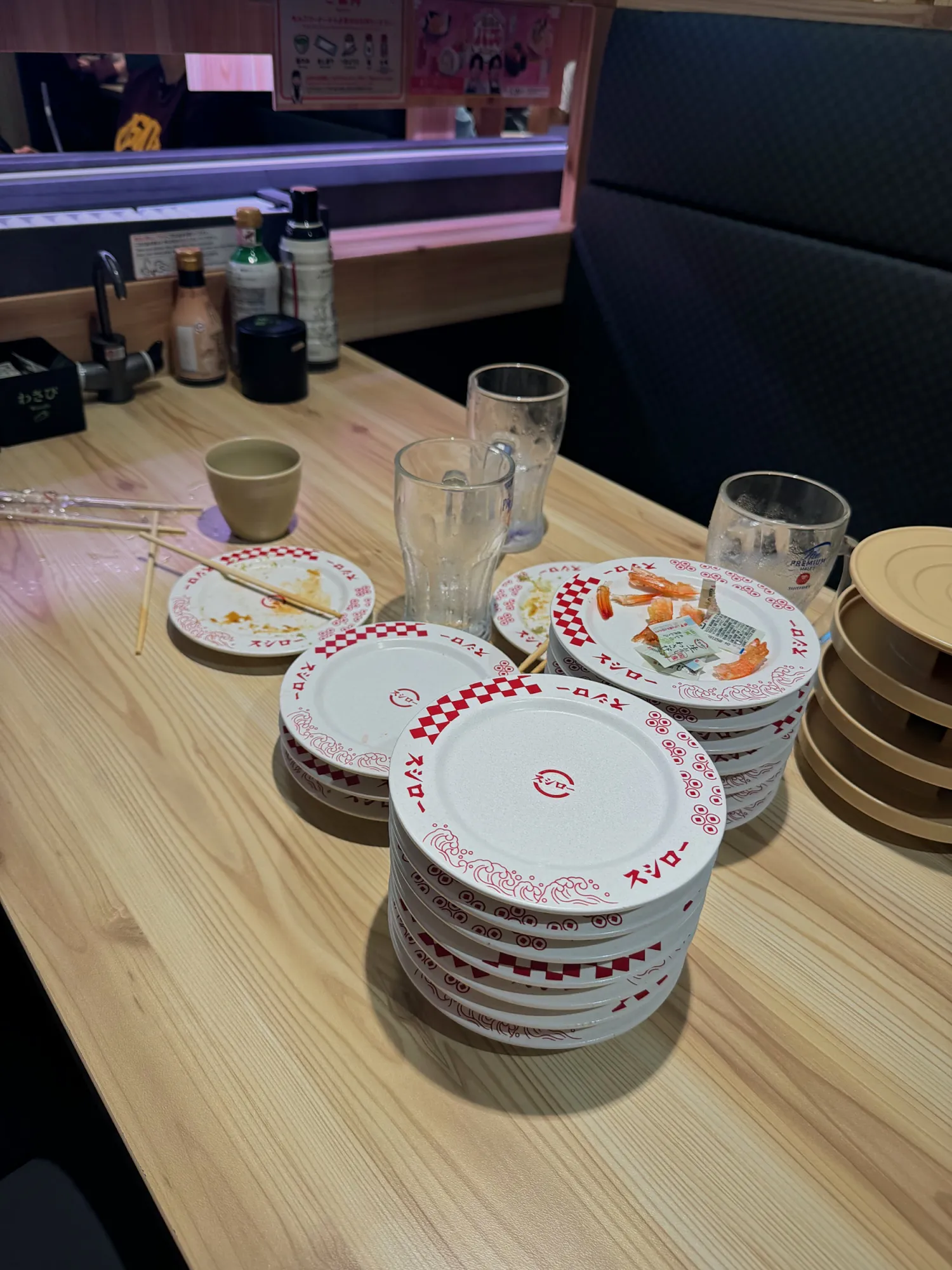
Sushiro wins overall. The fish tasted fresher, the rice was better, the room was calmer, and every plate is made to order, so you never wait for the one you want to come around. It was one of our top three meals in Tokyo. Kura Sushi was still great, and its Bikkura-pon prize game turns every fifth plate into a little lottery. The price is close to a tie. We scored Sushiro 10/10 and Kura Sushi 9/10. If you only have time for one, go to Sushiro.
| Category | Sushiro | Kura Sushi | Winner |
|---|---|---|---|
| Price | 26 plates, about $32 for two | 35 plates, about $39 for two | Kura, by a hair |
| The sushi | Fresher, better rice | Still great | Sushiro |
| How you get your plates | Order on the tablet; plates come to your table on the lane | Pick from the belt or order | Sushiro |
| Menu | Sushi, ramen, tempura, desserts | Sushi, ramen, tempura, desserts | Tie |
| Ordering in English | Tablet | Tablet | Tie |
| Atmosphere | Calm, never too loud | Louder | Sushiro |
| The game | At some branches, and we liked it more | Bikkura-pon at every table, a little pushy | Tie |
| Paying | Card | Card at self-checkout | Tie |
| Our score | 10/10 | 9/10 | Sushiro |
 Bernie & Cream@bernieandcream
Follow along on Facebook
Bernie & Cream@bernieandcream
Follow along on Instagram
Bernie & Cream@bernieandcream
Follow along on Threads
Bernie & Cream@bernieandcream
Watch us on TikTok
Bernie & Cream@bernieandcream
Follow along on X
Bernie & Cream@BernieAndCream


Is Kura Sushi or Sushiro Cheaper?
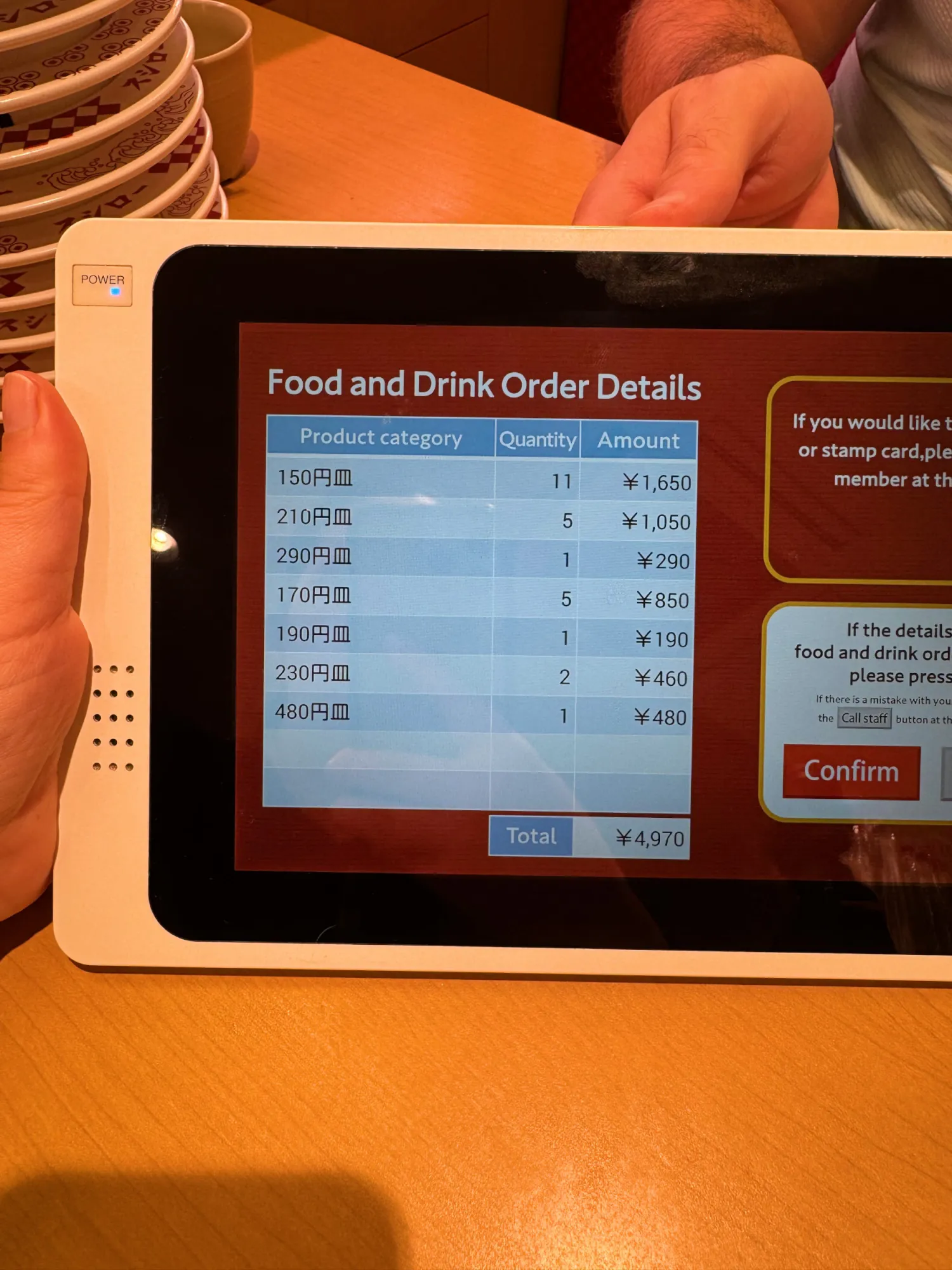
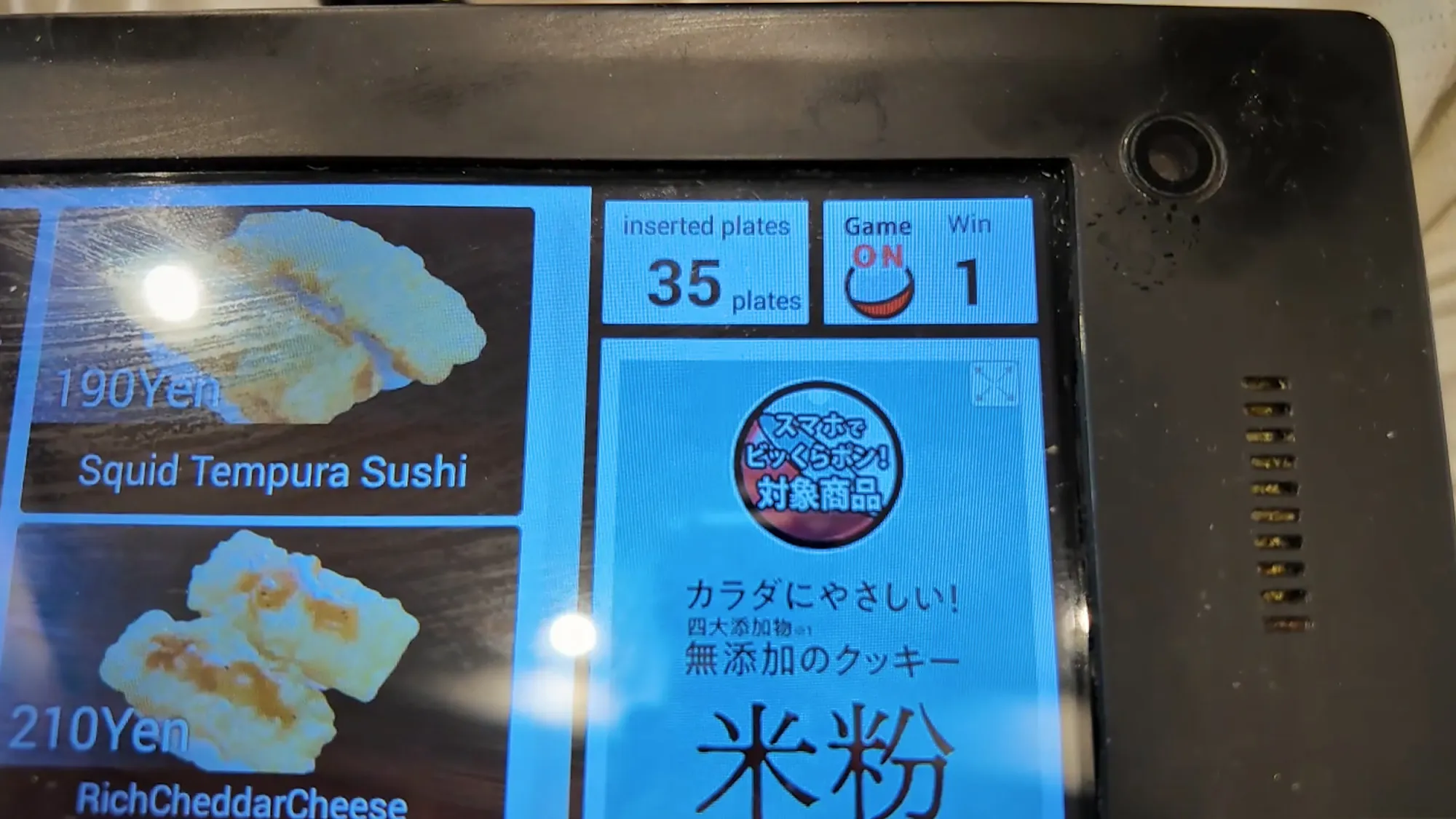
They cost about the same, and Kura came out a little cheaper per plate on our bills. At Sushiro, Cream and I ate 26 plates for ¥4,970, which was $31.72 on our card. At Kura Sushi we ate 35 plates and paid $38.66. That works out to roughly $1.20 a plate at Sushiro and $1.10 at Kura.
On paper, both chains start low. Sushiro's English site says plates start at 120 yen including tax, with prices varying by store.1 Kura Sushi's menu is split into store types where the cheapest plate is 110, 115, 125, or 145 yen.3 In central Tokyo, expect the higher end: our Sushiro bill started at 150 yen a plate, and at Kura we saw anago (sea eel) on the belt at 150 yen and squid tempura sushi on the tablet at 190 yen.
Either way, this is some of the best-value food in Tokyo. About $32 for a sushi dinner for two would be unthinkable at home, and it's why we ate sushi every week.
Winner: Kura Sushi, by a hair. The gap is small enough that price shouldn't decide it for you.
The Sushi: Which Tastes Better?
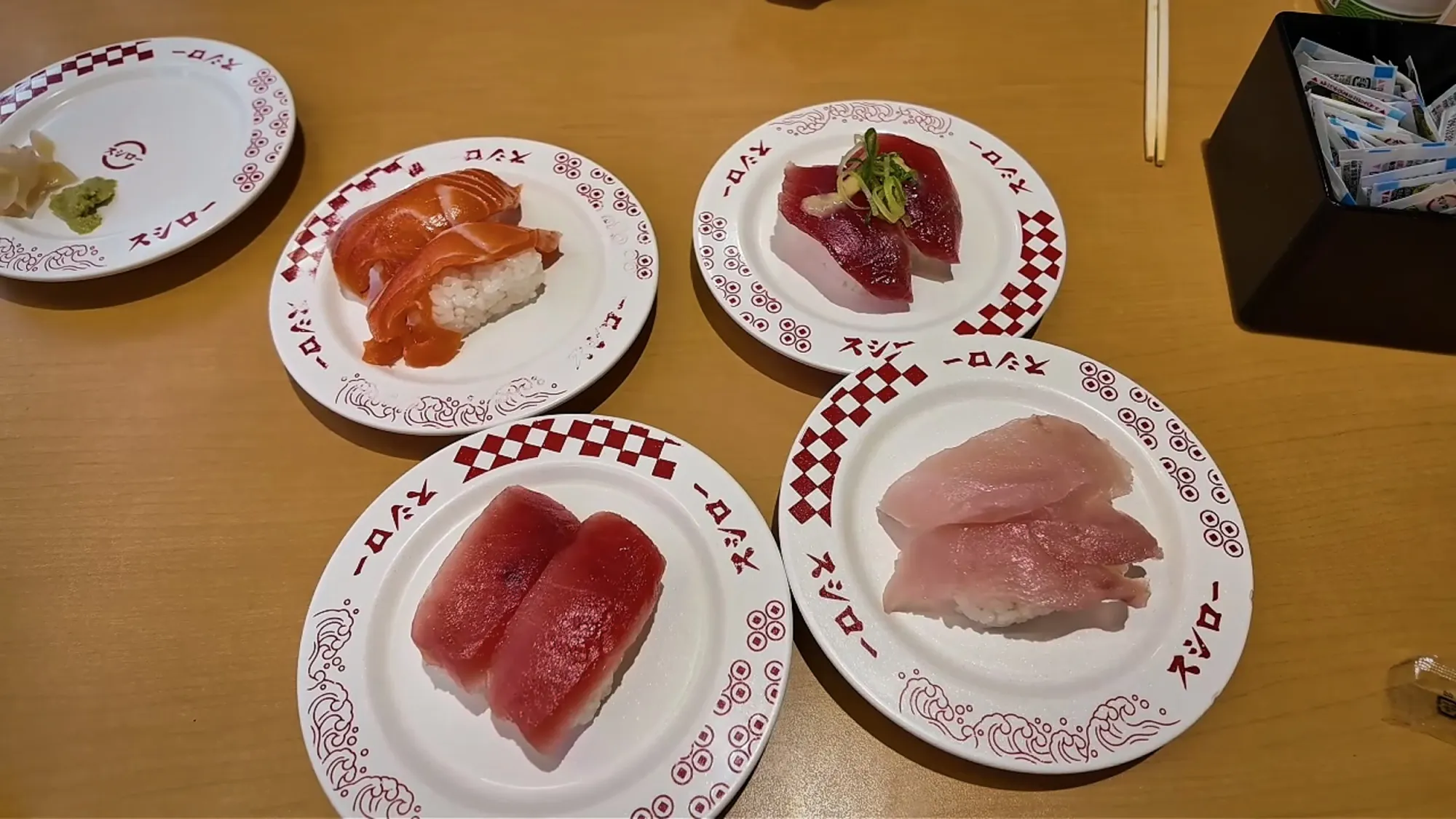
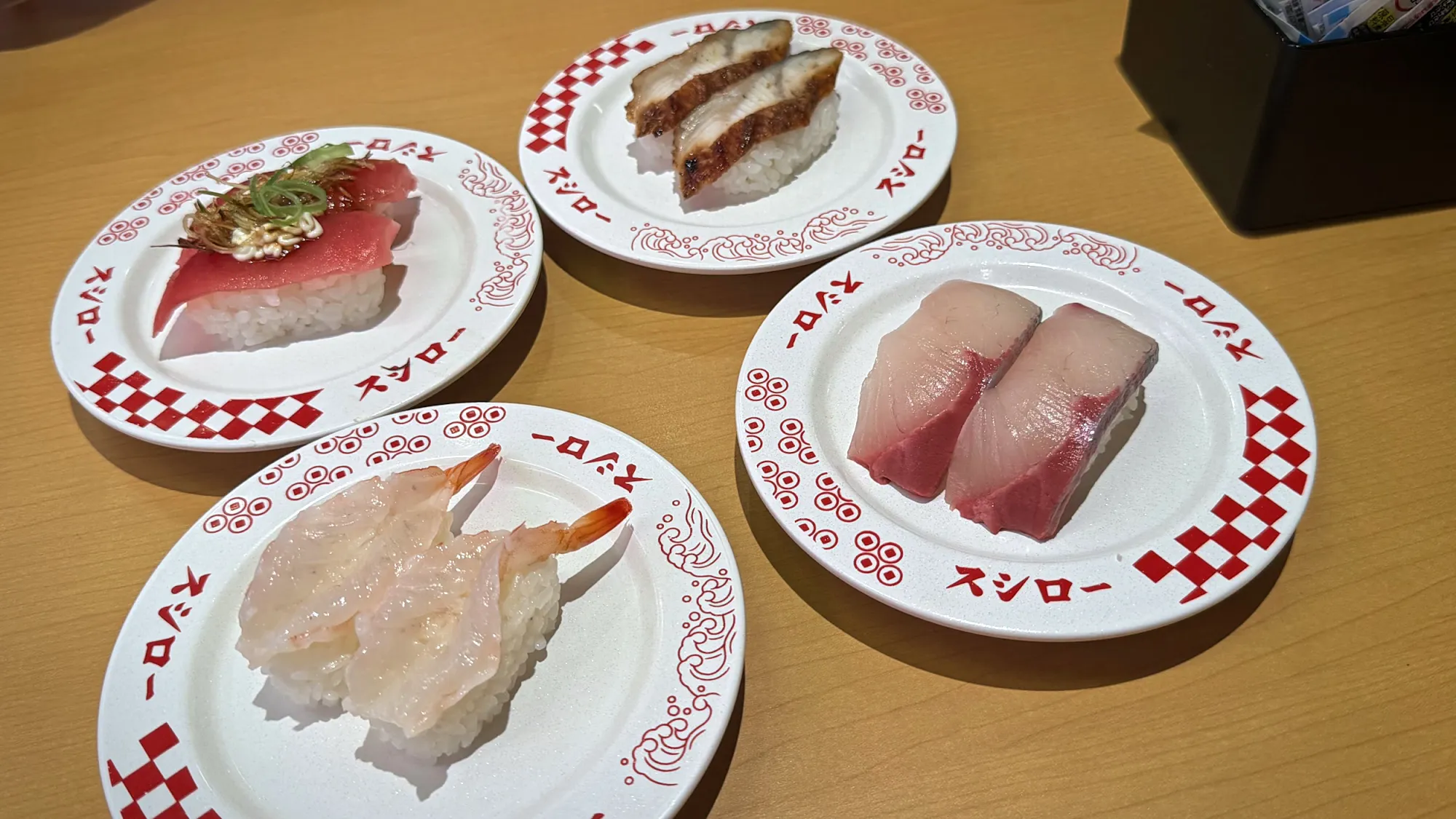
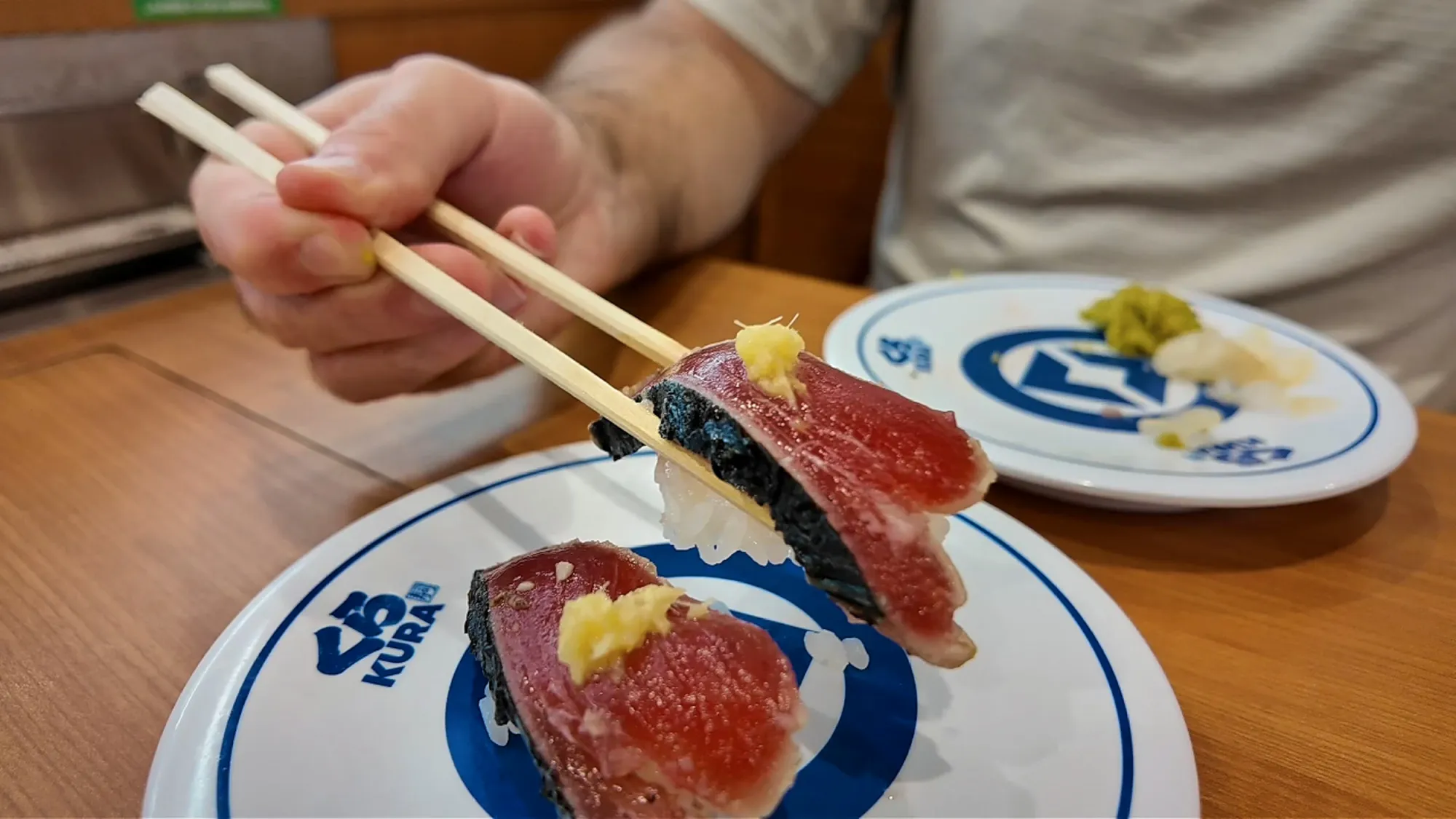
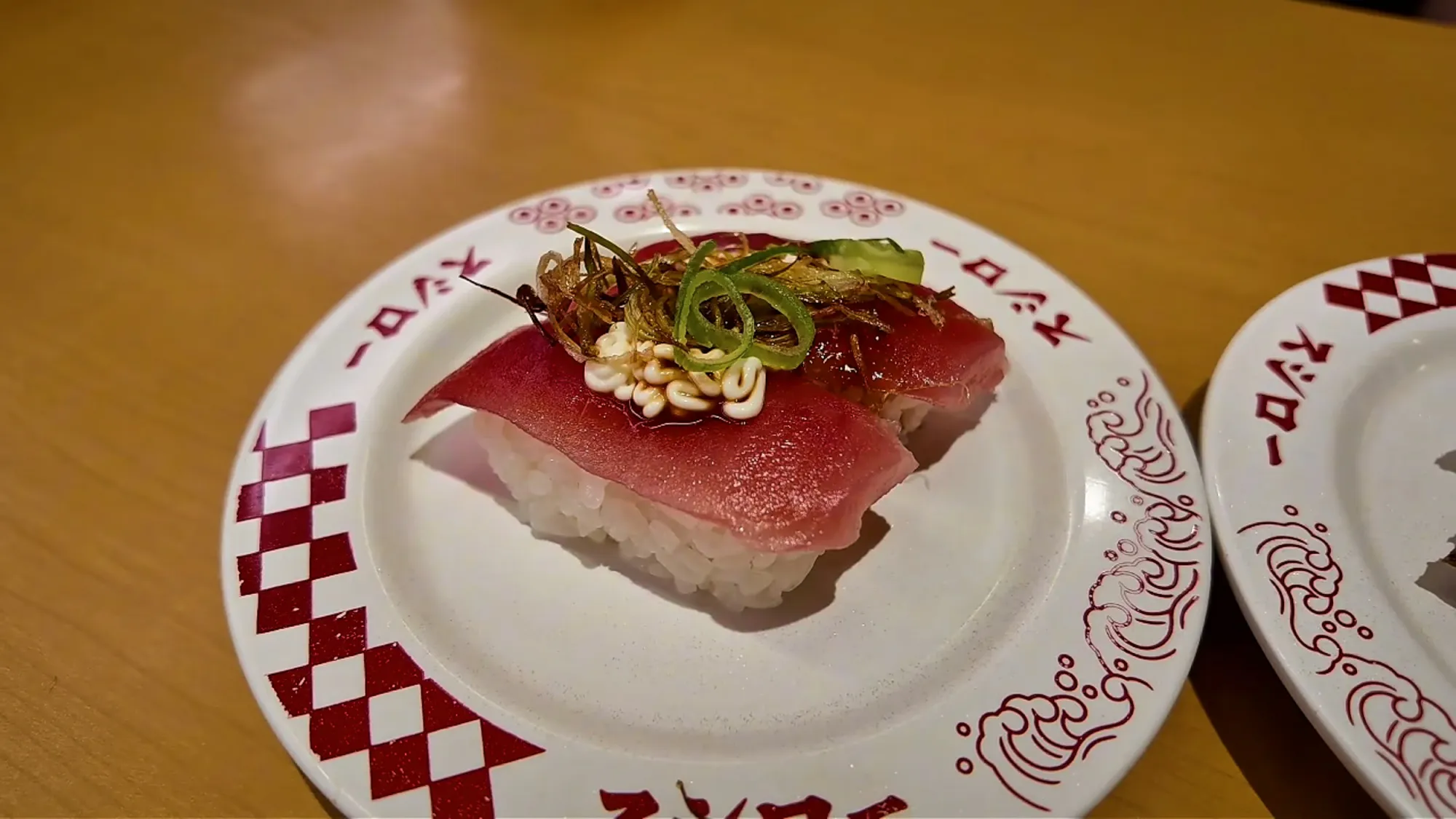
This is the category that matters most, and it's the one that decided it for us. Plate for plate, Sushiro's fish tasted fresher and its rice was better. For me, its fresh tuna is the best thing on either menu.
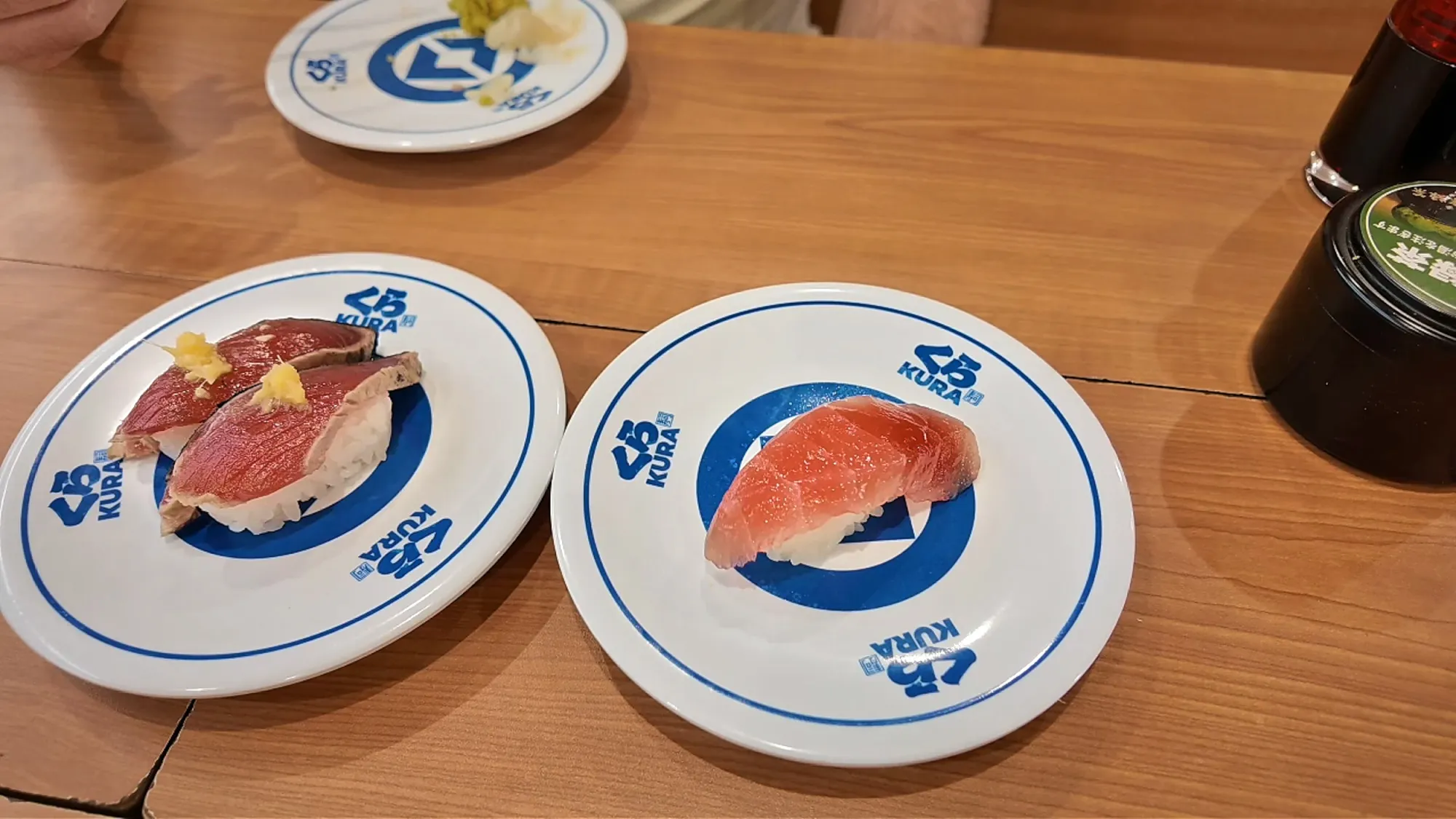
Kura Sushi wasn't bad. Its tuna, salmon, and bonito tataki were still great, and it earned a 9 out of 10. We just really liked Sushiro.
Winner: Sushiro.
The Biggest Difference: Order on the Tablet, or Pick From the Belt
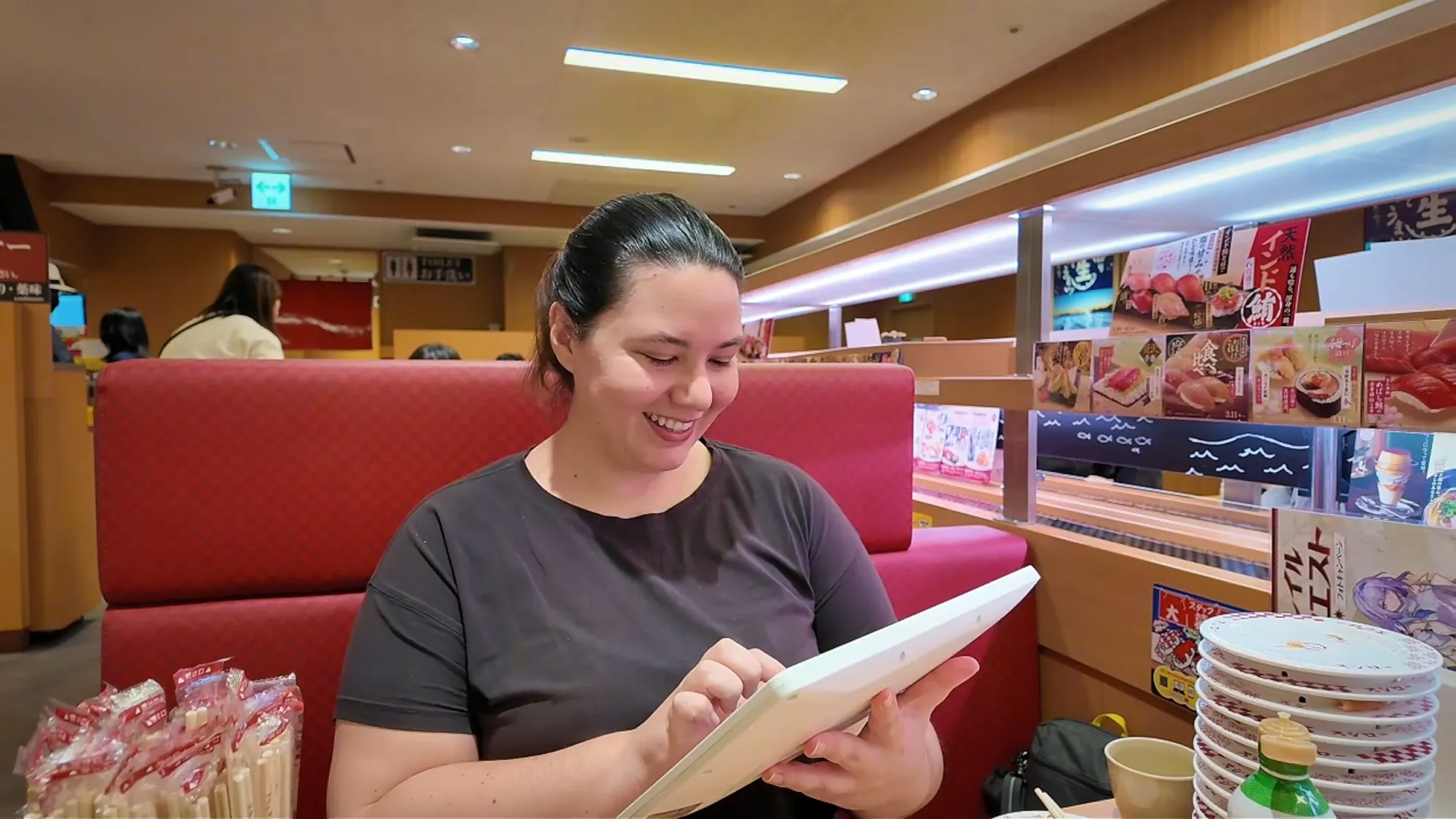
This is the difference nobody told us about. At our Sushiro, you order on the tablet, your sushi is made for you, and the plates come down an express lane to your table, where you lift them off. There's no parade of random plates to pick from; everything that arrives is something you asked for.
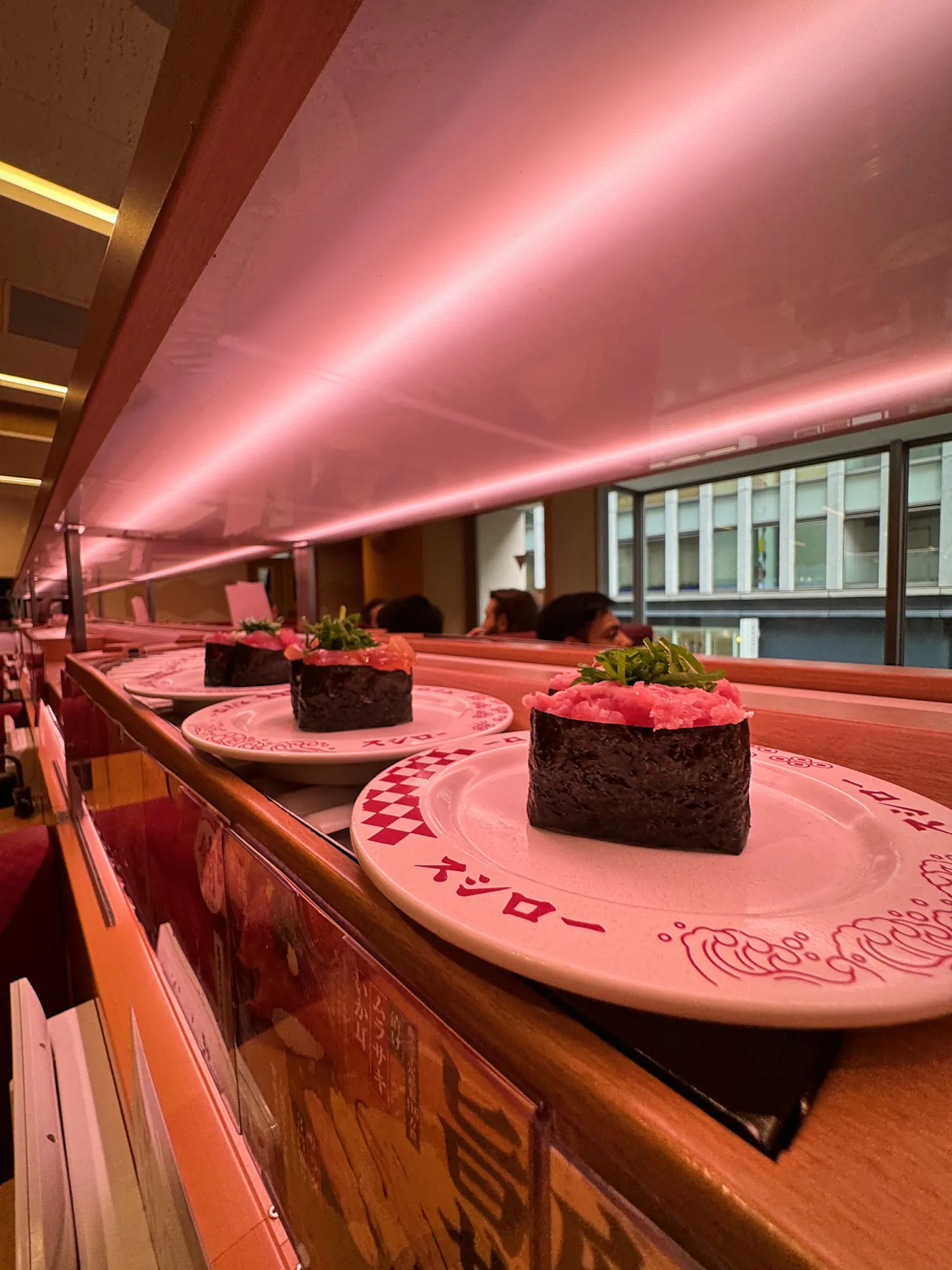
⭐ Watch the Sushiro lane deliver sushi straight to our table
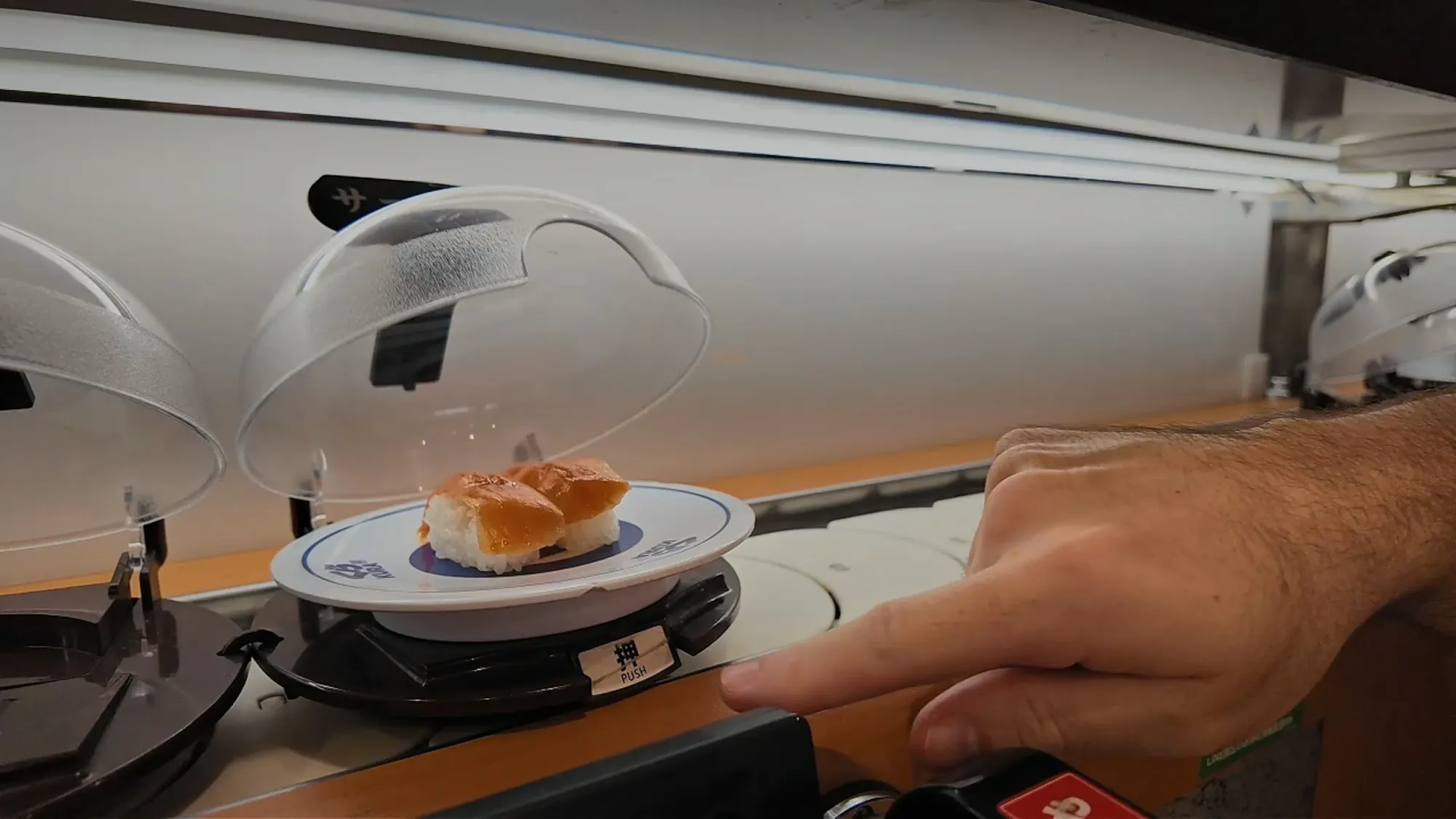
At Kura, plates rotate on a belt and you pick what you want, each one under a clear dome. Kura calls them antibacterial sushi covers: you press a button, the cover pops open, and you lift the plate out.2 You can also order on the tablet, and those plates come on their own lane. The catch was the belt itself. A lot of the plates we wanted were sold out, and a lot of the ones we didn't want were in full stock. At our table we also couldn't see the whole conveyor, so it was hard to know what was coming.
I prefer ordering on the tablet. If it's your first time, the Sushiro from our video is a great place to start, because you can see the entire conveyor from your seat and watch exactly how it works.
Winner: Sushiro.
The Menu: Fish, Fun Plates, and Everything Else
The menus are similar, and both go well beyond sushi. You can get ramen, tempura, desserts, and drinks at both, and Sushiro lists more than 100 kinds of sushi and side dishes.1 The most fun part is ordering random things and trying them all.
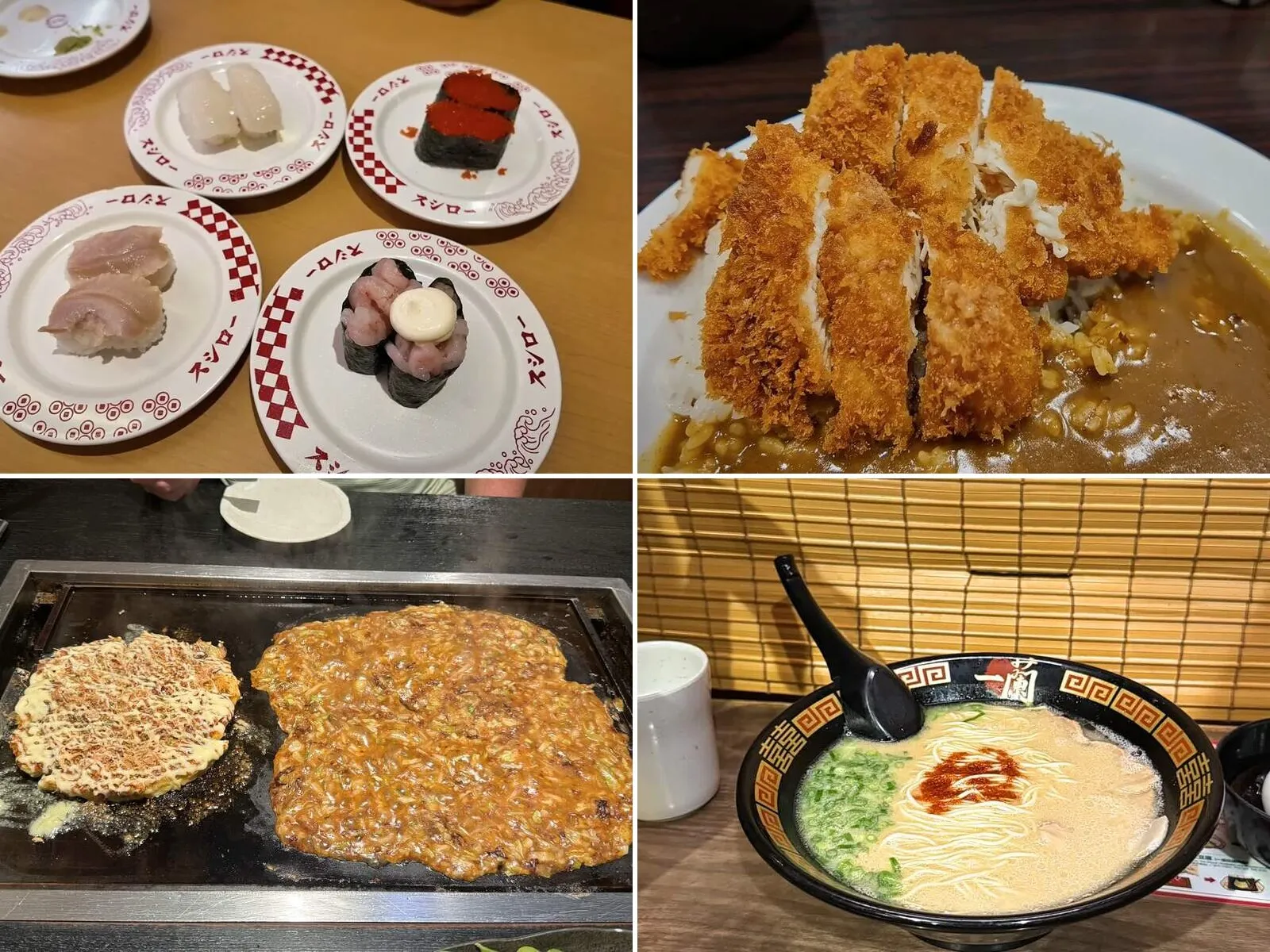
At Sushiro, we mostly stayed with fish, then I slipped in a surprise round of oddballs for Cream, kimchi natto included. Fun to try, but the classics beat every one of them (everything we ate at Sushiro).
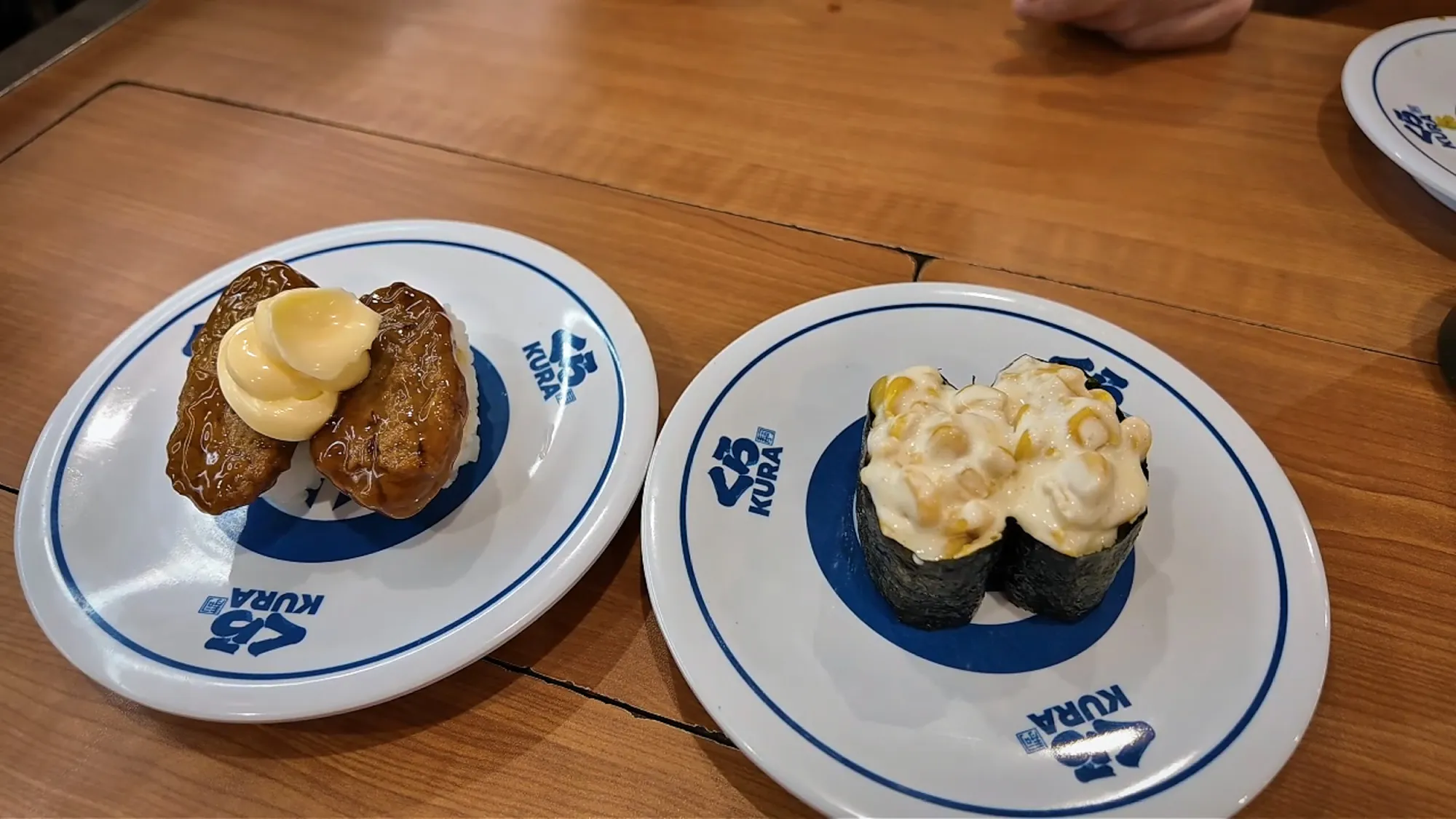
At Kura, the fun plates were hamburg steak sushi with a swirl of mayo and a corn gunkan (a seaweed-wrapped cup of rice topped with corn and mayo). The tablet also had squid tempura sushi and a cheddar cheese plate.
Winner: tie. Both have more than you can eat in one night. Order the fish first, then experiment.
Ordering in English, Tea, and the Little Things
Both are easy for first-timers. Every table has a touch-screen tablet with an English option, photos, and prices. Sushiro's English site calls it a multilingual touch panel,1 and at our table the choice was four languages. Sushiro lets you order four plates at a time.
Tea works the same at both. There's a jar of matcha powder at the table: scoop a spoonful into a cup and press it against the hot-water tap at your seat. Chopsticks, soy sauce, pickled ginger, and wasabi are already there. Cream liked that Sushiro's soy bottle drips out slowly, so you don't drench the fish.
Winner: tie.
Atmosphere: Which One Is Quieter?
Sushiro was calm on every visit, and we never waited long. Kura was louder. We'd reserved there too and walked straight in, but the room was noisier.
Winner: Sushiro.
The Game: How Kura Sushi's Bikkura-pon Works
Kura's prize game is its big draw. When you finish a plate, you drop it into a slot at your table instead of stacking it. Every five plates starts a short game on the tablet,2 and if you win, a capsule with a prize drops from the machine above your booth.4 Kura says the slot also counts your plates for the bill, using a small camera and AI.
Our games mostly ended on the はずれ (miss) screen, and our one win showed あたり (win) before the keychain capsule dropped. It's so fun, though by the end the game felt a little pushy. Sushiro has a game too, though not at every branch. Where we found it, we liked it more than Bikkura-pon, but at Kura the game is the whole point.
Winner: tie. Sushiro's game was more fun when a branch had one; Kura's is at every table, with a real prize machine above your booth.
Paying and Reservations
Both took our US credit card. Sushiro says it takes all major credit cards and QR code payments,1 and Kura has a self-checkout where you pay by card, e-money, or a QR payment app.2 Don't tip at either; tipping isn't done in Japan.
You can book a time on your phone at both chains, and we reserved every time. After our first visit, we always went to Sushiro Shinjuku Yasukuni-dori, on the 6th floor of a building a short walk from Shinjuku-sanchome station, because it was nearer our apartment and I could get a slot there even at the last minute.
Tip
If the Sushiro Japan app won't download with your US Apple account, install the Sushiro Singapore app instead. It worked for our Tokyo reservations, and we're still not sure why.
📶 Get Data Before You Land: Booking apps, maps, and Google Translate all run on mobile data, so have it working before you leave the airport. The simplest route is to install an Airalo eSIM ahead of your flight.
Winner: tie.
What I Didn't Love
At Sushiro, the only letdown was that the novelty plates never beat the plain fish.
At Kura, it was the belt: a lot of what we wanted was sold out while plates we didn't want kept coming around, and we couldn't see the whole conveyor from our seat. The room was louder, and the game felt a little pushy.
Which Should You Pick?
Both are great for anyone, but go to Sushiro if you can only pick one. We eat at chains like this everywhere for the same reason we eat McDonald's in every country: it's what everyday locals actually eat, it's consistent, and it's cheap. In Tokyo, both are fresh, cheap, and some of the best value we found in the city.
Next Steps for Your Tokyo Trip
- Why we love chain restaurants abroad: Why McDonald's is always our first meal in a new country
Bernie & Cream@bernieandcream
Follow along on Facebook
Bernie & Cream@bernieandcream
Follow along on Instagram
Bernie & Cream@bernieandcream
Follow along on Threads
Bernie & Cream@bernieandcream
Watch us on TikTok
Bernie & Cream@bernieandcream
Follow along on X
Bernie & Cream@BernieAndCream